

Baseball throwing pain is one of the most common concerns for players, parents, and coaches.
At first, it may feel like a little soreness after practice. Then it starts showing up earlier in catch play. Maybe the shoulder feels tight, the elbow feels irritated, or the arm feels heavy after throwing. Over time, the player may lose velocity, struggle with command, or avoid throwing hard because something does not feel right.
Throwing pain should not be ignored.
Baseball players are often told that arm soreness is just part of the game. Some soreness can happen, especially after increased throwing volume, a long tournament weekend, or time away from throwing. But pain that keeps returning, worsens while throwing, changes mechanics, or lingers after activity is a sign that the body is not tolerating the throwing workload well.
Throwing a baseball is one of the most demanding movements in sports. The shoulder and elbow experience high levels of stress, but the arm is only one part of the system. Throwing depends on the legs, hips, trunk, rib cage, shoulder blade, rotator cuff, forearm, and recovery habits all working together.
In this article, we will break down why baseball throwing pain happens, where it usually shows up, why your arm hurts when you throw a baseball, what warning signs to watch for, and what actually helps players recover and return to throwing with more confidence.
Why Baseball Throwing Pain Is So Common
Throwing is a high-speed, repetitive movement.
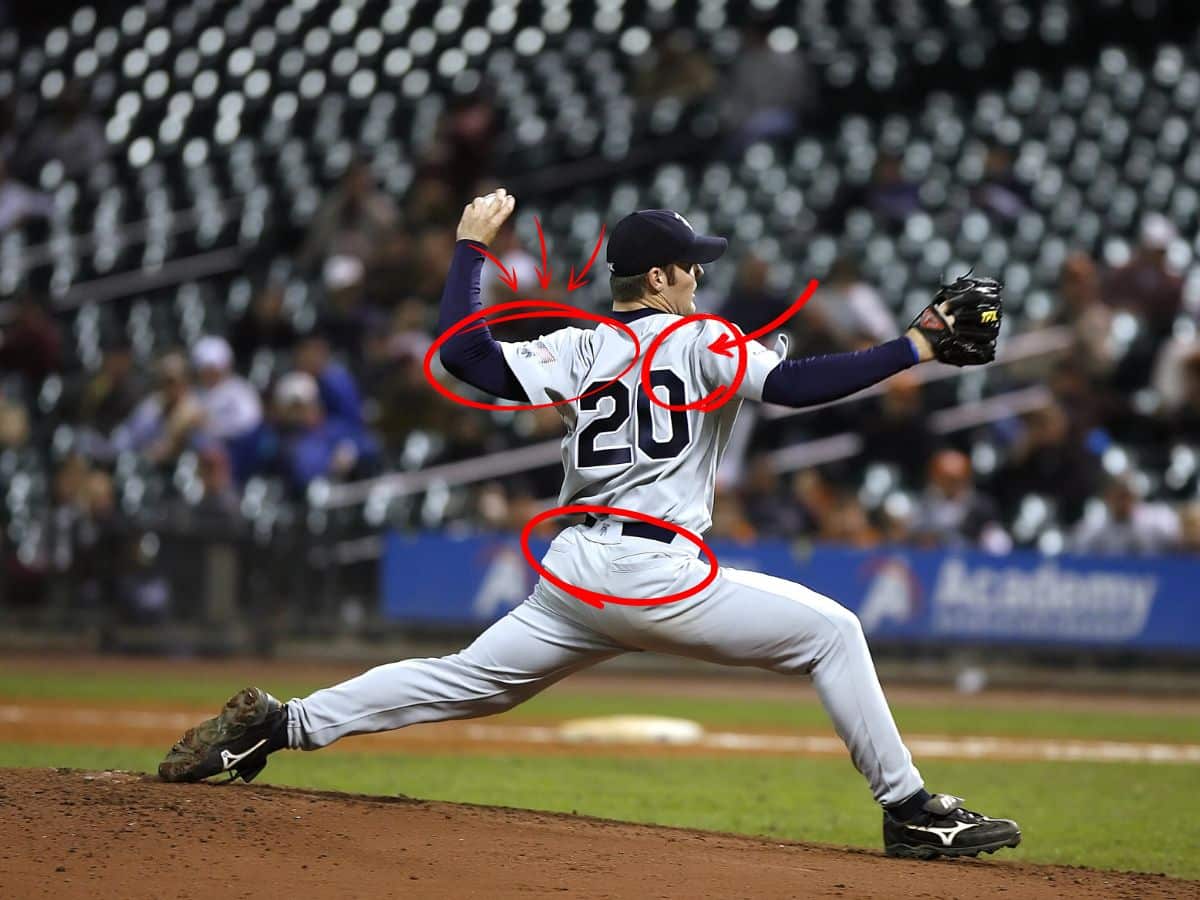
Every throw requires the body to generate force from the ground, transfer that force through the hips and trunk, and deliver it through the shoulder, elbow, forearm, wrist, and hand.
When this system works well, the arm is supported by the rest of the body. When it does not, the shoulder and elbow may absorb more stress than they can handle.
Baseball throwing pain is common because the sport involves:
- High throwing velocity
- Repeated throws across practices, games, showcases, and tournaments
- Rapid acceleration and deceleration of the arm
- High stress on the shoulder and elbow
- Year-round play for many athletes
- Pitching, fielding, long toss, bullpen sessions, and position-specific demands
- Fatigue from travel, school, lifting, and sport overlap
Throwing pain often builds gradually. A player may compensate for weeks before symptoms become obvious. By the time pain is limiting throwing, the issue may involve more than one tissue or one bad throw.
That is why early attention matters.
Where Throwing Pain Usually Shows Up
Baseball players may describe throwing pain in different areas of the arm.
The location can provide helpful clues, but it does not always tell the full story. Shoulder pain may be influenced by trunk or scapular control. Elbow pain may be influenced by shoulder mobility, throwing workload, or poor force transfer from the lower body.
Common areas include:
Front of the Shoulder
Pain in the front of the shoulder may show up during the cocking phase, acceleration, or after throwing.
Players may describe it as pinching, aching, tightness, or soreness near the front of the joint or biceps area.
This can be related to shoulder mobility, rotator cuff control, biceps tendon irritation, workload, or how the shoulder is managing end-range throwing positions.
Back of the Shoulder
Pain or tightness in the back of the shoulder is also common in throwers.
The back of the shoulder helps decelerate the arm after the ball is released. If this area does not have enough strength, endurance, mobility, or recovery, it may become irritated.
Posterior shoulder tightness can also affect how the shoulder moves during throwing.
Inside of the Elbow
Pain on the inside of the elbow is a major warning sign for baseball players, especially pitchers.
This area is stressed during throwing and may involve the ulnar collateral ligament, commonly called the UCL, the flexor-pronator muscles, or other medial elbow structures.
Inside elbow pain should not be brushed off as normal soreness, especially if it worsens with throwing or comes with loss of velocity, command, or confidence.
Forearm Pain
Forearm soreness can happen when the muscles that support the elbow and wrist are overloaded.
This may show up after throwing more than usual, gripping harder, changing pitch volume, or throwing through fatigue.
Forearm symptoms can sometimes be connected to elbow stress, so they should be monitored carefully.
Biceps Area Pain
Some players feel pain along the front of the upper arm or near the biceps tendon.
Shoulder Blade or Neck Area
Some throwing pain shows up around the shoulder blade, upper trap, or neck.
This may reflect scapular control issues, rib cage restrictions, thoracic mobility limitations, or compensation when the shoulder is not moving efficiently.
Why Does My Arm Hurt When I Throw a Baseball?
There is rarely one single reason a baseball player’s arm hurts when throwing.
More often, throwing pain develops because workload, strength, mobility, mechanics, recovery, and fatigue all interact.
Below are some of the most common contributors.
1. Throwing Workload Spikes
One of the biggest causes of throwing pain is a sudden increase in workload.
This can happen when a player:
- Throws more pitches than usual
- Plays multiple games in one weekend
- Adds showcases or tournaments
- Starts throwing hard after time off
- Increases long toss volume too quickly
- Throws for multiple teams
- Moves from winter training into spring baseball too fast
The arm adapts to throwing gradually. If workload increases faster than the body can tolerate, pain can develop.
This does not only apply to pitch counts. Warm-up throws, bullpen sessions, long toss, fielding throws, showcases, and position play all add to total throwing stress.
2. Poor Recovery Between Throwing Sessions
Throwing creates stress. Recovery is when the body adapts to that stress.
If a player throws hard repeatedly without enough recovery, the shoulder and elbow may become irritated.
Recovery can be affected by:
- Too many throwing days in a row
- Poor sleep
- Inadequate nutrition
- High school, club, and travel ball overlap
- Weight training fatigue
- Lack of off-days
- Stress from school or other sports
Even a strong, well-conditioned athlete can develop throwing pain if recovery does not match workload.
3. Shoulder Mobility Limitations
Throwing requires the shoulder to move through large ranges of motion.
If the shoulder lacks usable mobility, the body may compensate during the throwing motion. That compensation can increase stress on the shoulder, elbow, or trunk.
For throwers, mobility is not just about being flexible. It is about having enough controlled range to get into throwing positions without excessive strain.
4. Rotator Cuff Weakness or Poor Timing
The rotator cuff helps control the shoulder joint during throwing.
During a throw, the shoulder moves fast. The rotator cuff must help stabilize the joint while the arm accelerates and decelerates.
If the rotator cuff lacks strength, endurance, or timing, the shoulder may feel unstable, painful, or fatigued.
Basic band exercises can help early, but throwers often need more advanced progressions that prepare the shoulder for sport speed and workload.
5. Scapular Control Deficits
The shoulder blade provides the base for shoulder movement.
If the shoulder blade does not move or stabilize well against the rib cage, the arm may struggle to get into strong throwing positions.
Scapular control is important for both force production and arm deceleration.
A thrower with poor scapular control may feel shoulder fatigue, loss of command, reduced velocity, or discomfort around the shoulder blade and upper back.
6. Rib Cage and Thoracic Restrictions
The shoulder blade sits on the rib cage, and the trunk plays a major role in throwing.
If the rib cage and thoracic spine cannot rotate, extend, or expand well, the shoulder may be forced to compensate.
This can make the arm feel tight, overworked, or restricted.
For many throwers, improving shoulder pain requires looking beyond the shoulder itself.
7. Hip and Trunk Contribution Issues
Throwing is a full-body movement.
Power should come from the ground, legs, hips, trunk, and then the arm. If the lower body and trunk are not contributing well, the arm may have to create more of the force on its own.
This can increase stress on the shoulder and elbow.
Common issues include:
- Poor hip rotation
- Limited trunk rotation
- Weakness in the hips or core
- Poor single-leg control
- Difficulty transferring force from lower body to upper body
When force transfer breaks down, the arm often pays the price.
8. Elbow Stress From Poor Force Transfer
The elbow is not designed to be the main power source during throwing.
If the shoulder, trunk, hips, and legs are not contributing well, the elbow can experience more stress.
This is one reason elbow pain should be assessed as part of the entire throwing system, not just the elbow joint.
9. Throwing Through Fatigue
Fatigue changes mechanics.
As a player gets tired, arm slot, trunk position, stride, timing, and release point can all change. These changes may increase stress on the shoulder or elbow.
Fatigue can come from one long outing, repeated games, poor sleep, insufficient recovery, or overall training load.
Players, parents, and coaches should take fatigue seriously. It is often when mechanics break down and pain begins.
Shoulder Pain vs Elbow Pain When Throwing
Shoulder pain and elbow pain are both common in baseball players, but they may point toward different stress patterns.
That said, they are connected.
A player with elbow pain may also have shoulder mobility limitations. A player with shoulder pain may have trunk or hip issues that change throwing mechanics. The entire throwing chain matters.
Shoulder Pain When Throwing
Shoulder pain may be related to:
- Rotator cuff irritation
- Biceps tendon irritation
- Labral stress
- Posterior shoulder tightness
- Scapular control limitations
- Thoracic or rib cage restrictions
- Overload from too much throwing
Shoulder pain may show up during the cocking phase, acceleration, follow-through, or after throwing.
Some players describe the arm as dead, heavy, weak, or loose. Others feel pinching, tightness, or sharp discomfort.
Elbow Pain When Throwing
Elbow pain may be related to:
- High stress on the inside of the elbow
- UCL irritation or injury
- Flexor-pronator strain
- Forearm overload
- Growth plate irritation in younger athletes
- Poor workload management
- Mechanics that increase elbow stress
Pain on the inside of the elbow deserves particular attention.
Players should not keep throwing through medial elbow pain hoping it will disappear. Early assessment can help determine whether the issue is muscular, workload-related, or something that needs more medical evaluation.
When Throwing Pain Is a Warning Sign
Not every soreness after throwing means something serious is wrong. But some symptoms should not be ignored.
Baseball players should stop throwing and get assessed if they experience:
- Sharp pain while throwing
- Pain that worsens as throwing continues
- Pain that lingers after practice or games
- Pain on the inside of the elbow
- Loss of velocity
- Loss of command or control
- A sudden pop or tearing sensation
- Swelling around the elbow or shoulder
- Numbness or tingling
- Feeling of instability or looseness
- Pain that changes mechanics
- Repeated arm pain despite rest
The earlier these signs are addressed, the better chance an athlete has of avoiding a longer shutdown.
Playing through throwing pain is risky because compensation can build quickly. A player may change mechanics to avoid pain, which can shift stress elsewhere and create additional problems.
What Baseball Players Should Avoid When Their Arm Hurts
When throwing pain starts, athletes often try to manage it on their own. Some strategies are helpful. Others can make the problem worse.
Avoid Throwing Through Pain
Throwing through pain is one of the biggest mistakes baseball players make.
There is a difference between normal post-throwing soreness and pain that changes performance or mechanics. If pain worsens during throwing or affects how the athlete moves, continuing to throw is not a good plan.
Avoid Only Resting Without Rebuilding Capacity
Rest can calm symptoms, but rest does not always fix the reason pain developed.
If a player rests for two weeks, feels better, and then returns to the same throwing workload without improving strength, mobility, mechanics, or capacity, symptoms may come back.
Rest may be part of recovery, but it should not be the whole strategy.
Avoid Doing Only Band Exercises Forever
Band work has a place in throwing rehab and arm care. But bands alone do not fully prepare a baseball player for high-speed throwing.
Throwers need progressive strength, scapular control, trunk contribution, deceleration work, and a structured throwing progression.
Bands can be a starting point. They should not be the finish line.
Avoid Ignoring Workload
No exercise can fully overcome poor workload management.
If a player is throwing too much, too often, or too intensely without recovery, symptoms are likely to continue.
Workload includes all throwing, not just game pitches.
Avoid Changing Mechanics Without Assessment
Throwing mechanics matter, but randomly changing mechanics can create new issues.
If a player has pain, the first step should be understanding why. Mechanics may need adjustment, but those adjustments should be based on assessment, not guesswork.
Avoid Returning to Full Throwing Too Quickly
Once pain improves, players often want to jump right back into games or full practices.
This is where symptoms often return.
The arm needs progressive exposure. That may include catch play, distance progression, intensity progression, mound work, bullpen progression, and eventually game situations.
What Actually Helps Baseball Throwing Pain?
Throwing pain should be addressed with a plan that looks at the whole athlete.
The goal is not only to make pain go away. The goal is to understand why the arm became irritated and build the capacity needed to throw again.
Workload Management
Managing workload is often the first step.
This may include reducing throwing intensity, modifying volume, limiting certain throws, stopping pitching temporarily, or adjusting practice and tournament demands.
The plan should match the severity of symptoms and how the player responds.
Shoulder and Elbow Assessment
A proper assessment should look at shoulder range of motion, elbow symptoms, rotator cuff strength, forearm strength, scapular control, and pain response.
It should also consider the player’s age, position, throwing history, and recent workload.
Rotator Cuff Strength
The rotator cuff needs to control the shoulder during high-speed throwing.
Rehab may start with lower-level strengthening, then progress into positions that look more like throwing demands.
This can include external rotation work, 90/90 control, rhythmic stabilization, and deceleration drills.
Scapular Control
The shoulder blade helps position the arm for throwing.
Exercises may focus on serratus anterior strength, lower trap control, closed-chain stability, and shoulder blade movement against the rib cage.
Rib Cage and Thoracic Mobility
Improving rib cage and thoracic mobility can help the shoulder move more efficiently.
This may include breathing drills, thoracic rotation work, reach variations, and exercises that connect trunk position with shoulder motion.
Hip and Trunk Strength
Throwing power should not come from the arm alone.
Strengthening the hips and trunk can help improve force transfer and reduce unnecessary stress on the shoulder and elbow.
This may include rotational core work, single-leg strength, medicine ball progressions, and hip mobility drills.
Forearm Strength
The forearm helps support the elbow and wrist during throwing.
Forearm strengthening may include wrist flexion and extension work, pronation and supination drills, grip training, and progressive loading depending on the athlete’s symptoms.
Progressive Throwing Program
A return-to-throwing program should be gradual.
It may progress through distance, intensity, volume, mound work, pitch types, rest days, and game situations.
The athlete should not return based only on pain being gone. The arm needs to tolerate throwing again step by step.
Why the Whole Body Matters in Throwing
Baseball players often think of throwing pain as an arm problem.
But throwing is a full-body movement.
The lower body initiates force. The hips and trunk transfer energy. The rib cage and shoulder blade help position the arm. The shoulder and elbow deliver the ball. The posterior shoulder and trunk help decelerate the arm after release.
If one part of that chain is not contributing well, the arm may take on extra stress.
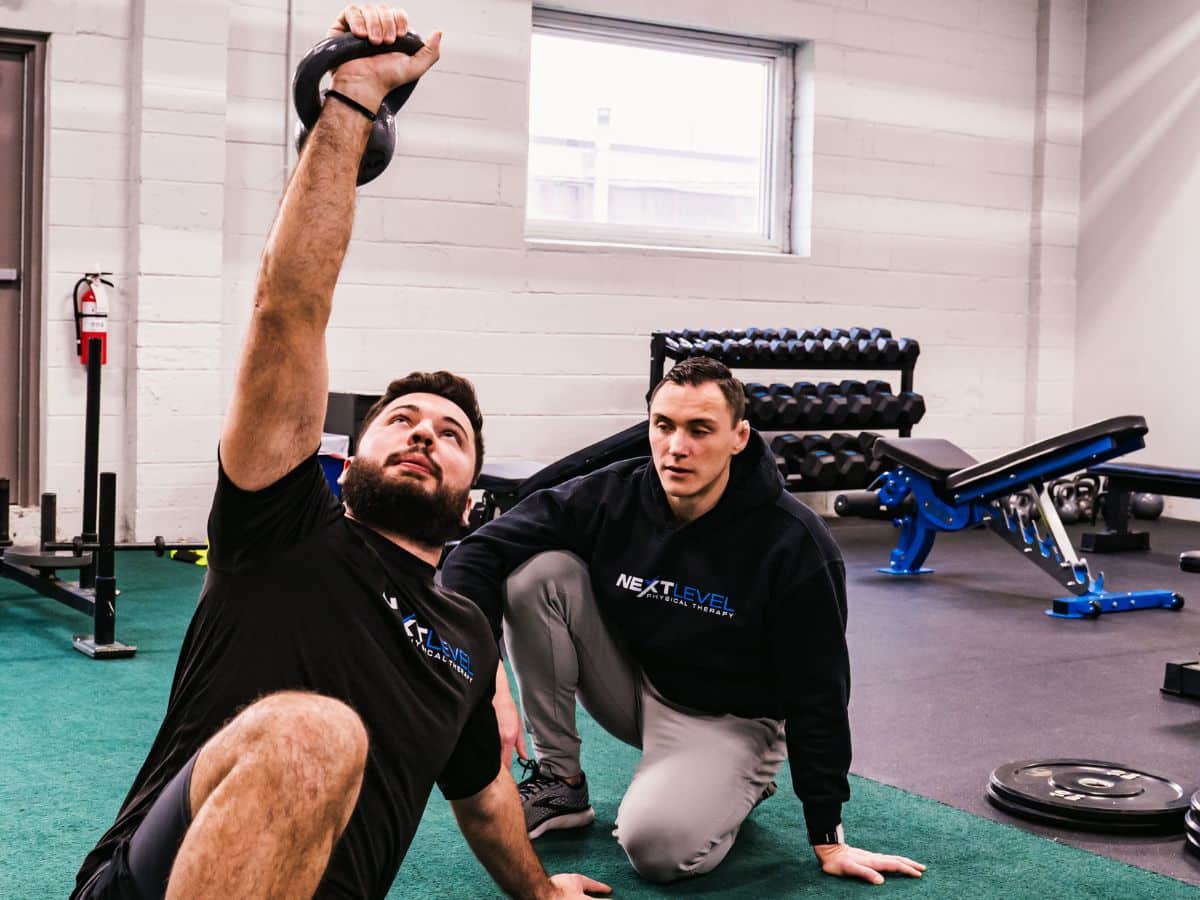
This is why a complete throwing assessment should look at:
- Hip mobility
- Single-leg control
- Trunk rotation
- Rib cage mobility
- Shoulder range of motion
- Scapular control
- Rotator cuff strength
- Forearm strength
- Throwing workload
- Recovery habits
Baseball throwing pain is rarely solved by treating only the painful spot.
How Physical Therapy Helps Baseball Players With Throwing Pain
Physical therapy for baseball throwing pain should be specific to the athlete and the demands of throwing.
A good plan may include:
- Pain and symptom assessment
- Shoulder and elbow evaluation
- Range of motion testing
- Strength testing
- Scapular control assessment
- Hip and trunk movement assessment
- Workload review
- Throwing progression guidance
- Sport-specific rehab exercises
- Return-to-play planning
The goal is to identify what is contributing to the pain and build a plan that helps the player return safely.
For some athletes, this may mean reducing throwing while building strength. For others, it may mean addressing mobility restrictions, improving mechanics, or progressing through a structured throwing program.
The right plan depends on the athlete.
When Physical Therapy Makes Sense
Baseball players should consider physical therapy if throwing pain keeps returning or affects performance.
Physical therapy may be especially helpful if:
- The player cannot throw with normal velocity
- Pain changes throwing mechanics
- Pain lingers after games or practices
- The athlete has inside elbow pain
- The shoulder feels weak, unstable, or fatigued
- Rest helps temporarily but pain comes back
- The player is unsure how to return to throwing safely
- A parent or coach notices mechanics changing because of pain
The earlier a player gets assessed, the easier it may be to correct the issue before it becomes more limiting.
The Bottom Line on Baseball Throwing Pain
Baseball throwing pain should not be treated as something every player simply has to push through.
Arm pain when throwing can come from workload spikes, poor recovery, shoulder mobility limitations, rotator cuff weakness, scapular control issues, rib cage restrictions, hip and trunk deficits, elbow stress, or throwing through fatigue.
The painful area matters, but it is rarely the whole story.
Throwing is a full-body movement. To recover well, baseball players need an approach that considers the shoulder, elbow, trunk, hips, workload, mechanics, and return-to-throwing progression.
If pain keeps coming back, the answer is usually not just rest or more band exercises. The athlete needs a plan that rebuilds capacity and prepares the arm for the real demands of baseball.
Need Help With Baseball Throwing Pain?
At Next Level Physical Therapy, we help baseball players and overhead athletes recover from throwing pain by identifying the deeper movement, strength, workload, and recovery factors that contribute to symptoms.
Our approach goes beyond chasing pain in the arm. We look at how the whole body supports throwing so athletes can return with better control, confidence, and capacity.
If shoulder, elbow, or arm pain is limiting your ability to throw, our team can help guide the process.
Request an appointment here to learn more about our approach to baseball throwing pain, sports rehabilitation, and physical therapy.


