TAP TO CALL AND BOOK YOUR APPOINTMENT
Next Level Physical Therapy
(609) 623-5964
REQUEST AN APPOINTMENT
Next Level Physical Therapy
  • Services
    • Physical Therapy
    • Sports Rehabilitation
    • Post-Surgical Rehabilitation
    • Running Gait Analysis
    • Functional Movement Screen (FMS)
    • Dry Needling
    • Personal Training
    • Online Program
  • What We Treat
    • Back Pain
    • Knee Pain
    • Hip Pain
    • Shoulder Pain
    • Head and Neck Pain
    • Ankle and Foot Pain
    • Elbow and Wrist Pain
  • Who Can Benefit
    • Athletes
    • Active Adults
    • Post-Surgery
  • Resources
    • Blog
    • Guides
    • FAQ
  • Testimonials
  • About Us
    • Meet the Team
    • Careers
  • Contact Us
  • Locations
    • Bridgewater NJ
    • Hamilton NJ
    • Marlton NJ
    • Narberth PA
    • Southampton PA

Resources

We’re here to help! (In and out of the clinic)
Take a look at some of our best resources for keeping you PAIN-FREE, ACTIVE, AND IN THE KNOW.

Join our Facebook group

For access to exclusive training videos, answers to your questions, and a growing community of health focused individuals.
Join now
Read More
Your Scapula Is NOT Dysfunctional
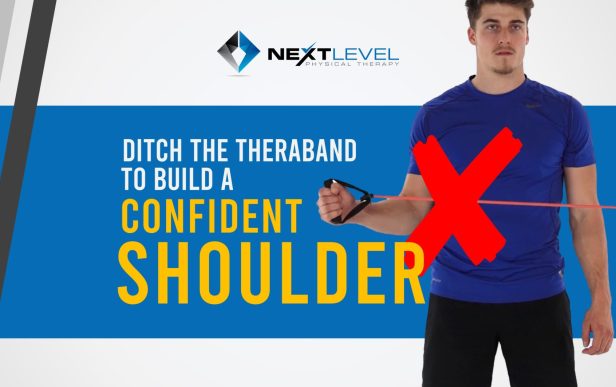
We can all agree that shoulder pain is frustrating. Shoulder function is something people rely on constantly. Getting dressed, showering, feeding oneself, driving, lifting weights, doing pushups, writing, and many other daily activities all depend on healthy shoulder function. Most people rely on their shoulders every day. There are many possible causes of shoulder pain, but if you have been told you have scapular dyskinesis, scapular instability, or scapular dysfunction, which are essentially different labels for the same idea, there is something important to understand. It may be an uncomfortable truth at first. Are you sure? Really sure? Alright. There is no such thing as a dysfunctional scapula. That may come as a surprise, but it is important to take a closer look at the language we use. The word dysfunctional has no place in conversations about how bodies move. It reinforces the idea that our bodies are fragile or broken, which can lead to hesitation, fear avoidance, and an increased risk of recurring injuries. How does that happen? Our good friend Dumbledore summed it up well: (his beard is filled with wisdom) Calling a scapula dysfunctional implies that there is a single correct or normal way for a shoulder to move. Anyone labeled as dysfunctional is then seen as abnormal, incorrect, or at risk of hurting themselves. Terms like dyskinesia, abnormal mechanics, and instability create similar problems. They are binary. You are either normal or abnormal, with no room in between. This kind of mental framing often leads to self-limiting beliefs. People given these diagnoses frequently avoid activity out of fear of making things worse, which ironically tends to make things worse over time. Just because a shoulder is not working the way someone wants does not mean something is wrong with it. It simply means there are a few things that need to be addressed. To understand this better, it helps to look at the anatomy of the shoulder. There are three main structures involved: the ribcage, the scapula, and the humerus. The scapulothoracic joint exists between the ribcage and the scapula, while the glenohumeral joint connects the scapula and the humerus. The scapula contributes roughly 30 percent of total shoulder motion and functions as a floating joint with no direct bone-to-bone attachment to the rest of the body. The upper arm bone, or humerus, sits in a socket on the outer edge of the scapula. As the scapula moves, the socket moves with it, allowing the shoulder to orient itself in many different positions. This is what allows the hand to be placed in such a wide variety of positions. The shoulder has more range of motion than any other joint in the body. With greater available motion comes greater complexity and a higher demand for control. This is where the discussion of stability usually enters the picture. For this discussion, stability means the ability to resist unwanted motion or return to a desired position after being moved. This definition explains why common treatments for an “unstable” shoulder often include exercises like BOSU planks, reactive drills where a therapist applies unpredictable forces, or lifting weights attached to bands. The intent behind these exercises is good, but the application is often flawed. These drills are complex and involve many variables. For someone already dealing with shoulder issues, that level of complexity can be overwhelming and lead to inconsistent results. A more effective approach is to start by developing passive motion so the shoulder has access to the positions it needs. The next step is active motion within that newly available range. From there, the focus should shift to producing force in those positions and building strength and consistency in the desired movement patterns. Only if the issue persists after these steps should more advanced and variable exercises be introduced. For example, a client should not perform any type of unstable surface pushup until they can clearly demonstrate twenty clean and consistent strict pushups first. Highly variable and dynamic exercises may look impressive, but they belong at the top of the pyramid, not the bottom. The foundation has to be built properly before progressing upward. If you have been struggling to get your shoulders back to where you want them to be and feel like you have tried everything, returning to the basics and mastering them using this progression can make a significant difference. If this cannot be sorted out independently, working with a skilled professional who understands this process can be extremely valuable. There is nothing wrong with the shoulder. It is simply having difficulty managing complexity right now.
Read More
Top 5 Exercises For Instant Shoulder Pain Relief
Shoulder pain is a common issue for many people, from high level athletes to weekend warriors and everyone in between. Despite how common it is, shoulder pain can come from many different causes. Some of the most frequent contributors include overuse conditions, which are often seen in athletes such as baseball pitchers, degenerative changes from gradual wear and tear over time, or acute injuries like falling on an outstretched arm. Regardless of the cause, one of the most effective ways to reduce shoulder pain and allow healing to begin is by changing the position and posture of the body. Improving posture can help create more space in the shoulder joint, reducing stress on irritated tissues and allowing the area to calm down. If you are currently dealing with shoulder pain, we always recommend being evaluated by a licensed professional so you can receive a customized plan tailored to your specific needs. In the meantime, here are my top 5 exercises for instant shoulder pain relief. These are not meant to be a long-term solution, but they can help you feel better so you can get through your day and your workouts without pain holding you back. 1. Banded Shoulder Distraction 3 sets x 30 sec hold [embed]https://www.youtube.com/watch?v=foTgEqbKGUQ[/embed] 3 sets x 30 second hold Grab hold of a resistance band, straighten your arm, and bend forward slightly at the hips. Try to relax into the position and allow the band to gently pull your shoulder away from the joint. This creates a traction force that helps open up space in the shoulder joint and reduce pressure on irritated or impinged tissues. You should also feel a strong stretch through the lat muscles, which is an area many gym-goers tend to have tightness. 2. Banded Bully Stretch [embed]https://www.youtube.com/watch?v=7JHZwYrSDoY[/embed] 3 sets x 30 second hold Hang a 1 to 1.5 inch resistance band from a squat rack, pull-up bar, or another sturdy overhead surface. Place the band around the upper part of your humerus as close as possible to where the arm meets the shoulder. Face away from the band and place your hand behind your back as if you were being handcuffed. Step forward until you feel a strong but tolerable stretch deep in the shoulder. This exercise is excellent for opening up space within the shoulder joint and often provides quick relief. It can be especially helpful before or after an upper body workout. 3. Seated Back Expansion [embed]https://www.youtube.com/watch?v=OCUzQOT0Ij0[/embed] 5 sets x 5 breath cycles Set up in a chair at a table that is roughly knee height. Place your elbows on the table directly in front of you, making sure they are aligned under your shoulders. Your palms should be facing you. Lean slightly forward and reach your chest away from the table while keeping your abdominal muscles engaged. Hold this position and take five slow, deep breaths. You should feel a stretch between your shoulder blades and throughout your upper back. Cranky shoulders are often linked to stiffness in the thoracic spine, also known as the upper back. The following two exercises focus on improving upper back mobility to help your shoulders move more freely. 4. ½ Kneeling T-Spine Rotation [embed]https://www.youtube.com/watch?v=njY2DlYMnPo[/embed] 3 sets x 8 reps each direction Find a wall and a foam roller. Set up in a half kneeling position as close to the wall as possible. Place the foam roller between the wall and your outside knee, keeping steady pressure against the wall throughout the movement. Hold both arms straight out in front of you at shoulder height, with your inside arm against the wall. Rotate your torso and outside arm, reaching back toward the wall behind you. Rotate as far as you can while keeping your knee pressed into the foam roller. Be sure to perform this exercise on both sides. 5. T-Spine Bench Mobility [embed]https://www.youtube.com/watch?v=n2iwe5LNVmY[/embed] 3 sets x 10 reps, 3 second hold Grab a PVC pipe or dowel and a weight bench. Kneel in front of the bench and hold the PVC with both hands, palms facing up. Place your elbows on the bench in front of you. Slowly sit your hips back while dropping your head and bending at the elbows. You should feel a deep stretch through your upper back and mid spine. Pause for three seconds at the bottom of each repetition before returning to the starting position. These exercises can be a helpful starting point for reducing shoulder pain and improving movement. If your symptoms persist or continue to worsen, a thorough evaluation can help identify the underlying cause and guide a more comprehensive plan for lasting relief.
Read More
< 1 2 … 4 5
Next Level Physical Therapy
  • About Us
  • Who Can Benefit
  • Testimonials

    Services

    • Physical Therapy
    • Sports Rehabilitation
    • Post-Surgical Rehabilitation
    • Running Gait Analysis
    • Functional Movement Screen (FMS)
    • Dry Needling
    • Personal Training
    • Online Program

    What We Treat

    • Back Pain
    • Knee Pain
    • Hip Pain
    • Shoulder Pain
    • Head and Neck Pain
    • Ankle and Foot Pain
    • Elbow and Wrist Pain

    Resources

    • Guides
    • Blog
    • FAQ

Contact Us

BRIDGEWATER (NJ)
575 Route 28, Suite 206,
Raritan, NJ 08869
(908) 396-6909
HAMILTON (NJ)
4609 Nottingham Way,
Hamilton, NJ 08690
(609) 436-9089
MARLTON (NJ)
751 Route 73 North, Suite 2,
Marlton, NJ 08053
(856) 420-2460
NARBERTH (PA)
711 Montgomery Avenue,
Suite 4, Narberth, PA 19072
(215) 278-6373
SOUTHAMPTON (PA)
1020 Industrial Blvd, Suite 300,
Southampton, PA 18966
(215) 614-5922
Follow Us
    • Privacy Policy
REQUEST AN APPOINTMENT

Congratulations!

Now you can have media content!
Ok