If you have ever been told you have tendon pain, there is a good chance you heard the word tendinitis. It is a familiar label and one that gets used often for pain in the Achilles, patellar tendon, elbow, or shoulder.
But in many chronic cases, tendinitis vs tendinosis is not just a matter of wording. The difference matters because it changes how we think about why the pain developed and what actually helps it improve.
For active adults and athletes, this distinction is especially important. If chronic tendon pain is treated like a short-term inflammatory problem, the plan often falls short. The tendon may calm down temporarily, but the pain frequently returns once activity picks back up.
In this article, we will break down the difference between tendinitis and tendinosis, explain why chronic tendon pain is often misunderstood, and outline what effective treatment usually looks like.
What Is a Tendon?
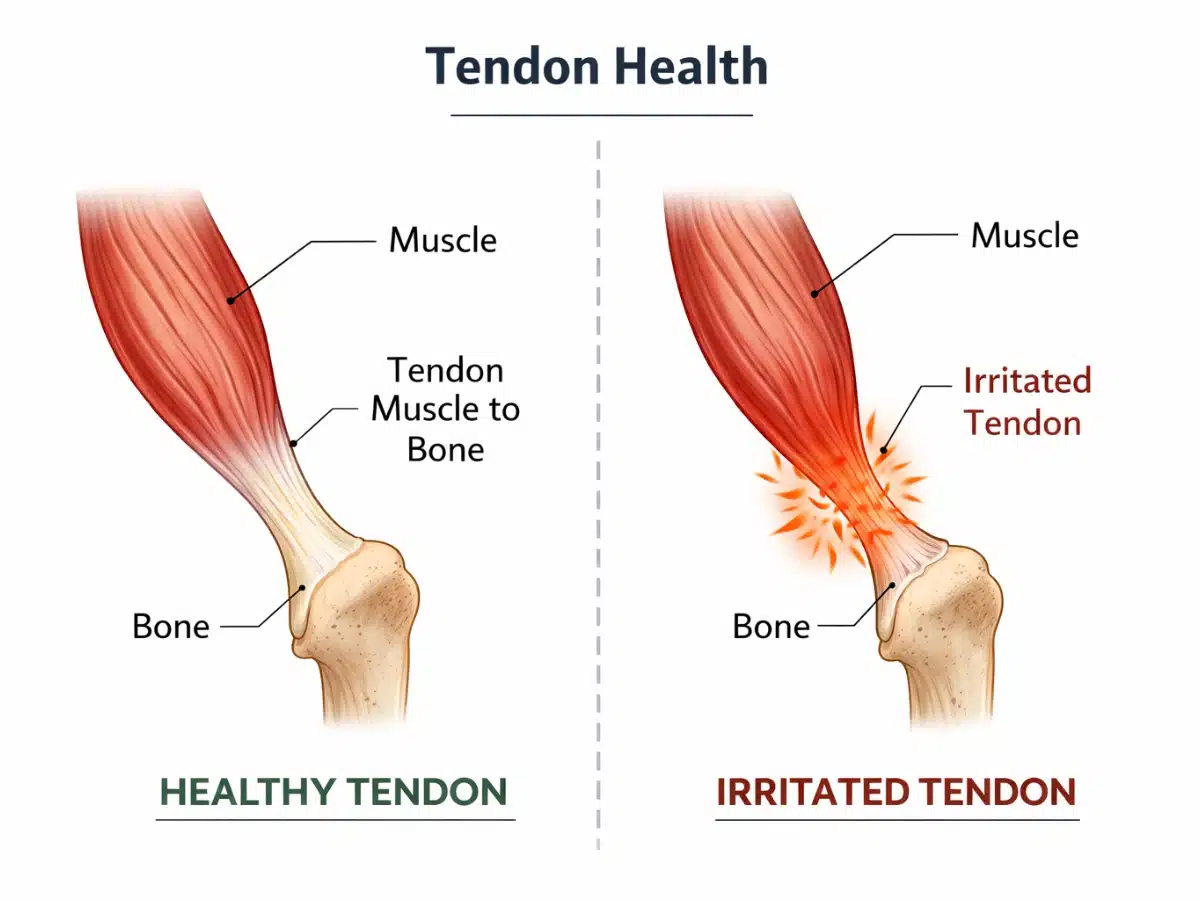
A tendon is the structure that connects muscle to bone. Its job is to transmit force so the body can move, absorb load, and in many cases store and release energy during athletic activity.
This is why tendons matter so much in activities like sprinting, jumping, lifting, and throwing. They are not passive ropes. They are living tissues that respond to stress over time.
When the amount of load placed on a tendon exceeds its current capacity, pain can develop. That is where terms like tendinitis, tendinosis, and tendinopathy enter the conversation.
What Is Tendinitis?
Tendinitis traditionally refers to an acute inflammatory condition of a tendon. The “-itis” ending means inflammation.
In theory, tendinitis describes a situation where a tendon becomes irritated after a recent spike in stress. This could happen after an abrupt increase in training volume, a sudden change in activity, or a short-term overload event.
In these earlier phases, the tendon may become painful, sensitive, and reactive. Some inflammatory processes can be involved, particularly in the early response to overload.
However, this is where the confusion starts. Many people who are told they have “tendinitis” have actually been dealing with symptoms for months. At that point, inflammation alone usually does not explain the problem.
What Is Tendinosis?
Tendinosis refers to longer-standing degenerative changes within the tendon. Instead of a short-term inflammatory reaction, the tissue shows signs of disorganization, failed healing, and reduced tendon quality.
In simpler terms, the tendon has been overloaded for long enough that it has not adapted well. The collagen structure becomes less organized, the tissue may thicken, and the tendon becomes less capable of tolerating stress efficiently.
This is why chronic tendon pain often behaves differently than an acute flare. It may warm up with activity, calm down temporarily, then become sore again later or the next day. It is not always a classic “inflamed” picture.
Why Most “Tendinitis” Is Really Tendinopathy
In modern sports medicine, the broader term tendinopathy is often preferred because it captures the full picture better. Tendinopathy is an umbrella term that includes painful tendon conditions across a spectrum, from more reactive presentations to more degenerative ones. Research has proposed a continuum model of tendon pathology, where tendon pain develops and progresses based on how the tissue responds to load over time.
That matters because many chronic tendon problems are not purely inflammatory and are not best understood as simple tendinitis. They often sit somewhere along a continuum of tendon pathology shaped by repeated overload and incomplete recovery.
So when someone says “I have tendinitis,” the more useful question is usually not, “What is the label?” It is, “What stage is the tendon in, and what kind of load can it currently tolerate?”
What Is the Difference Between Tendinitis and Tendinosis?
The easiest way to think about it is this:
- Tendinitis usually describes a more acute, reactive, irritation-driven stage.
- Tendinosis usually describes a more chronic, degenerative, failed-healing stage.
Both can cause pain. Both can limit performance. But the treatment logic is not exactly the same.
An acutely reactive tendon may need temporary load modification and a short window of calming things down. A chronically painful tendon usually needs a longer-term plan that builds capacity and improves how the tissue handles force.
This is why the distinction matters. If chronic tendon pain is treated only with rest, ice, or anti-inflammatory strategies, the tendon often never regains the strength and resilience it needs.
Why Chronic Tendon Pain Keeps Coming Back
One of the most frustrating parts of tendon pain is how often it lingers. People rest until symptoms calm down, then return to activity and feel the pain come back almost immediately.
This usually happens because the tendon’s pain level improved faster than its capacity did.
Tendons adapt more slowly than muscles. A person may feel better before the tendon is truly prepared for the same volume, intensity, or explosiveness that caused the issue in the first place. If activity resumes too quickly, the cycle starts over.
That is also why complete rest is rarely a great long-term answer. Rest may reduce symptoms in the short term, but too much unloading can leave the tendon even less prepared for future stress.
Common Examples of Tendon Pain
Chronic tendon pain can show up in many different areas of the body. Some of the most common examples include:
- Achilles tendinopathy in runners and field athletes
- Patellar tendinopathy in jumping athletes and lifters
- Lateral elbow tendinopathy in racquet sports and grip-heavy activities
- Gluteal tendinopathy in active adults with lateral hip pain
- Rotator cuff tendinopathy in throwing or overhead athletes
Each area has its own details, but the same broad principle applies: the tendon is struggling to handle the amount or type of stress being placed on it.
Why Anti-Inflammatories and Passive Care Often Fall Short
This is where outdated tendon care often misses the mark. If the problem is viewed only as inflammation, the plan may lean heavily on anti-inflammatory medications, injections, massage, or short-term rest.
Some of these strategies may help with pain in the moment. But for long-standing tendon pain, they usually do not solve the real issue on their own.
The tendon typically needs better load tolerance, better movement quality, and a smarter progression back to activity. Passive care can sometimes support the process, but it usually should not be the whole plan.
What Actually Helps Tendon Pain Heal
The most evidence-supported foundation of chronic tendon rehab is progressive loading.
That means the tendon is exposed to a structured amount of stress that it can tolerate, then gradually challenged more over time. The exact form of loading depends on the person, the tendon involved, and the stage of symptoms, but the general principle is the same: tendons need appropriately dosed stress to adapt.
This often includes phases such as:
- Reducing aggravating load enough to calm symptoms
- Introducing controlled strengthening
- Progressing into heavier resistance work
- Rebuilding elastic and explosive capacity
- Gradually returning to sport or training demands
In many cases, the tendon also needs the rest of the system addressed. If movement mechanics, strength asymmetries, or training errors are contributing to overload, those factors need to be part of the rehab plan too.
Why Load Management Matters So Much
One of the biggest keys in tendon rehab is managing load, not avoiding it entirely.
Too much load too soon can flare symptoms. Too little load for too long can reduce capacity. The sweet spot is finding the right level of stress that the tendon can respond to productively.
This is where good rehab becomes highly individualized. A runner with Achilles pain, a volleyball player with patellar tendon pain, and a desk worker with elbow tendinopathy may all need different starting points and progressions.
What they have in common is that the tendon needs a graded path back to demand.

Why Strength Training Is So Important
Strength work is often one of the most important parts of tendon rehab. Heavy, controlled loading can help improve tendon capacity and build the muscle support around the area.
This does not mean jumping straight into aggressive plyometrics or high-volume sport drills. It means using the right progression at the right time.
For chronic tendon pain, the solution is often not “stop using it forever.” It is “rebuild its ability to tolerate force.” That is a very different mindset, and it usually produces much better long-term results.
What About Pain During Rehab?
Tendon rehab is not always pain-free in the absolute sense. Mild, manageable discomfort during loading is sometimes acceptable, depending on the program and the individual response.
The more important question is how symptoms behave over time. If pain becomes severe, lingers strongly, or keeps escalating after sessions, the load is probably too aggressive. If the tendon tolerates the work and gradually improves, that usually suggests the program is moving in the right direction.
This is another reason tendon rehab should be guided by more than just the diagnosis label. Good progress depends on response, progression, and context.
How to Think About Tendon Pain More Effectively
If you have chronic tendon pain, it helps to stop thinking only in terms of inflammation and start thinking in terms of capacity.
The tendon is not just irritated. It is often underprepared for the demands being placed on it. That is why long-term success usually depends on rebuilding load tolerance, not just reducing symptoms.
This shift in thinking can be huge for active adults and athletes. Instead of feeling like the tendon is fragile, the goal becomes making it stronger, more adaptable, and better able to handle stress.
The Bottom Line on Tendinitis vs Tendinosis
So what is the difference between tendinitis and tendinosis?
Tendinitis generally refers to a more acute inflammatory or reactive presentation. Tendinosis generally refers to more chronic degenerative changes. In real life, many painful tendon problems are better described under the broader term tendinopathy, because they exist on a spectrum rather than in neat categories.
For chronic tendon pain, that distinction matters because the treatment should go beyond temporary symptom relief. It should focus on progressive loading, movement quality, and building the tendon’s ability to handle the demands of your life or sport.
And that is usually where real recovery begins.