
A return to sport checklist can help athletes, parents, coaches, and active adults understand whether the body is truly ready for full activity after physical therapy.
This matters because returning to sport is not the same as feeling better.
An athlete may be pain-free during daily life, walking normally, completing basic rehab exercises, and still not be ready for the speed, impact, fatigue, contact, cutting, jumping, throwing, or decision-making demands of their sport.
That gap is where many setbacks happen.
After an injury, surgery, or long period of pain, athletes often want to get back as quickly as possible. That is understandable. But return to sport should not be based only on time, pain level, or whether someone has finished a basic physical therapy plan.
A safer return should be based on readiness.
That means the athlete has rebuilt strength, restored mobility, improved control, practiced sport-specific movements, tolerated workload progression, and developed confidence in the injured area again.
In this article, we will walk through a return to sport checklist after physical therapy, including what athletes should be able to do before going back to full play, what common mistakes to avoid, and how physical therapy helps bridge the gap between rehab and real performance.
Why Return to Sport Is More Than Being Pain-Free
Being pain-free is important, but it is not the only measure of readiness.
Pain is only one piece of the puzzle.
An athlete may no longer feel pain during normal daily activities, but sport asks much more from the body. Running, sprinting, jumping, landing, cutting, throwing, absorbing contact, changing direction, and reacting to opponents all place higher demands on the system.
Those demands are not always recreated by basic rehab exercises.
For example, an athlete recovering from an ACL injury may be able to squat and lunge without pain, but still lack the single-leg strength, landing control, deceleration ability, and confidence needed to cut at game speed.
A baseball player recovering from shoulder pain may feel fine during band exercises, but still struggle with throwing volume, arm speed, trunk rotation, and deceleration demands.
A runner recovering from hip or Achilles pain may feel good walking, but symptoms may return once mileage, hills, speed work, or fatigue are added back in.
Return to sport should answer a bigger question:
Can this athlete handle the actual demands of their sport without compensation, hesitation, or repeated symptom flare-ups?
What a Return to Sport Checklist Should Include
A good return to sport checklist should look at more than one factor.
No single test, exercise, or timeline can prove an athlete is fully ready. Instead, readiness should be based on a combination of physical, functional, sport-specific, and psychological factors.
A complete checklist may include:
- Pain and symptom response
- Range of motion
- Strength symmetry
- Power and explosiveness
- Balance and control
- Landing mechanics
- Deceleration ability
- Agility and change of direction
- Sport-specific skill work
- Conditioning and workload tolerance
- Confidence and psychological readiness
- Response to fatigue
- Ability to recover between sessions
The exact checklist depends on the injury and sport.
A basketball player needs to jump, land, cut, defend, and react. A soccer player needs to sprint, change direction, kick, decelerate, and tolerate contact. A baseball player needs throwing progression, shoulder and elbow capacity, trunk rotation, and position-specific demands. A runner needs impact tolerance, mileage progression, strength, cadence, and workload management.
The details change, but the principle stays the same.
Return to sport should be criteria-based, not just calendar-based.
1. Pain and Symptom Checklist
The first part of a return to sport checklist is symptom response.
The athlete does not need to feel perfect every second, but symptoms should be well controlled and predictable. Pain should not be increasing during sport-specific activity, and symptoms should not be lingering in a way that suggests the body is not tolerating the workload.
Before returning to full sport, the athlete should be able to say:
- I do not have sharp pain during sport-specific movements.
- I do not have swelling after activity.
- My symptoms do not worsen as the session continues.
- I do not have pain that changes how I move.
- Any soreness after training is mild, expected, and resolves appropriately.
- I can complete progressive drills without a major flare-up later that day or the next morning.
This is especially important because some injuries feel good during activity but react afterward.
For example, tendon pain may warm up during training and then feel worse later. Knee swelling may not appear until hours after practice. Shoulder pain may feel fine during low-level drills but worsen after higher throwing volume.
That is why return-to-sport decisions should consider the athlete’s response during activity and after activity.
2. Range of Motion Checklist
Range of motion is not the only thing that matters, but it does matter.
An athlete needs enough usable motion to perform their sport without compensating. If a joint is still stiff or guarded, the body may find motion somewhere else.
That compensation can increase stress on nearby tissues.
Before returning to sport, the athlete should have appropriate range of motion for their injury and sport demands.
This may include:
- Knee flexion and extension after knee injury or surgery
- Hip rotation, flexion, and extension for running, lifting, skating, golf, or field sports
- Ankle dorsiflexion for squatting, landing, cutting, and running
- Shoulder rotation and elevation for throwing, swimming, serving, or overhead sports
- Thoracic rotation for throwing, golf, tennis, and rotational athletes
Range of motion should also be controlled.
Being flexible enough to reach a position does not automatically mean the athlete can control that position under speed, load, fatigue, or contact.
3. Strength Checklist
Strength is one of the most important parts of return to sport.
After injury, athletes often lose strength even if they do not notice it at first. Pain, swelling, time off, surgery, altered movement, and reduced loading can all create strength deficits.
The athlete may feel normal, but the injured side may still be weaker than the other side.
Before returning to sport, strength should be tested and compared as appropriate. This does not always mean both sides must be exactly identical, but major deficits should be addressed before full return.
Lower-Body Strength
For lower-body injuries, the athlete should demonstrate strength in movements such as:
- Squats
- Split squats
- Step-downs
- Single-leg squats
- Deadlifts or hinges
- Calf raises
- Hamstring loading
- Lateral lunges
Single-leg strength is especially important because most sports happen on one leg at a time.
Running, cutting, jumping, landing, kicking, skating, and changing direction all require the athlete to control force through one leg.
Upper-Body Strength
For shoulder, elbow, wrist, or upper-body injuries, strength should include more than basic isolated exercises.
The athlete may need to show appropriate strength in:
- Rotator cuff work
- Scapular control exercises
- Rows
- Pressing variations
- Loaded carries
- Grip or forearm work
- Overhead control
- Deceleration exercises
For throwing athletes, the shoulder and arm must be prepared for speed, volume, and repeated stress.
Trunk and Hip Strength
The trunk and hips are important for nearly every sport.
They help transfer force, control position, absorb load, and support movement efficiency.
Return to sport should include trunk and hip strength, especially for athletes who run, jump, cut, rotate, throw, lift, or absorb contact.
4. Power and Explosiveness Checklist
Strength and power are not the same thing.
Strength is the ability to produce force. Power is the ability to produce force quickly.
Sport usually requires both.
An athlete may be strong in the weight room but still not ready to sprint, jump, cut, or throw at full speed. That is because sport demands fast force production and fast force absorption.
Power readiness may include:
- Jump testing
- Hop testing
- Sprinting progressions
- Medicine ball throws
- Plyometrics
- Bounding
- Acceleration drills
- Explosive lifting variations when appropriate
Power training should be introduced progressively.
The athlete should not jump from slow rehab exercises straight into maximal sprinting, high-intensity plyometrics, or full competition.
5. Balance and Control Checklist
Balance and control matter because sport rarely happens in perfect positions.
Athletes need to control their bodies while moving fast, reacting, changing direction, landing, reaching, rotating, and dealing with fatigue.
Balance work does not have to mean standing on unstable surfaces. In many cases, the most useful balance training involves controlling real sport positions.
This may include:
- Single-leg balance reaches
- Step-downs
- Single-leg hinges
- Lateral lunges
- Controlled landings
- Deceleration drills
- Reactive balance drills
- Sport-specific stance and movement work
The athlete should be able to control movement without obvious compensation.
For example, the knee should not repeatedly collapse inward during landing or cutting. The trunk should not lose control during single-leg tasks. The athlete should not shift away from the injured side without realizing it.
6. Landing and Deceleration Checklist
Many sports injuries happen when athletes are slowing down, landing, or changing direction.
That is why landing and deceleration should be part of the return to sport checklist.
It is not enough to jump. The athlete must also land well.
It is not enough to sprint. The athlete must also slow down well.
Landing and deceleration readiness may include:
- Drop landings
- Jump and stick drills
- Single-leg landings
- Lateral bounds
- Snap-downs
- Acceleration to controlled stop
- Cutting progressions
- Reaction-based deceleration drills
Good landing and deceleration should show control, confidence, and symmetry.
7. Agility and Change-of-Direction Checklist
For field and court athletes, agility and change of direction are critical.
Returning to straight-line jogging is not the same as returning to sport.
Sports like soccer, basketball, lacrosse, football, tennis, volleyball, and field hockey require athletes to change direction quickly, react to unpredictable situations, and control speed in multiple planes of motion.
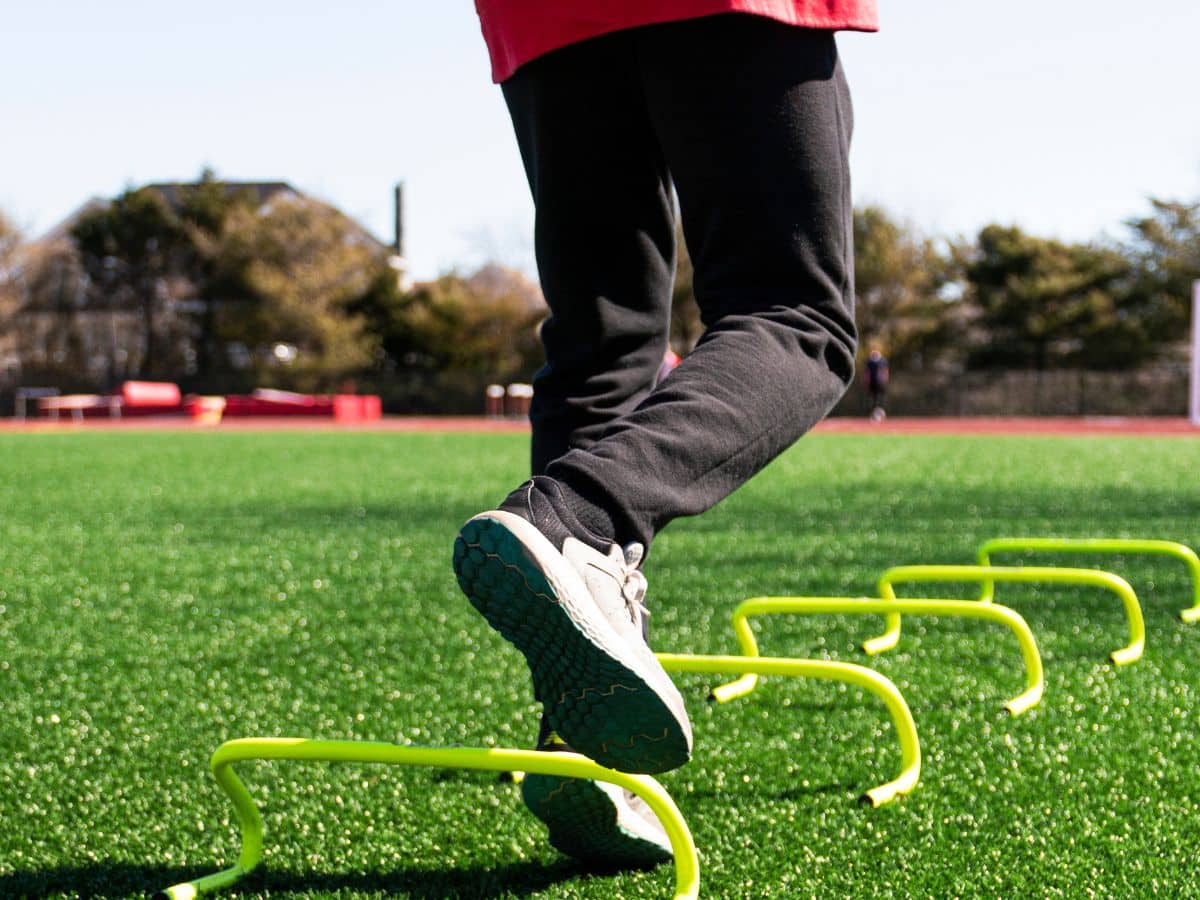
Agility progressions may include:
- Forward and backward running
- Side shuffles
- Carioca drills
- Cone drills
- Cutting at planned angles
- Unplanned change-of-direction drills
- Reaction drills
- Defensive movement patterns
- Position-specific footwork
The athlete should progress from planned movement to reactive movement.
Planned drills are useful, but sport is unpredictable. An athlete must eventually be able to react to a ball, opponent, teammate, coach cue, or changing game situation.
8. Sport-Specific Skill Checklist
Sport-specific skill work is one of the most important parts of return to sport.
Rehab exercises build the foundation, but the athlete still needs to practice the actual skills their sport requires.
This may include:
- Throwing progressions for baseball or softball players
- Kicking progressions for soccer players
- Shooting and defensive drills for basketball players
- Serving and overhead work for volleyball or tennis athletes
- Stick handling and skating drills for hockey players
- Sprinting and cutting for field athletes
- Running progressions for runners
- Lifting progressions for strength athletes
- Contact preparation for collision sports
The goal is to move from general rehab to sport-specific demand.
An athlete should usually progress through stages such as:
- Basic movement
- Controlled drills
- Sport-specific drills
- Non-contact practice
- Controlled contact or higher-intensity practice
- Full practice
- Limited competition
- Full competition
The exact progression depends on the sport, injury, and athlete.
9. Conditioning and Workload Checklist
An athlete also needs conditioning and workload tolerance.
This is where many returns go wrong.
The athlete may be strong enough for a few drills but not conditioned enough for a full practice, tournament, game, match, meet, or season. When fatigue builds, movement quality may decline and symptoms may return.
Before full return, the athlete should be able to tolerate:
- Practice intensity
- Practice duration
- Repeated drills
- Sport-specific conditioning
- Back-to-back training days when relevant
- Warm-up and cool-down demands
- Position-specific workload
- Recovery between sessions
Workload should be rebuilt gradually.
Athletes should not go from rehab exercises twice per week directly into full games, tournaments, showcases, or high-volume practices.
The body needs time to adapt to the total workload.
10. Confidence and Psychological Readiness Checklist
Physical readiness is not the only factor.
Athletes also need confidence.
After an injury, it is common to feel hesitant, protective, or unsure. The athlete may avoid certain movements, favor the uninjured side, or hold back during drills because they do not fully trust the injured area.
Confidence matters because fear can change mechanics.
An athlete who is afraid to land on one leg may land stiffly or shift away from that side. An athlete who does not trust their knee may avoid cutting aggressively. A thrower who does not trust the shoulder may change arm slot or reduce velocity.
Before returning to full sport, the athlete should be able to say:
- I trust the injured area during sport-specific movements.
- I do not hesitate during key movements.
- I feel confident progressing intensity.
- I understand what symptoms are acceptable and what symptoms are not.
- I know how to manage workload and recovery.
- I have practiced the movements I need for my sport.
Psychological readiness does not mean the athlete has no nerves at all.
It means fear is not significantly changing movement, effort, or decision-making.
Common Return-to-Sport Mistakes
Returning to sport is exciting, but mistakes during this stage can increase the risk of setbacks.
Here are some of the most common issues.
Returning Just Because Pain Is Gone
Pain relief is not the same as readiness.
If the athlete has not rebuilt strength, control, power, conditioning, and sport-specific capacity, returning too soon can be risky.
Returning Based Only on Time
Timelines can be helpful, but they should not be the only deciding factor.
Two athletes can be the same number of weeks from injury or surgery and have very different levels of readiness.
Criteria matter more than the calendar alone.
Skipping Plyometrics, Sprinting, Throwing, Cutting, or Contact Progressions
If the sport requires a demand, rehab should eventually prepare the athlete for that demand.
A soccer player needs cutting and kicking. A basketball player needs jumping and landing. A baseball player needs throwing progressions. A football player needs contact preparation. A runner needs mileage and intensity progression.
Skipping these steps can leave a gap between rehab and sport.
Going From PT Exercises Straight to Competition
Clinic exercises are not the same as competition.
Competition adds speed, fatigue, pressure, unpredictability, and decision-making.
Athletes should usually progress through controlled practice before full competition.
Ignoring Fatigue
Movement quality often changes under fatigue.
An athlete may look strong early in a session but lose control later. Return-to-sport testing and progression should consider how the athlete moves when tired.
Not Monitoring Symptoms After Return
Return to sport is not a single moment.
It is a process.
Even after returning, athletes should monitor pain, swelling, soreness, fatigue, performance, and confidence. A small adjustment early can prevent a bigger setback later.
How Physical Therapy Helps With Return to Sport
Physical therapy can play a major role in return-to-sport planning.
The goal is not only to reduce pain. The goal is to prepare the athlete for the real demands of their sport.
A return-to-sport focused physical therapy plan may include:
- Strength testing
- Range of motion assessment
- Balance and control testing
- Jump and hop testing
- Landing mechanics assessment
- Running analysis
- Throwing or overhead movement assessment
- Agility and change-of-direction progression
- Sport-specific drills
- Workload planning
- Communication with coaches, parents, trainers, or physicians when appropriate
Physical therapy can also help the athlete understand what is normal during return and what is not.
Some soreness may be expected as activity increases. Sharp pain, swelling, worsening symptoms, instability, or recurring flare-ups should be addressed.
The right plan helps the athlete progress without guessing.

A Practical Return to Sport Checklist
Every athlete should be evaluated individually, but the following checklist can help guide the conversation.
Before returning to full sport, ask:
- Is pain well controlled during and after activity?
- Is swelling absent or well managed?
- Has range of motion been restored for sport demands?
- Is strength comparable enough for the demands of the sport?
- Can the athlete perform single-leg tasks with control?
- Can the athlete jump, land, and absorb force safely if the sport requires it?
- Can the athlete decelerate and change direction if needed?
- Has speed work been progressed gradually?
- Has sport-specific skill work been reintroduced?
- Can the athlete tolerate full practice demands before full competition?
- Does movement quality hold up under fatigue?
- Does the athlete trust the injured area?
- Is there a plan for workload progression after return?
- Does the athlete know what symptoms should be monitored?
If several of these answers are no, the athlete may not be fully ready yet.
That does not mean they are failing. It means there is still a gap to close.
Return to Sport After Surgery
Returning after surgery often requires even more structure.
Post-surgical athletes may have tissue healing timelines, surgeon protocols, strength deficits, mobility limitations, swelling, and confidence barriers to address.
Common examples include:
- ACL reconstruction
- Meniscus repair
- Labral repair
- Rotator cuff repair
- Shoulder stabilization surgery
- Achilles repair
- Hip arthroscopy
- Fracture fixation
After surgery, returning to sport should be coordinated with the medical team and based on objective progress.
The athlete may feel ready before the body is actually prepared for full sport load.
That is why strength testing, functional progression, workload planning, and sport-specific criteria are so important.
Return to Sport After a Non-Surgical Injury
Non-surgical injuries also need a structured return.
Muscle strains, tendon pain, ankle sprains, shoulder pain, back pain, hip pain, and overuse injuries can all return if the athlete jumps back too quickly.
Just because an injury did not require surgery does not mean the athlete can skip progressive loading.
For non-surgical injuries, return to sport should still include:
- Symptom monitoring
- Strength rebuilding
- Mobility restoration when needed
- Sport-specific drills
- Gradual workload progression
- Confidence building
- Recovery planning
The goal is to return with more capacity than the athlete had when symptoms started.
How Parents and Coaches Can Help
Parents and coaches play an important role in return to sport.
Athletes may underreport symptoms because they do not want to miss games, lose playing time, disappoint teammates, or appear weak.
Parents and coaches can help by watching for signs such as:
- Limping
- Favoring one side
- Reduced effort
- Loss of speed or power
- Hesitation during drills
- Changing mechanics
- Swelling after activity
- Recurring complaints after practice
- Athlete avoiding certain movements
The goal is not to hold athletes back unnecessarily.
The goal is to help them return in a way that supports long-term performance.
The Bottom Line on a Return to Sport Checklist
A return to sport checklist helps athletes know whether they are truly ready after physical therapy.
Returning should not be based only on pain being gone, a certain number of weeks passing, or completing basic rehab exercises.
Athletes need to show that they can handle the strength, speed, impact, fatigue, confidence, and sport-specific demands of full play.
A complete return-to-sport plan should consider pain response, range of motion, strength, power, control, landing mechanics, agility, sport-specific skills, conditioning, workload tolerance, and psychological readiness.
The goal is not just to get back.
The goal is to stay back, perform well, and reduce the risk of another setback.
Need Help Returning to Sport After Physical Therapy?
At Next Level Physical Therapy, we help athletes bridge the gap between rehab and performance with sport-specific testing, progressive loading, movement assessment, and return-to-play planning.
Our approach goes beyond basic exercises. We look at the demands of your sport and help build the strength, control, confidence, and workload tolerance needed to return safely.
If you are unsure whether you or your athlete is ready for full practice or competition, our team can help guide the next step.