If you spend any time in the fitness or rehab world, you have probably heard the terms mobility and flexibility used interchangeably. Many people assume they mean the same thing. Stretching routines, mobility drills, warmups, and recovery work are often grouped together under the same umbrella.
But mobility and flexibility are not the same thing. In fact, understanding the difference between the two can completely change how you approach training, injury prevention, and long-term movement health.
For athletes and active adults especially, confusing mobility with flexibility can lead to ineffective training strategies, lingering movement limitations, and even recurring pain.
In this article, we will break down mobility vs flexibility, explain what each term actually means, and show why the difference matters for strength, performance, and injury prevention.

Why People Confuse Mobility and Flexibility
The confusion between mobility and flexibility mostly comes from how these terms are used in everyday conversation. Many fitness programs label stretching routines as mobility work. Athletes might say they need to “improve mobility” when they really mean they feel tight.
While these concepts are related, they describe very different abilities within the body.
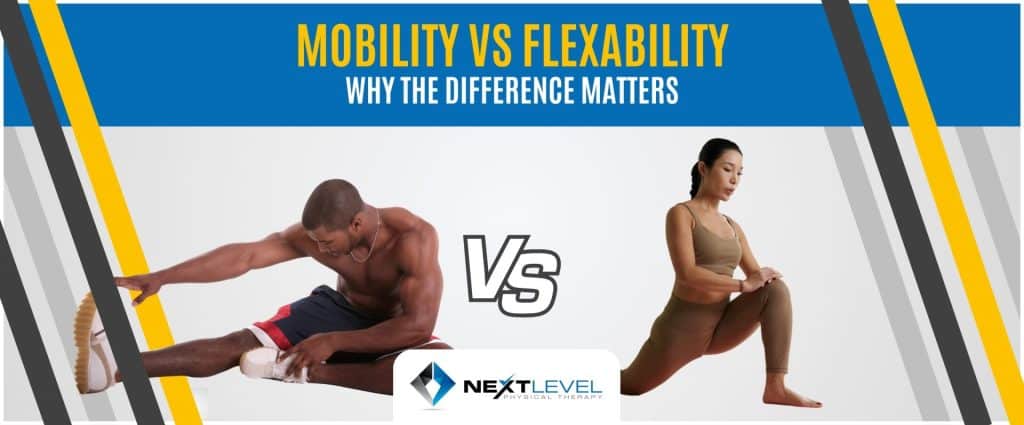
Flexibility refers to the ability of a muscle to lengthen.
Mobility refers to the ability of a joint to move through a full range of motion with control.
In other words, flexibility is about passive tissue length. Mobility is about active movement.
This distinction may sound small, but it has major implications for how the body moves and performs.
What Flexibility Actually Means
Flexibility describes how much a muscle can lengthen when an external force is applied. This usually occurs during static stretching, where a muscle is gradually lengthened and held in a stretched position.
A classic example is a hamstring stretch where someone sits on the floor and reaches toward their toes. In this case, the hamstrings are being lengthened passively.
Flexibility can be influenced by several factors including:
- Muscle tissue elasticity
- Connective tissue properties
- Nervous system tolerance to stretch
- Joint structure
Improving flexibility can allow muscles to lengthen more comfortably. However, flexibility alone does not guarantee that the body can use that range of motion effectively during movement.
What Mobility Actually Means
Mobility refers to the ability to actively move a joint through its available range of motion while maintaining control and stability.
This means that mobility involves not only flexibility but also strength, coordination, and neuromuscular control.
For example, someone may have enough hamstring flexibility to touch their toes during a stretch. But if they cannot control that range of motion while performing a squat or hinge movement, their mobility may still be limited.
Mobility requires the muscles surrounding a joint to work together to create and control movement. This makes mobility a much more functional measure of movement capacity.
Why Flexibility Alone Doesn’t Solve Movement Problems
Many people try to address movement limitations by stretching alone. While stretching can temporarily increase flexibility, it does not automatically improve how the body moves during dynamic activity.
This is because movement requires more than just muscle length.
The body must coordinate multiple joints, stabilize certain segments, and generate force through others. Without strength and control, newly gained flexibility may not translate into better movement.
In some cases, excessive focus on stretching can even create instability if flexibility increases without the strength needed to support it.
This is one reason why athletes who stretch frequently may still feel stiff or restricted during training.
Why Mobility Requires Strength and Control
True mobility involves the ability to actively control joint positions throughout movement.
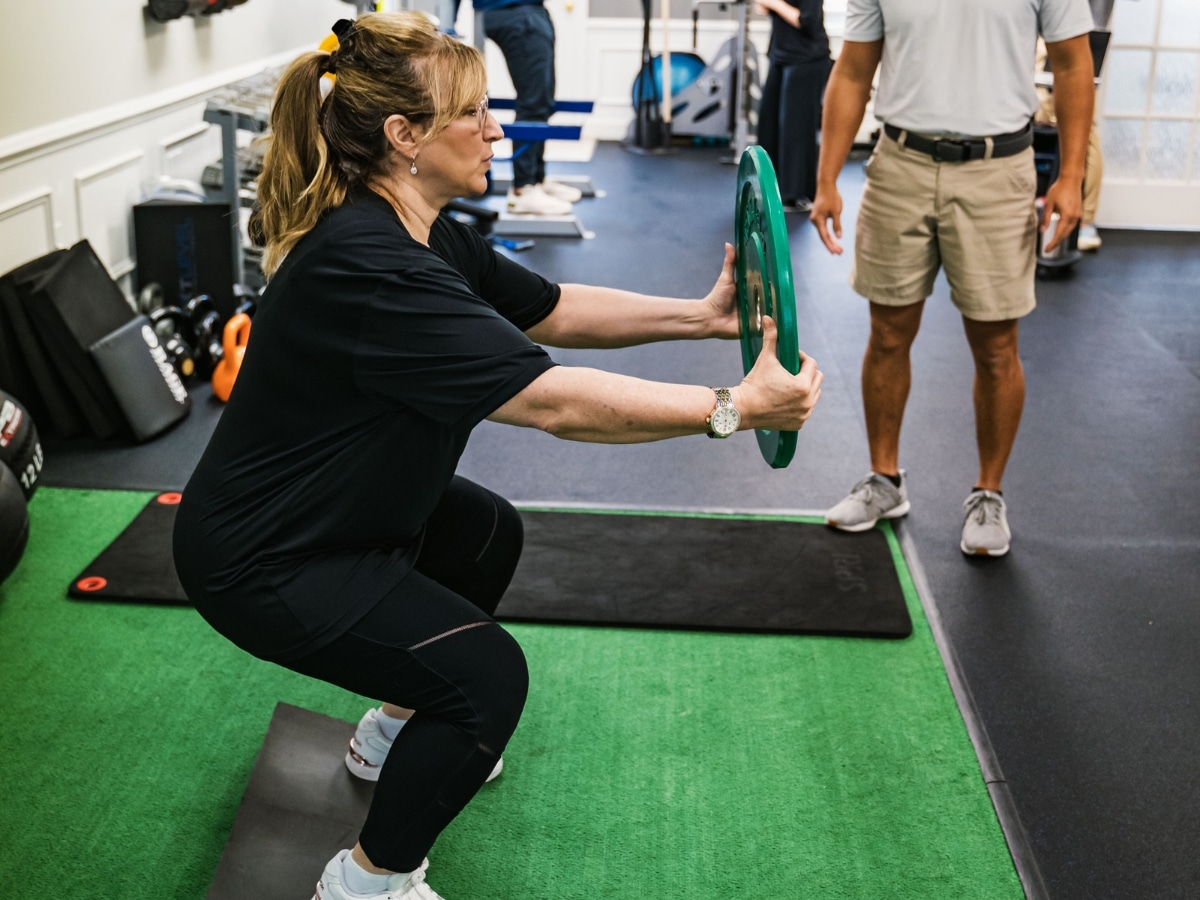
Think about a deep squat. To perform this movement well, the hips, knees, and ankles must all move through a coordinated range of motion. At the same time, the core and surrounding muscles must stabilize the body.
This requires a balance of mobility and strength.
If someone only has flexibility without strength, they may be able to reach the bottom position passively but struggle to control it during loaded movements.
Mobility training focuses on building this active control so the body can access and stabilize larger ranges of motion safely.
How Limited Mobility Can Lead to Pain or Injury
When mobility is restricted, the body often compensates by shifting stress to other joints or tissues.
For example, limited hip mobility can force the lower back to move more than it should during bending or rotational movements. Over time, this extra stress can contribute to discomfort or injury.
Similarly, limited ankle mobility may affect squat mechanics, running stride, or landing patterns during sports.
These compensation patterns often develop gradually and may not become noticeable until pain or performance limitations appear.
Why Athletes Need Both Mobility and Flexibility
While mobility plays a major role in movement quality, flexibility still has an important place in overall physical preparation.
Muscles must have adequate length to allow joints to move through their intended ranges of motion. If flexibility is extremely limited, mobility may be difficult to develop.
The key is understanding that flexibility alone is not the goal. Instead, flexibility should support the development of controlled mobility.
For athletes, this means combining stretching with strength and movement training that teaches the body how to use those ranges effectively.
Common Training Mistakes People Make
One of the most common mistakes people make when trying to improve movement is focusing entirely on stretching routines.
Long static stretching sessions may feel productive, but without integrating strength and movement work, improvements may not carry over into real-world activities.
Another common mistake is chasing extreme ranges of motion that are unnecessary for the individual’s goals.
Most people do not need gymnast-level flexibility to move well. Instead, they need balanced mobility that supports the activities they perform most often.
Targeted mobility work paired with strength training tends to produce more lasting improvements in movement quality.
Simple Ways to Improve Mobility the Right Way
If your goal is to move better and reduce the risk of injury, a balanced approach that integrates flexibility and mobility is ideal.
This often includes:
- Dynamic warmups that move joints through active ranges
- Strength training through full ranges of motion
- Mobility drills that challenge stability and coordination
- Strategic stretching when true flexibility limitations exist
Rather than viewing stretching as the solution to all movement limitations, mobility training focuses on improving how the body moves as a complete system.
Understanding Mobility vs Flexibility Can Change Your Training
Understanding the difference between mobility and flexibility can reshape how you approach training, warmups, and recovery.
Flexibility allows muscles to lengthen. Mobility allows joints to move through those ranges with strength and control.
Both play a role in healthy movement, but mobility ultimately determines how well the body performs during real activities.
When training programs emphasize controlled movement rather than passive stretching alone, the body becomes more resilient, more adaptable, and better prepared for the demands of sport and daily life.
And that is why the difference between mobility and flexibility truly matters.