

PT exercises for lower back pain can be extremely helpful, but the best exercises are not the same for everyone.
That is one of the biggest misunderstandings about back pain.
When your lower back hurts, it is natural to search for one stretch, one core exercise, or one routine that will finally fix it. But lower back pain can come from many different movement patterns, sensitivities, strength limitations, mobility restrictions, and loading issues.
That means an exercise that helps one person may irritate another.
Some people need to restore motion. Some need to build strength. Some need better hip mobility. Some need more trunk control. Some need to stop protecting the back so much and gradually rebuild confidence with movement. Others need a more specific plan because pain keeps returning every time they lift, run, sit, or train.
The best physical therapy exercises for lower back pain are the ones that match what your body actually needs.
In this article, we will break down what PT exercises for lower back pain should accomplish, which exercise categories are commonly helpful, what movements may need to be modified, and when back pain exercises are not enough on their own.
Why Lower Back Pain Exercises Are Not One-Size-Fits-All
Lower back pain is common, but it is not always caused by the same thing.
One person may feel better when bending forward. Another may feel better when extending backward. One person may have pain after sitting all day. Another may only feel pain during deadlifts, running, golf, or standing for long periods.
This matters because the right exercise depends on the pattern.
If someone is sensitive to bending, forcing repeated forward folds may make symptoms worse. If someone is afraid to bend but actually needs to restore spinal flexion, avoiding all bending may keep the problem going. If someone lacks hip mobility, the lower back may compensate during squats or hinges. If someone lacks trunk strength, the back may become irritated when lifting or carrying.
This is why generic lists of lower back pain exercises can be limited.
The question is not just, “What exercise is good for back pain?”
The better question is, “What does this person’s back need to tolerate movement better?”
What PT Exercises for Lower Back Pain Should Do
Physical therapy exercises should not only chase temporary pain relief.
Good PT exercises for lower back pain should help the body move better, tolerate more stress, and return to normal activity with more confidence.
Depending on the person, lower back pain exercises may help:
- Calm symptoms
- Restore comfortable movement
- Improve hip mobility
- Improve spinal mobility
- Build trunk strength and control
- Strengthen the glutes, hamstrings, and hips
- Improve lifting mechanics
- Increase walking and activity tolerance
- Reduce fear around movement
- Build confidence with bending, lifting, running, or training
The goal is not to make the back fragile or overly protected.
The goal is to help the back become more capable.
Best PT Exercise Categories for Lower Back Pain
The best PT exercises for lower back pain usually fall into a few major categories.
Not everyone needs every category, and the order matters. Some people need to start with gentle movement and symptom control. Others may need strength and loading much sooner.
Breathing and Positioning Drills
Breathing and positioning drills can help reduce tension, improve rib cage movement, and restore a better sense of control through the trunk.
These exercises are especially helpful for people who feel guarded, stiff, or constantly braced.
Lower back pain often causes people to hold tension. They may brace all day, avoid movement, or breathe shallowly because they are trying to protect the painful area. That can make the back feel even more restricted.
Breathing drills can help the body relax enough to move again.
Gentle Spinal Mobility
Some lower back pain improves when the spine is exposed to gentle, controlled movement.
This does not mean forcing painful ranges. It means gradually restoring comfortable motion so the back does not remain stiff, guarded, or fearful.
Mobility exercises may include flexion, extension, rotation, or side-bending depending on what the person tolerates best.
Hip Mobility
The hips and lower back work closely together.
If the hips do not move well, the lower back often compensates during squatting, hinging, running, sitting, standing, or sports.
Improving hip mobility can reduce unnecessary stress on the lower back by giving the body more movement options.
Core Control
Core exercises for lower back pain should not only be about making the abs burn.
The trunk needs to control movement, transfer force, and support the spine during activity. That includes resisting excessive motion, coordinating with the hips and rib cage, and staying strong under load.
Core control is less about holding a plank forever and more about helping the body manage real movement.
Glute and Posterior Chain Strengthening
The glutes, hamstrings, and posterior chain help support lifting, running, standing, and athletic movement.
When these areas are underprepared, the lower back may take on more work than it should.
Strengthening the hips and posterior chain can help the body distribute load more effectively.
Loaded Carries
Loaded carries are often overlooked in lower back rehab.
They train the trunk, hips, grip, shoulders, and posture while the body is moving. Carries can help build real-world strength because life often requires carrying, walking, lifting, and controlling load at the same time.
Squat and Hinge Retraining
Many people with lower back pain become afraid to squat, bend, or lift.
But avoiding these movements forever is rarely the answer.
Instead, PT often focuses on relearning how to squat and hinge with better control, confidence, and gradual loading.
Walking and Graded Movement Exposure
Walking is one of the simplest and most useful tools for many people with lower back pain.
It helps restore rhythm, circulation, movement confidence, and activity tolerance.
For some people, a walking progression is just as important as a specific exercise routine.
Best PT Exercises for Lower Back Pain
The following exercises are commonly used in physical therapy for lower back pain.
They are not a universal prescription. If an exercise increases sharp pain, worsens symptoms, or causes symptoms to travel down the leg, it may not be the right choice for you at that stage.
Start with movements that feel tolerable and controlled.
1. 90/90 Breathing
90/90 breathing can help reduce excessive tension and improve trunk positioning.
To perform it, lie on your back with your feet on a wall, hips and knees bent around 90 degrees. Gently breathe in through the nose and exhale slowly, allowing the ribs to move down and the back to settle toward the floor.
This drill can be helpful for people who feel constantly tight through the lower back or struggle to relax their trunk.
Why it helps:
- Encourages rib cage movement
- Reduces excessive bracing
- Improves trunk awareness
- Creates a gentle starting point for movement
This is not about forcing the back flat. It is about breathing, control, and reducing unnecessary tension.
2. Cat-Cow
Cat-cow is a gentle spinal mobility exercise.
Start on your hands and knees. Slowly round your back upward, then gently arch the spine in the opposite direction. Move within a comfortable range.
Why it helps:
- Restores gentle spinal motion
- Helps reduce guarding
- Improves awareness of flexion and extension
- Can be modified based on comfort
Cat-cow should feel smooth and controlled. Avoid pushing into pain or forcing the end ranges.
3. Child’s Pose Breathing or Rock Backs
Child’s pose breathing and rock backs can help some people gently explore spinal flexion, hip motion, and breathing.
Start on your hands and knees, then gently rock your hips back toward your heels. You can stay there and breathe, or move in and out of the position slowly.
Why it helps:
- Encourages gentle lower back and hip movement
- Can reduce protective tension
- Helps connect breathing with motion
- Provides a low-load mobility option
This exercise is not right for everyone. If bending forward increases symptoms significantly, it may need to be modified.
4. Open Books
Open books help improve thoracic rotation and rib cage mobility.
Lie on your side with your knees bent and stacked. Reach both arms forward, then slowly rotate the top arm across your body while keeping the knees together.
Why it helps:
- Improves upper-back rotation
- Reduces compensation through the lower back
- Encourages rib cage mobility
- Helps people who feel stiff through the trunk
Lower back pain is not always caused by the lower back. Sometimes the back is compensating for limited motion above or below it.
5. Hip Flexor Rock Back or Half-Kneeling Hip Mobility
Hip mobility can be important for lower back pain, especially when stiffness in the hips changes how the pelvis and spine move.
A half-kneeling hip mobility drill can help improve hip extension while encouraging trunk control. Start in a half-kneeling position, gently shift forward, and focus on feeling motion through the front of the hip without arching the lower back excessively.
Why it helps:
- Improves hip extension
- Reduces lower back compensation
- Supports better walking, running, and lifting mechanics
- Helps connect hip motion with trunk control
The key is not to crank into the stretch. Keep the movement controlled and avoid using the lower back to fake hip motion.
6. Dead Bugs
Dead bugs are a core control exercise that trains the trunk to stay stable while the arms and legs move.
Lie on your back with your arms reaching toward the ceiling and hips and knees bent. Slowly lower one arm and the opposite leg while keeping the trunk controlled, then return to the starting position.
Why it helps:
- Builds trunk control
- Improves coordination between arms, legs, and core
- Teaches the body to resist excessive extension
- Can be scaled easily
If the lower back arches or symptoms increase, reduce the range of motion or start with only the arms or legs.
7. Bird Dogs
Bird dogs train trunk control, hip stability, and coordination.
Start on hands and knees. Reach one arm forward and the opposite leg back while keeping the trunk steady. Return slowly and repeat on the other side.
Why it helps:
- Improves trunk stability
- Challenges hip and shoulder coordination
- Builds control without heavy loading
- Supports better movement awareness
The goal is not to lift the leg as high as possible. Keep the movement controlled and avoid rotating the pelvis or arching the lower back.
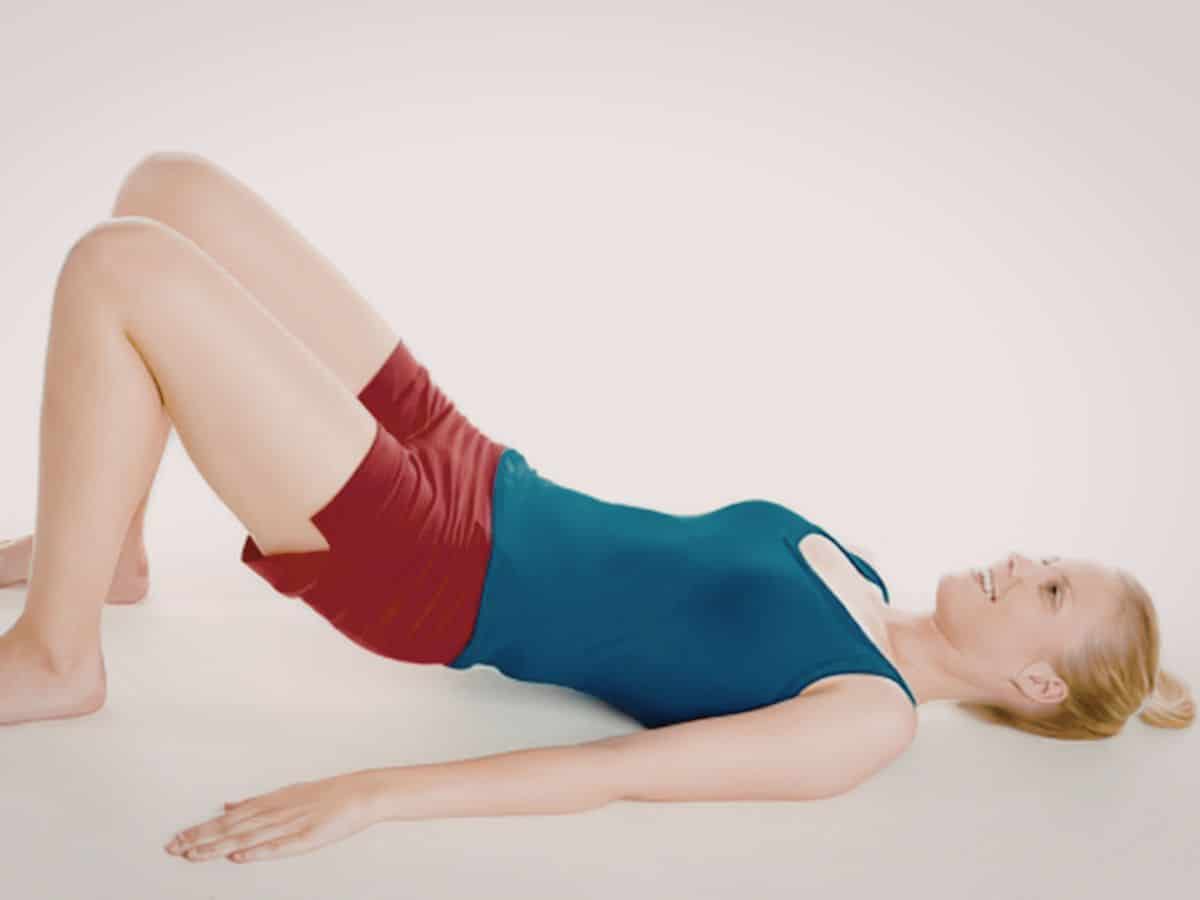
8. Glute Bridges
Glute bridges help strengthen the hips and posterior chain.
Lie on your back with your knees bent and feet on the floor. Push through your feet and lift your hips, then lower with control.
Why it helps:
- Strengthens the glutes
- Builds hip extension capacity
- Can reduce over-reliance on the lower back
- Provides a simple entry point to posterior chain strengthening
If you feel this mostly in the lower back, adjust the setup. You may need to focus on rib position, foot pressure, or a smaller range of motion.
9. Side Planks
Side planks train lateral trunk strength and hip control.
They can be started from the knees and progressed to the feet as strength improves.
Why it helps:
- Strengthens the side body and trunk
- Improves hip and pelvis control
- Supports walking, running, and single-leg mechanics
- Builds endurance without repeated spinal movement
Side planks should be challenging but controlled. Avoid letting the hips sag or the shoulder shrug.
10. Pallof Press
The Pallof press is an anti-rotation exercise that trains the trunk to resist unwanted movement.
Using a band or cable, stand sideways to the anchor point, hold the handle at your chest, then press your hands forward without letting your body rotate.
Why it helps:
- Improves trunk control
- Trains anti-rotation strength
- Supports lifting, carrying, and athletic movement
- Can be progressed easily
This exercise is especially useful for people whose back pain is aggravated by twisting, uneven loading, or poor trunk control.
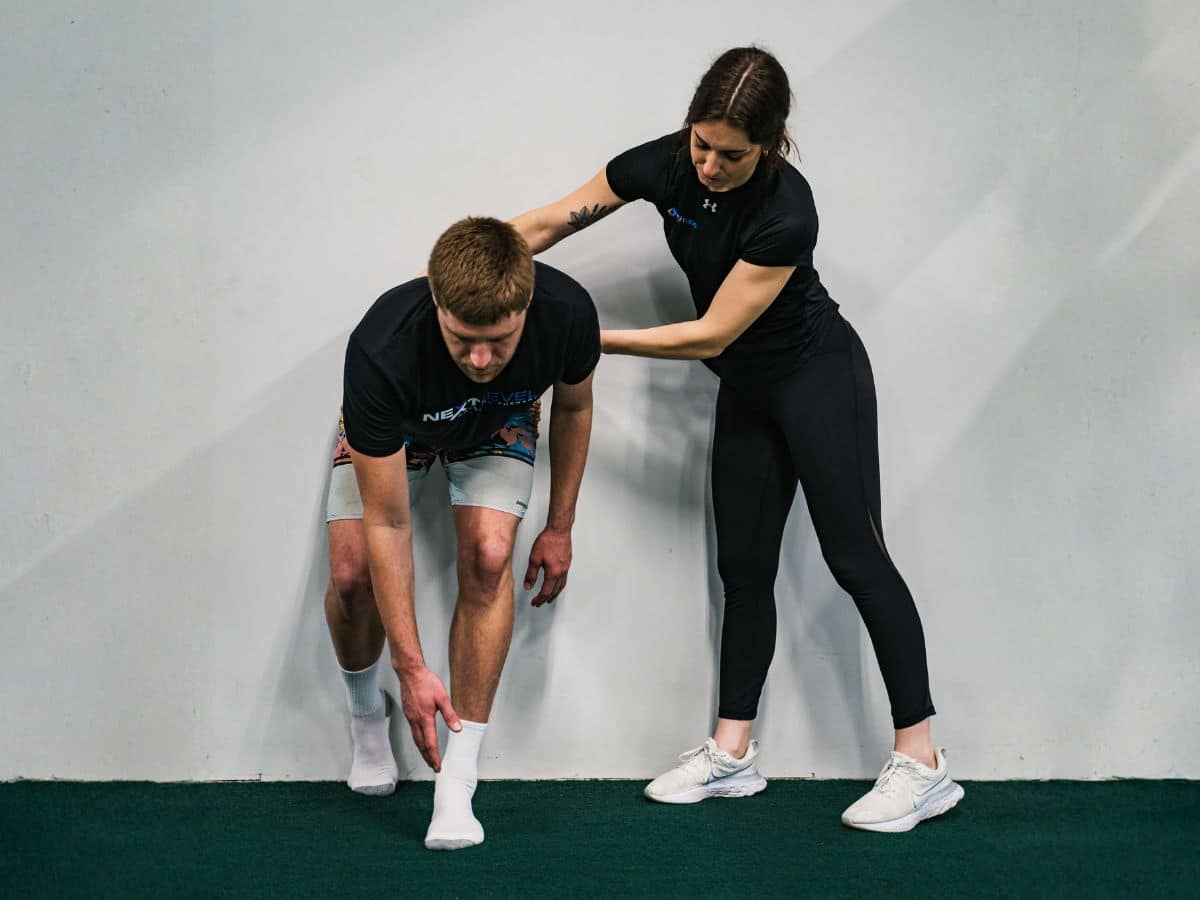
11. Hip Hinge Practice
The hip hinge is one of the most important movement patterns for lower back health.
Many people with lower back pain either avoid bending completely or bend mostly through the spine because the hips are not contributing well.
To practice a hip hinge, stand tall and push the hips back while keeping the trunk controlled. A dowel along the back can help teach the movement.
Why it helps:
- Teaches better bending mechanics
- Improves hip contribution
- Prepares for lifting and daily tasks
- Builds confidence with forward movement
The goal is not to avoid spinal motion forever. The goal is to learn how to use the hips and trunk together so the lower back is not overloaded.
12. Split Squats
Split squats build lower-body strength, hip control, and single-leg capacity.
Start in a staggered stance and lower slowly into a comfortable range, then return to standing.
Why it helps:
- Strengthens the legs and hips
- Improves single-leg control
- Challenges trunk stability
- Supports stairs, walking, running, and lifting
Split squats can be modified by holding onto support, reducing depth, or starting with bodyweight.
13. Farmer Carries
Farmer carries train the trunk, hips, grip, shoulders, and walking mechanics under load.
Hold weights at your sides and walk with control.
Why it helps:
- Builds real-world strength
- Improves trunk endurance
- Trains posture under load
- Supports lifting and carrying demands
Start light enough that you can walk without leaning, bracing excessively, or changing your gait.
14. Walking Progression
Walking is often underrated for lower back pain.
For many people, walking helps reduce stiffness, restore movement confidence, and gradually build activity tolerance.
Why it helps:
- Encourages gentle spinal and hip movement
- Improves circulation
- Builds confidence with activity
- Supports recovery without excessive load
If walking is painful, start with shorter distances and build gradually. The goal is to find a tolerable dose and progress over time.
What Exercises Should You Avoid With Lower Back Pain?
There is no universal list of exercises that everyone with lower back pain must avoid.
This is important.
Some people are told to avoid bending, twisting, lifting, running, squatting, deadlifting, or arching forever. But many of those movements are normal parts of life and training.
The issue is not always the movement itself. The issue is whether your body can tolerate it right now.
In general, you may need to temporarily avoid or modify exercises that:
- Create sharp pain
- Cause symptoms to travel down the leg
- Worsen pain as you continue
- Lead to a major flare-up afterward
- Feel unstable or uncontrolled
- Require more load than you can currently tolerate
That does not mean those movements are bad forever.
It may simply mean they need to be regressed, modified, or reintroduced gradually.
Why Passive Relief Is Not Enough
Heat, massage, stretching, foam rolling, and rest may help symptoms feel better temporarily.
But passive relief alone often does not solve the reason lower back pain keeps returning.
If the body lacks strength, mobility, control, or load tolerance, symptoms may come back when normal activity resumes.
This is why physical therapy often combines symptom relief with active exercise.
The goal is not just to feel better for a few hours. The goal is to help the body handle more movement and stress over time.
When Back Pain Exercises Are Not Enough
Lower back pain exercises can be helpful, but they are not always enough on their own.
You may need a more individualized assessment if:
- Pain keeps returning despite doing exercises
- Symptoms travel down the leg
- You have numbness, tingling, or weakness
- Pain affects walking, sleep, or daily life
- You cannot sit, stand, lift, or train without symptoms
- You are unsure which exercises help or hurt
- You keep having flare-ups after workouts
- Back pain has changed how you move
These signs do not always mean something serious is wrong, but they do suggest that guessing may not be the best strategy.
A physical therapist can help identify which movements your back tolerates, what your body is avoiding, and how to build a plan that progresses safely.
How Physical Therapy Helps Lower Back Pain
Physical therapy for lower back pain should start with understanding the person, not just the diagnosis.
A good assessment may look at:
- How your symptoms started
- Which movements help or worsen pain
- Hip mobility
- Spinal mobility
- Strength and control
- Squat and hinge mechanics
- Walking and daily movement patterns
- Training habits
- Work demands
- Previous injuries
From there, the plan should be built around what you need.
For some people, that may mean restoring motion. For others, it may mean building strength. Some people need to learn how to bend and lift confidently again. Others need help returning to running, sports, or gym training.
Physical therapy can also help identify directional preferences.
A directional preference means your back feels better with certain types of movement. Some people feel better with extension-based exercises. Others feel better with flexion-based exercises. Others need rotation, walking, or strengthening more than repeated mobility work.
This is one reason individual assessment matters.
How to Progress Lower Back Pain Exercises
Exercise progression matters.
Many people start with gentle exercises and either stop there forever or jump too quickly into heavy activity.
A better plan usually progresses in stages.
Stage 1: Calm Symptoms
Early exercises should help you move without increasing irritation.
This may include breathing drills, gentle mobility, walking, and low-load core control.
Stage 2: Restore Motion
Once symptoms are calmer, the goal is to improve movement options.
This may include hip mobility, spinal mobility, thoracic rotation, and controlled bending or extension depending on your pattern.
Stage 3: Build Strength
Strength helps the back tolerate more stress.
This may include bridges, dead bugs, bird dogs, split squats, rows, hinges, carries, and progressive lower-body strengthening.
Stage 4: Rebuild Load Tolerance
Eventually, the body needs to handle real tasks again.
This could include lifting, running, carrying, squatting, deadlifting, golf, sports, or long workdays.
Gradual exposure helps the back become more confident and capable.
Stage 5: Return to Normal Activity
The final goal is not just less pain. It is getting back to life, training, and activity without constantly worrying about the back.
This stage should be specific to your goals.
The Bottom Line on PT Exercises for Lower Back Pain
PT exercises for lower back pain can improve mobility, strength, control, and confidence.
But the best exercise plan depends on the person.
Some backs need gentle mobility. Some need stronger hips. Some need better trunk control. Some need walking and graded exposure. Some need help learning how to bend, lift, and train again without fear.
The right exercises should help your body tolerate more, not just provide temporary relief.
If your back pain keeps returning, worsens with certain movements, or limits your ability to stay active, an individualized assessment can help you stop guessing and start progressing.
Need Help With Lower Back Pain?
At Next Level Physical Therapy, we help active adults and athletes address lower back pain by identifying the deeper movement, strength, mobility, and loading factors that contribute to symptoms.
Our approach goes beyond generic back pain exercises. We build a plan around how your body moves, what your back can tolerate, and what you need to return to daily life, training, or sport with confidence.
If lower back pain is keeping you from moving, lifting, running, or staying active, our team can help guide the process.


