Stretching is something most of us do, but have we ever stopped to think about why. Usually the logic is simple. The muscle feels tight, so we stretch it. If a muscle is tight because it is shortened, stretching it to make it longer makes sense.
But what if the reason a muscle feels tight has nothing to do with it actually being shortened. If that is the case, how effective is stretching really.
Let’s use the hamstrings as an example to explain this idea more clearly.
And do not worry. At the end of this article, We will still show you our top three exercises to fix “tight” hamstrings.
Why Everyone Thinks Their Hamstrings Are Tight
Almost everyone believes they have tight hamstrings, and almost everyone stretches them.
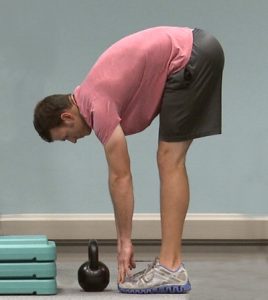
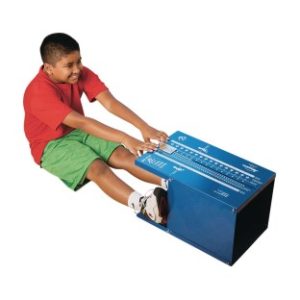
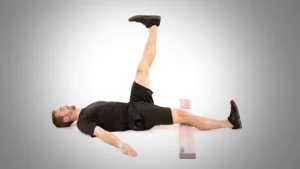
Common ways hamstrings are assessed include the active straight leg raise and the toe touch. Many of us also remember the sit and reach test from physical education class growing up.
If you could not lift your leg high enough, touch your toes, or reach far down the ruler, you were told you had tight hamstrings and needed to stretch them.
But just because something feels tight does not mean stretching is the solution.
How many people have stretched their hamstrings consistently and seen little to no lasting change. If stretching does not change anything long term, maybe the hamstrings are not actually shortened and stretching is not the answer.
A common response is, “But I really feel tension in the back of my leg when I try to touch my toes or when my leg is lifted.”
That feeling is real. The tension is real. The reason for it is just often misunderstood.
To understand why, we need to talk about position.
Understanding Hamstring Anatomy
The hamstrings originate at the ischial tuberosity of the pelvis, often referred to as the sit bone. They cross the knee joint and attach to the tibia and fibula in the lower leg.
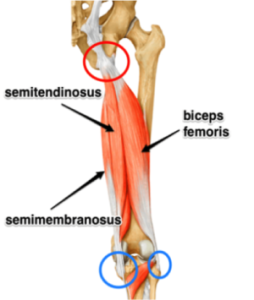
An easy way to visualize the hamstrings is to think of them like a rubber band running from the pelvis down to the back of the lower leg.
When you lift your leg during a straight leg raise, the hamstrings are lengthened and tension increases. However, because the hamstrings attach to the pelvis, the position of the pelvis plays a major role in how much tension is already present.
Pelvis Position Changes Everything
Now let’s talk about pelvic position.
If someone stands, sits, or lies down in an anterior pelvic tilt, the pelvis is tipped forward. When the pelvis is tipped forward, the hamstrings are already placed under tension.
In other words, the rubber band is already stretched before you even move.
So when you go to touch your toes or lift your leg, you feel tension much earlier. Your nervous system interprets this as approaching a limit and creates a protective response by stopping the movement.
This is not because the hamstrings are short. It is because they are already lengthened due to pelvic position.
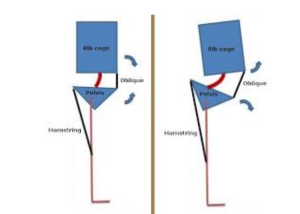
Figure 5 illustrates this clearly. With a neutral pelvis, the hamstrings sit at a more optimal resting length. With an anteriorly tilted pelvis, the hamstrings are visibly longer and already under tension.
When you then try to stretch further, your body says no.
Why Stretching Often Fails
If your hamstrings already feel stretched due to pelvic position, stretching them more does not solve the problem. In many cases, it simply reinforces the same limitation.
This is why some people can stretch daily and never see meaningful changes in flexibility.
Before forcing more stretching or having someone push you deeper into a toe touch, it is worth looking at position first.
If you improve pelvic alignment or get out of an overly extended posture, you may find that hamstring mobility improves without stretching at all. This often leads to better movement, less pain if pain is present, and reduced injury risk.
A Quick Disclaimer
This is not an argument that stretching is bad.
Stretching can improve tissue quality, elasticity, and durability. It absolutely has a place. However, if stretching has not improved your hamstring mobility, there is a good chance you are addressing the wrong problem.
Sometimes the solution is not to stretch harder, but to change position first.
If you want to learn how to do that, click below to see my top three exercises to fix “tight” hamstrings.