
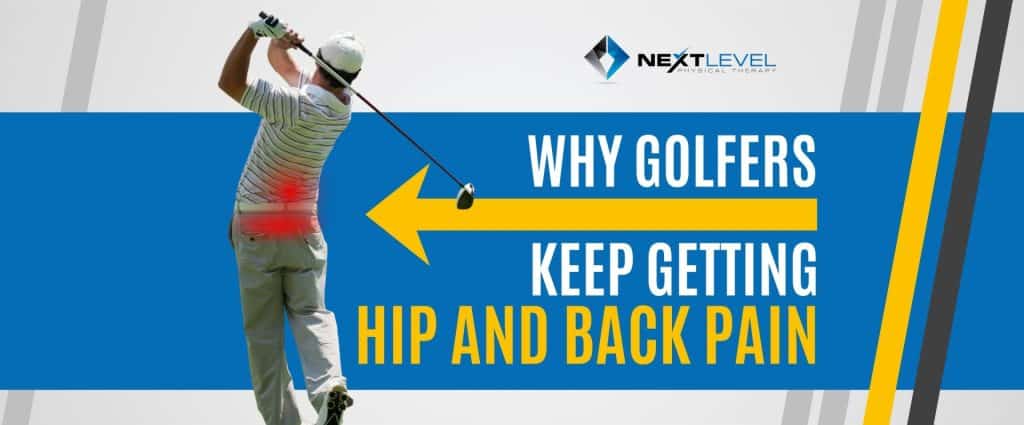
Golf is often described as a low-impact sport, but anyone who plays regularly knows how demanding it can be on the body. The golf swing is one of the most biomechanically complex movements in sports. It requires precise coordination, controlled rotation, force transfer, and timing across multiple segments of the body.
When everything connects, the swing feels effortless. The club moves fluidly. The ball launches cleanly. Power transfers smoothly from the ground through the body and into the clubface.
But when something in the system is off, the experience changes. The swing feels tight or forced. Distance drops. Accuracy suffers. And over time, pain develops. Most commonly, that pain shows up in the hips and lower back.
If you have been dealing with golf hip and back pain, it is natural to assume the issue lies in your swing mechanics. In reality, the problem often runs deeper.
This article will explain why golfers keep getting hip and back pain, why mobility drills and swing adjustments often fail to solve it, and how understanding your body’s movement patterns can create a more fluid, pain-free swing.

What Every Golfer Wants
Regardless of handicap, most golfers want the same things. They want to hit the ball farther. They want to hit it straighter. They want their swing to feel smooth and effortless rather than forced and mechanical.
At a physical level, this requires seamless coordination between the hips, spine, ribcage, shoulders, and lower extremities. The body must rotate in one direction during the backswing and reverse direction during the downswing, all while maintaining balance and transferring force efficiently.
For a right-handed golfer, this means:
- Rotating the trunk to the right during the backswing
- Shifting weight into the left hip during the downswing
- Transferring force cleanly through the lead leg
When the body can access these motions freely, the swing feels connected. When it cannot, compensation begins.
Why Golf Hip and Back Pain Is So Common
The repetitive rotational demands of golf make the hips and lower back especially vulnerable.
The hips are designed to rotate and absorb force. The spine is designed to provide stability while allowing controlled movement. When the hips move well, the spine does not have to compensate. When the hips are restricted, the lower back often takes on more stress than it should.
Over time, this added stress can result in stiffness, irritation, and recurring pain.
But restricted hip mobility is rarely just a local hip problem. It is often part of a larger movement pattern.
The Two Predictable Patterns That Limit Golfers
At Next Level, we view the body through the lens of movement patterns. While every person is unique, most people fall into one of two dominant tendencies that influence how they move and rotate.
These patterns are not random. They reflect how the human body is built and how it interacts with gravity.
The Right-Dominant Pattern
Human beings are inherently asymmetrical. Most people are right-handed. Internal organs are distributed unevenly. The diaphragm attaches more strongly on the right side. The right lung has three lobes while the left has two.
These asymmetries create a natural bias toward the right side of the body.
For golfers, especially right-handed golfers, this can become exaggerated over time.
When the right-dominant pattern becomes too pronounced, two key limitations often appear:
- Difficulty rotating the trunk to the right during the backswing
- Difficulty shifting into and rotating through the left hip during the downswing
If a right-handed golfer cannot rotate the trunk fully to the right, the body will find another way to complete the backswing. Often this means overextending through the lower back or forcing motion through the shoulders.
If that same golfer cannot access the left hip properly during the downswing, force transfer becomes inefficient. The lower back, knee, or other segments may absorb the extra stress.
Over time, this compensation pattern frequently leads to hip and back pain.
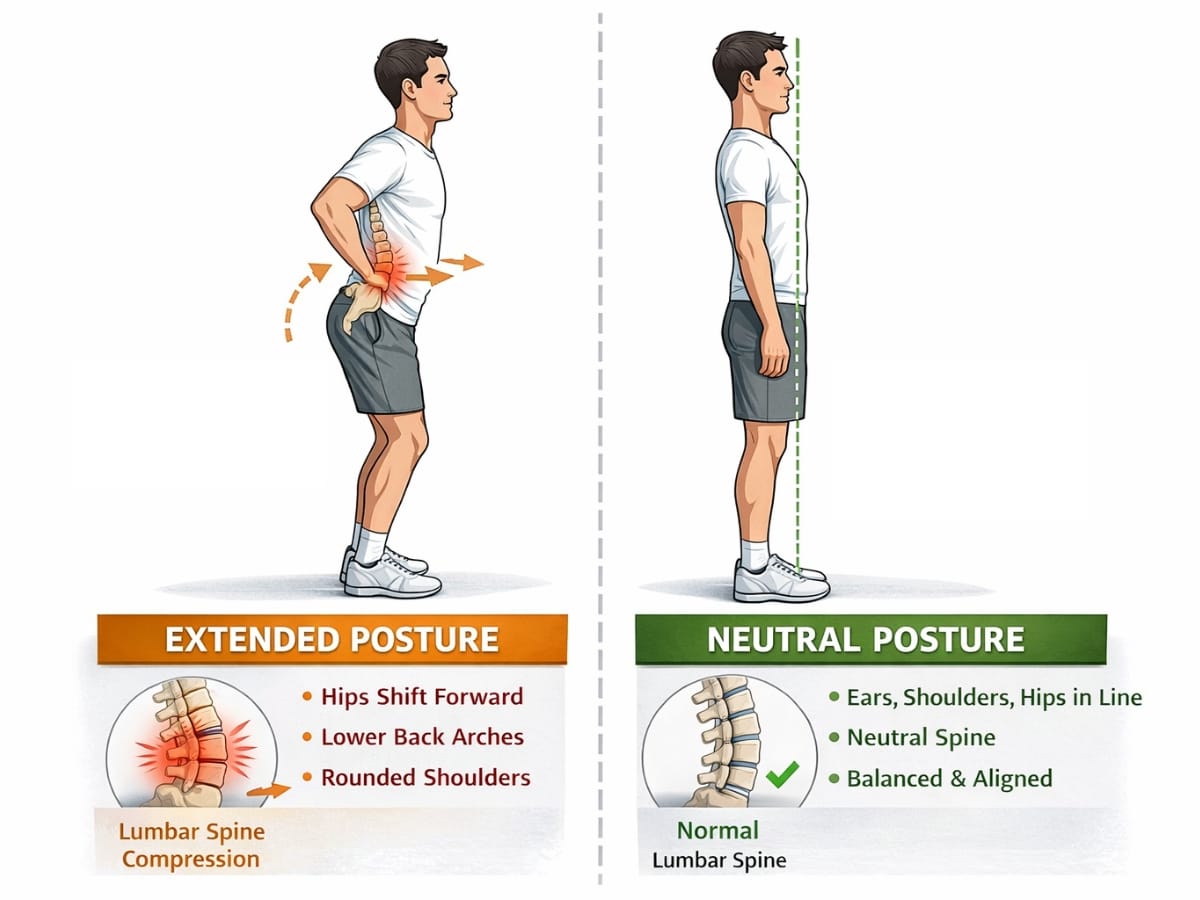
The Extended or Forward Pattern
The second common pattern is what we refer to as an extended or forward-driven pattern.
Many golfers develop this pattern long before they ever pick up a club. High-stress jobs, prolonged sitting, years of lifting, and other athletic backgrounds can all push the body into a forward-biased, extended posture.
In this position, the hips shift forward and the lower back compresses. The system becomes “jammed” into extension.
When the body is stuck in this pattern, rotational ability decreases significantly. The hips and spine lose access to smooth, controlled rotation.
But the task of swinging a golf club remains. So the body compensates.
Rotation may be forced through the lumbar spine. The knees may absorb more torsion than they should. The swing may feel powerful but rigid.
Eventually, pain develops.
Why Mobility Drills Alone Don’t Fix It
Most golfers who experience hip or back pain recognize that something feels tight. The natural response is to stretch the hips or work on thoracic mobility.
While mobility work can be helpful, it often fails to create lasting change because it does not address the underlying pattern.
If the body is stuck in a right-dominant or extended pattern, simply stretching the hips does not restore true rotational access. The system will often revert back to its default pattern under load.
This is why many golfers feel temporarily looser after stretching, only to experience the same limitations during the next round.
Why Swing Mechanics Alone Don’t Solve Golf Hip and Back Pain
Golf coaches play an essential role in refining technique. However, mechanics can only be improved if the body has access to the necessary motion.
If a golfer lacks the ability to rotate through the hips or trunk, no amount of cueing can fully correct the swing.
The body will always complete the task. If ideal mechanics are unavailable due to physical limitations, compensation becomes inevitable.
In these cases, working harder on swing drills may actually increase stress on already vulnerable tissues.
Why Assessment Matters More Than High-Tech Swing Analysis
It is tempting to believe that slow-motion video and advanced swing tracking are the key to solving golf-related pain.
While these tools can provide valuable insight, they often reveal the symptom rather than the cause.
In many cases, a thorough movement assessment performed on a treatment table can reveal more about why your swing is breaking down than a high-tech swing analysis.
By assessing hip rotation, trunk mobility, asymmetries, and breathing mechanics, it becomes possible to identify which pattern is limiting your movement.
Once that pattern is understood, intervention can become targeted and effective.
Fixing the Human First, Not Just the Swing
The key to reducing golf hip and back pain is not to abandon swing mechanics, but to address the body that produces the swing.
When the right-dominant pattern is balanced and the extended pattern is reduced, the system regains access to smooth rotation.
Force transfers more efficiently. The swing feels less forced. The hips absorb load appropriately. The spine no longer has to compensate.
This is why golfers often notice improvements in both pain and performance when deeper movement patterns are addressed.
What a More Effective Approach Looks Like
A more effective approach to golf-specific rehab focuses on identifying:
- Which dominant pattern you are stuck in
- Where rotational access is limited
- How force is being compensated during your swing
- Which segments are absorbing stress unnecessarily
From there, targeted interventions can restore balance and motion in the system.
This is not about generic stretching or strengthening. It is about restoring the prerequisites that allow mechanics to improve naturally.
Golf Should Feel Effortless
When your body moves well, the golf swing feels fluid and coordinated. You are not forcing rotation. You are not guarding against pain. You are not trying to protect a stiff hip or sensitive back.
The club moves because your body allows it to move.
If you keep dealing with golf hip and back pain, it is worth looking beyond the swing itself.
Often, the real issue is not a technical flaw. It is a predictable movement pattern that has limited your ability to rotate and transfer force.
Fix the pattern, and the swing can follow.
Moving Toward a Pain-Free, Fluid Swing
Golf is one of the most beautiful biomechanical sports because it demands so much coordination. When the system works together, it feels effortless. When it does not, the stress shows up somewhere.
Understanding why golfers keep getting hip and back pain begins with understanding the body as a whole.
By addressing deeper movement patterns rather than chasing symptoms, you create the opportunity for a swing that is not only more powerful, but more sustainable.
And in the long run, that is what every golfer wants.


