

ACL injury recovery is often framed as a checklist. Regain your range of motion. Build strength. Pass return-to-sport testing. Get cleared and move on.
But if ACL recovery were that simple, re-tear rates would not be as high as they are. Athletes would not consistently report feeling “off” months or even years after surgery.
If you are recovering from an ACL injury, especially after reconstruction surgery, understanding one commonly overlooked factor can make the difference between simply returning to activity and truly returning with confidence and control.

ACL Injury Recovery Is About More Than Strength and Straight-Line Motion
One of the most common misconceptions in ACL injury recovery is that the knee is simply a hinge joint. Bend it. Straighten it. Strengthen it.
While the knee does flex and extend, that is only part of the story. In real life and in sport, the knee functions as part of a complex system that includes the foot, ankle, hip, pelvis, and trunk.
To recover fully from an ACL injury, especially if your goal is returning to sport, you must appreciate the rotational components of knee motion and how those are influenced by joints above and below the knee.
The Knee Is Not Just a Hinge Joint
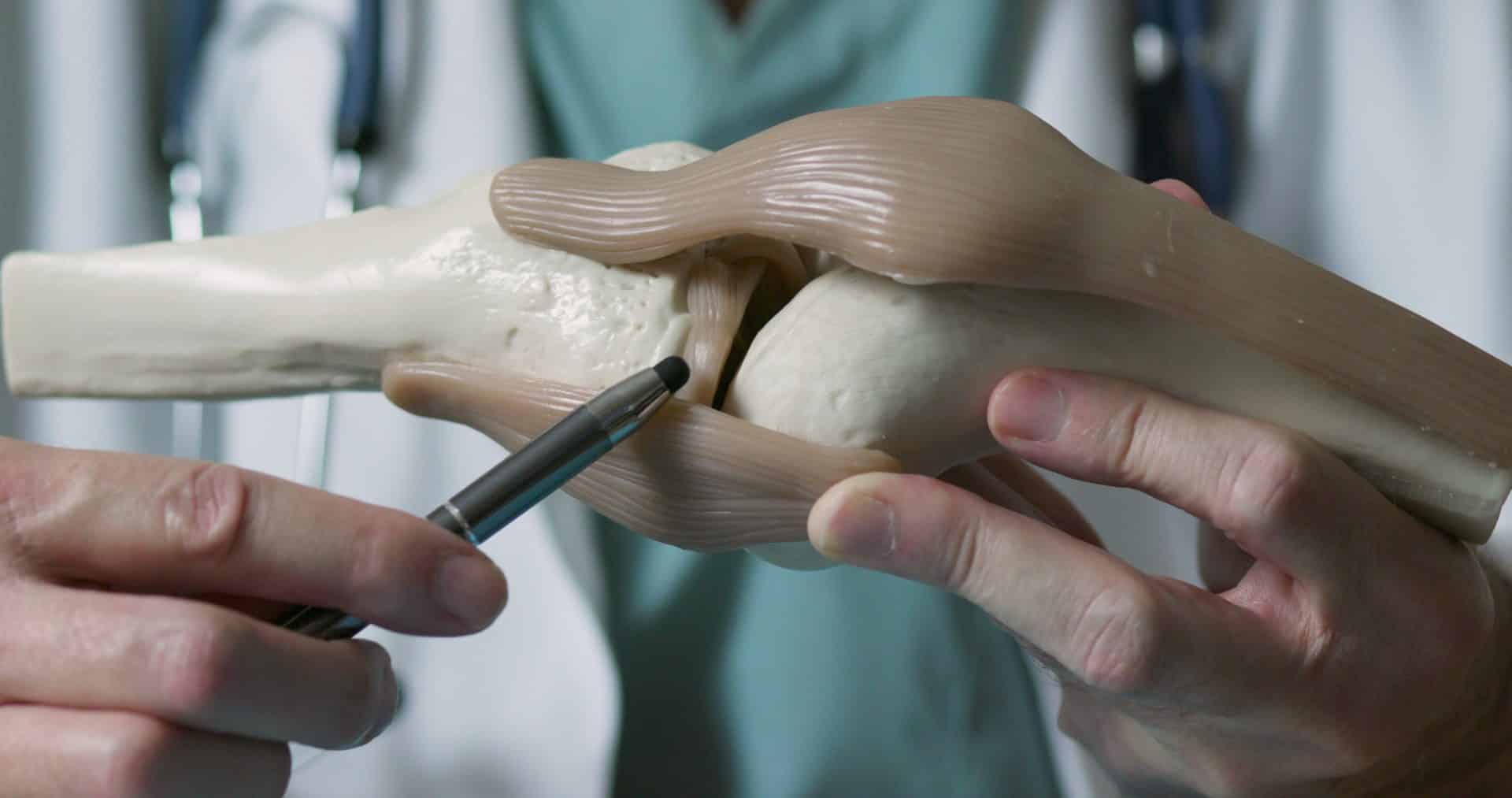
The knee is often categorized as a hinge joint because its most obvious movements are bending and straightening. However, the knee also relies on subtle but critically important rotational movements.
As the knee bends, the tibia naturally rotates internally relative to the femur. As the knee straightens, especially near full extension, the tibia rotates externally.
This rotation is not optional. It is built into how the knee is designed to move.
Why Non-Contact ACL Injuries Happen So Often
Many ACL injuries occur without direct contact. An athlete plants their foot, changes direction, or lands from a jump, and the knee gives way.
These injuries often occur when the knee is forced to absorb rotational forces that should have been shared by the hip and ankle.
When those joints cannot contribute effectively, the knee takes on more motion and load than it is designed to handle.
The Knee as the “Middle Child” of the Lower Body
The knee is best thought of as a joint that responds to what is happening above and below it.
The foot, ankle, and hip dictate how forces travel through the leg. If those joints are not moving or controlling motion well, the knee adapts.
This matters during ACL injury recovery because the knee is ideally a stable joint, not the primary source of rotation.
The Joint-by-Joint Approach to ACL Injury Recovery
The joint-by-joint approach helps explain why ACL rehab often breaks down.
- Foot: primarily stable
- Ankle: needs mobility
- Knee: needs stability
- Hip: needs mobility
- Lumbar spine: needs stability
- Thoracic spine: needs mobility
When mobility is lost at the ankle or hip, the knee often compensates.
Why Losing Hip and Ankle Mobility Matters After ACL Surgery
After ACL reconstruction surgery, many people focus exclusively on the knee. While understandable, this often creates blind spots.
If hip mobility is limited, especially rotational mobility, the body still needs to rotate somewhere. The knee often becomes the path of least resistance.
The same is true when ankle mobility is limited.
Tibial Internal Rotation: The Most Overlooked Factor in ACL Injury Recovery
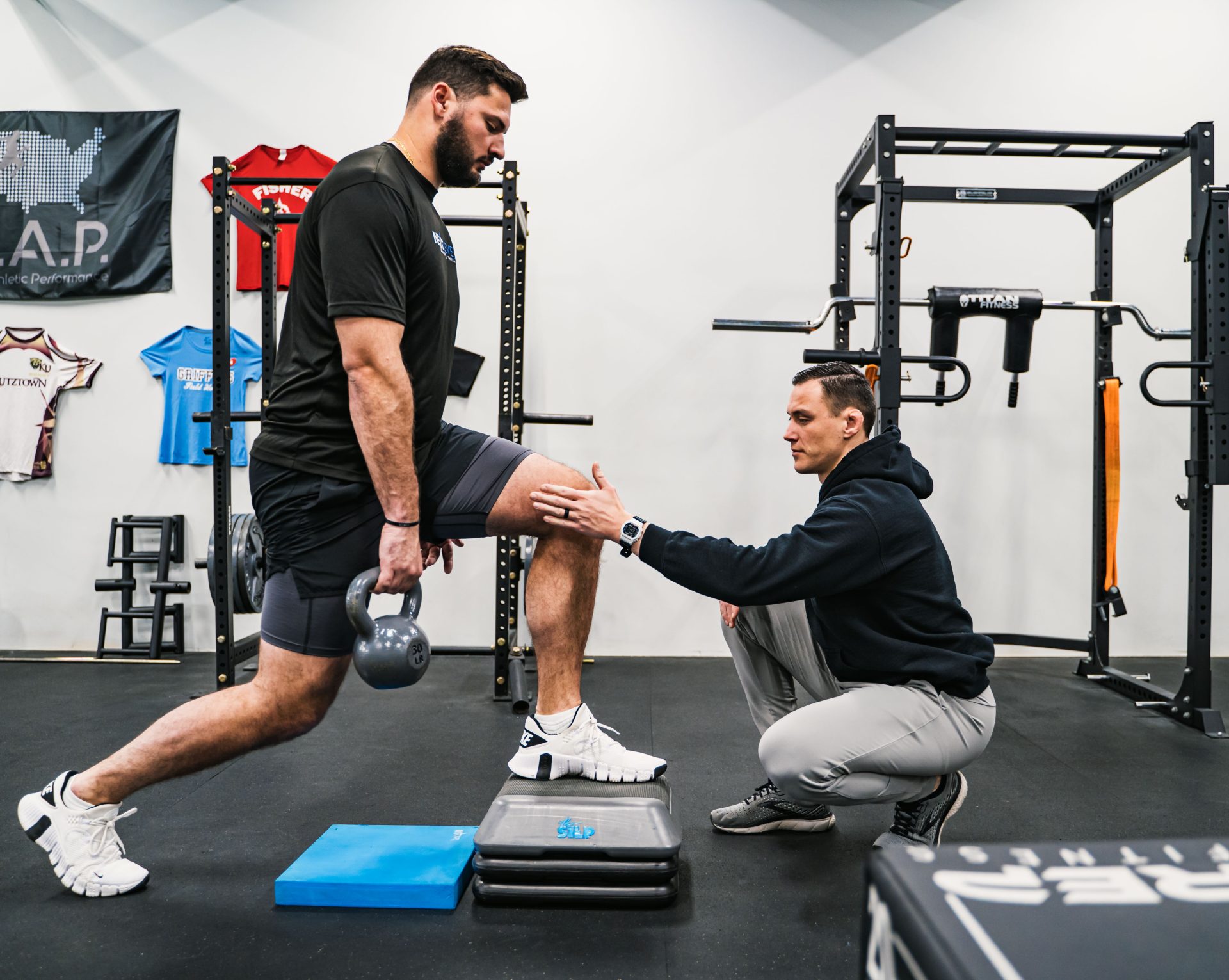
One of the most commonly missed components of ACL injury recovery after surgery is tibial internal rotation.
Tibial internal rotation refers to the ability of the lower leg to rotate inward relative to the femur.
After ACL reconstruction, many people lose this motion due to surgical changes, stiffness, or protective movement patterns.
How Loss of Tibial Internal Rotation Affects Knee Function
When tibial internal rotation is limited:
- Knee flexion often feels stiff
- Squatting and decelerating feel awkward
- Cutting and pivoting feel unstable
More importantly, the knee loses its ability to distribute forces efficiently.
Why Strength Alone Does Not Fix This Problem
Strength is important in ACL injury recovery, but it is not enough.
If the knee lacks passive rotational mobility, strengthening exercises will not restore it.
You cannot strengthen your way out of a joint motion restriction.
Why Tibial Internal Rotation Often Requires Hands-On Care
Unlike some mobility restrictions, tibial internal rotation deficits often require hands-on intervention.
This is especially true after ACL reconstruction, where joint mechanics may be altered.
Reinforcing Restored Motion Through Movement
Once tibial internal rotation is restored passively, it must be reinforced actively.
This involves controlled loading, specific positioning, and progressive exposure to rotational demands.
Returning to Sport After ACL Injury Requires Rotational Control
Returning to sport is not just about strength or straight-line running. Sport demands cutting, pivoting, and reacting to unpredictable forces.
All of these require controlled rotation through the lower body.
What to Do If You Are Recovering From an ACL Injury
If you are currently recovering from an ACL injury, consider asking:
- Has my hip and ankle mobility been assessed?
- Has tibial internal rotation been evaluated?
- Am I being prepared for rotational demands?
If not, important pieces of your recovery may be missing.
Final Thoughts on ACL Injury Recovery After Surgery
ACL injury recovery after surgery is complex. It requires more than timelines and protocols. The knee is not just a hinge joint. Rotation matters.
Tibial internal rotation is one of the most overlooked aspects of ACL rehab, and ignoring it can delay recovery and increase reinjury risk.
How Physical Therapy Can Help
Working with a physical therapist who understands the full demands of ACL injury recovery can make a meaningful difference.
A comprehensive approach that addresses hip mobility, ankle mobility, knee rotation, and movement control is critical for long-term success.
If you’re looking for expert help with your ACL recovery, don’t hesitate to reach out to our team at Next Level.


