What We Treat

Back pain
Knee pain
Hip pain
Shoulder pain
Head and Neck pain
Ankle and Foot pain
Elbow and Wrist pain

Find out more about how we connect the dots from the deepest root and eliminate your pain from the source.

What We Treat

Back pain
Knee pain
Hip pain
Shoulder pain
Head and Neck pain
Ankle and Foot pain
Elbow and Wrist pain

Find out more about how we connect the dots from the deepest root and eliminate your pain from the source.

What We Treat

Back pain
Knee pain
Hip pain
Shoulder pain
Head and Neck pain
Ankle and Foot pain
Elbow and Wrist pain

Find out more about how we connect the dots from the deepest root and eliminate your pain from the source.

What We Treat

Back pain
Knee pain
Hip pain
Shoulder pain
Head and Neck pain
Ankle and Foot pain
Elbow and Wrist pain

Find out more about how we connect the dots from the deepest root and eliminate your pain from the source.

What We Treat

Back pain
Knee pain
Hip pain
Shoulder pain
Head and Neck pain
Ankle and Foot pain
Elbow and Wrist pain

Find out more about how we connect the dots from the deepest root and eliminate your pain from the source.

What We Treat

Back pain
Knee pain
Hip pain
Shoulder pain
Head and Neck pain
Ankle and Foot pain
Elbow and Wrist pain

Find out more about how we connect the dots from the deepest root and eliminate your pain from the source.

What We Treat

Back pain
Knee pain
Hip pain
Shoulder pain
Head and Neck pain
Ankle and Foot pain
Elbow and Wrist pain

Find out more about how we connect the dots from the deepest root and eliminate your pain from the source.

The Only Way to
Long-Term Pain Relief

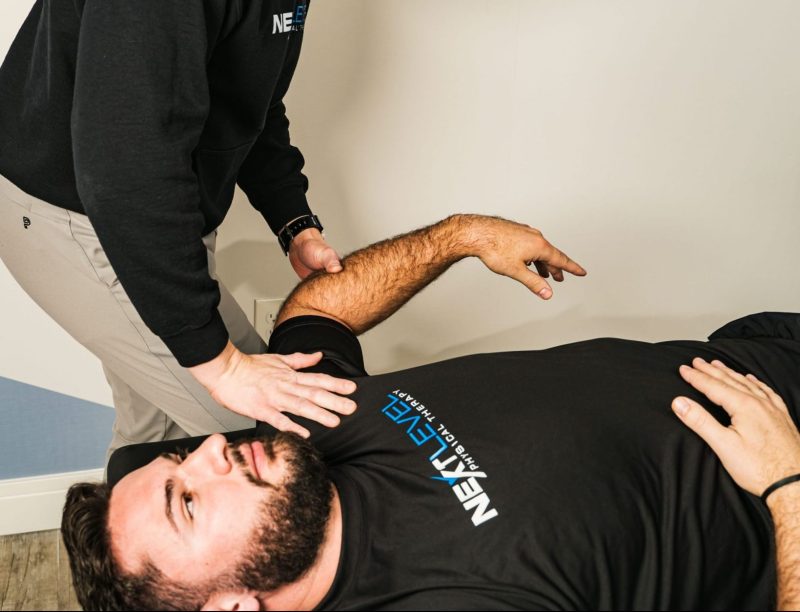
Shoulder pain often shows up when reaching overhead, lifting, pushing, pulling, or performing repetitive upper body movements. For some people it starts after a clear injury. For others it develops gradually from overuse, posture, or movement patterns that place excessive strain on the shoulder complex.

The shoulder relies heavily on coordination between the arm, shoulder blade, spine, and core. When mobility, strength, or control is lacking anywhere in that system, stress is often absorbed at the shoulder joint itself. This can lead to pain, weakness, or a feeling of instability over time.

At Next Level, we work with people who seek physical therapy for shoulder pain when symptoms linger, movement feels limited, or pain keeps returning despite rest or previous care. Our approach focuses on identifying why the shoulder is being overloaded and restoring the movement and control needed to support it.

Whether pain is sharp, aching, or activity dependent, effective treatment looks beyond the shoulder alone and addresses how the entire upper body works together.

Conditions Treated

  • Rotator Cuff Tear
  • Shoulder Impingement
  • Rotator Cuff Tendinitis
  • Frozen Shoulder
  • Shoulder Instability
  • Shoulder Dislocation
  • Biceps Tendinitis
  • Bursitis
  • Throwing Injuries
  • Scapular Dyskinesis
  • Scapular Winging
  • Muscle Strain and Sprain
  • Muscle Pain and Tightness
  • Thoracic Outlet Syndrome
  • Post Surgical Shoulder Pain
  • Recurrent Shoulder Pain
  • Overuse Shoulder Injuries
Pain-Free Secrets Guide 2.0
Our new guide dives deeper into the Next Level System, giving you clear, actionable strategies to eliminate pain, improve movement, and achieve lasting results.
Athlete's Guide
Unlock your full potential with our free guide for athletes. Learn how to move better, prevent injuries, and perform pain-free with the proven Next Level System.
End Back Pain Guide
Discover the proven steps to finally end back pain for good. This free guide reveals the root causes of pain and how to move, strengthen, and recover with confidence.
get rid of your shoulder pain for good

Are you ready to get to the root cause of your shoulder pain?

Take the first step into your pain-free life by clicking the button below.
`

BLOG

The #1 Missing Piece In Resolving Shoulder Pain
Are you Treating the Problem or The Result?  Shoulder problems are incredibly common among the athletes and active adults we see. As therapists, we regularly encounter diagnoses such as shoulder impingement, tendonitis, and rotator cuff injuries. These conditions are often blamed on weak rotator cuff muscles, scapular winging, or muscle imbalances. One major thing to understand about these diagnoses is that they are not the actual problem. They are the result. They are the result of deeper rooted movement habits and mechanics that often go unaddressed in traditional rehabilitation. Common solutions for these issues are often just as short sighted. Stretching, rotator cuff strengthening, and general strength training are frequently prescribed, yet they often miss the mark when it comes to truly resolving pain. Why? Because they address symptoms rather than the cause of the faulty mechanics, overuse of certain muscles, or positioning muscles in disadvantaged positions. To understand the biggest missing piece in resolving shoulder pain, we first need to understand how the shoulder actually works. A Quick Anatomy Lesson of the Shoulder Complex  The shoulder complex is made up of four major components: the glenohumeral joint, which is the ball and socket, the scapula or shoulder blade, the sternum and clavicle, and the rib cage. Shoulder movement in any direction requires rotation of the humeral head within the glenoid socket. Because the shoulder has so much freedom of movement, stability of the joint must be maintained. This is why every shoulder movement is accompanied by scapular movement. Since the socket of the shoulder joint is part of the scapula, its motion is essential for keeping the humeral head centered within the socket during movement. When the humeral head does not stay centered, issues such as shoulder impingement, proximal biceps tendonitis, and rotator cuff injuries can occur. For the shoulder to move well, the scapula must move in coordination with the humerus. The scapula has a natural curvature and sits on a rib cage that also has curvature due to normal thoracic spine shape. The rounded rib cage and curved scapula allow these structures to stay congruent and permit normal scapular rotation in support of shoulder movement. The position of the rib cage and its ability to expand properly to support the scapula is essential for normal shoulder motion without compensation. Rib Cage Position and Expansion  Under normal circumstances, the rib cage should be able to expand in all directions during breathing. With each inhale, the lower ribs should move outward in what is known as bucket handle motion, while the upper ribs and sternum move up and outward in a pump handle motion. The back side of the rib cage should demonstrate similar movement, particularly in the upper ribs. When the rib cage lacks these normal movements, scapular position and shoulder mobility are negatively affected. For example, when the back side of the upper rib cage becomes restricted or flattened due to chronic tension in the upper back, scapular movement becomes limited. A curved scapula resting on a flat surface cannot move or rotate the same way it would on a rounded, congruent rib cage. Without proper scapular movement, the shoulder either loses access to normal motion or must rely on compensatory mechanics. Repeatedly moving into ranges you do not truly have or compensating for restrictions is exactly what leads to repeated stress in the same tissues. This often shows up as shoulder impingement, biceps tendonitis, or gradual wear of the rotator cuff tendons. How Rib Cage Mechanics Are Lost Loss of normal rib cage mechanics is commonly seen in resistance training. Many gym movements emphasize pulling the shoulder blades back and down for stability. Whether pushing, pulling, squatting, or deadlifting, rib cage and scapular position often remain the same. A similar issue comes from the common advice to pull the shoulders back and down for good posture. Spending excessive time in a retracted scapular position limits normal scapular motion and flattens the upper rib cage. This forces the shoulder to compensate to achieve desired movements. The Solution To truly resolve shoulder pain, you must start at the source. While factors such as rotator cuff strength, dynamic stability, and local tissue irritation matter, they should not be addressed in isolation. If you do not resolve what led to these issues in the first place, you are simply treating symptoms. To improve shoulder joint mechanics and motion, proper scapular movement must be restored. Normal scapular movement depends on a rib cage that is positioned correctly and able to expand in all directions to provide a stable foundation. Once this foundation is in place, other components of shoulder rehabilitation can be addressed with much greater success. Below are 2 examples of drills to implement into your program to improve ribcage expansion: Seated Zercher Breathing Video [embed]https://www.youtube.com/watch?v=3CtDqIZnC_U[/embed] Seated Back Expansion Video  [embed]https://www.youtube.com/watch?v=24K6f7OMDXE[/embed]
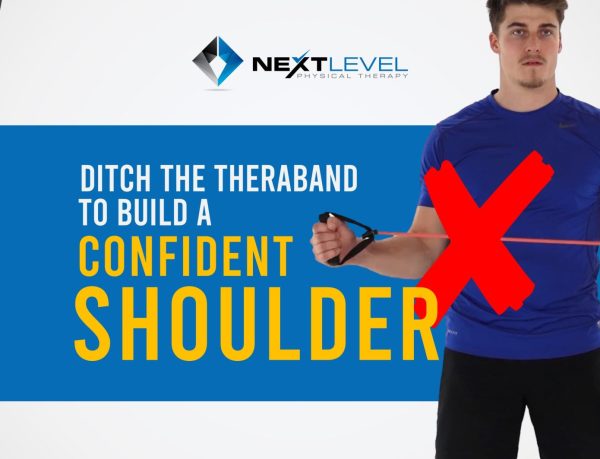
Why Resistance Bands Alone Are Not Enough for Shoulder Rehab
The shoulder is one of the most mobile joints in the body, which also makes it one of the most demanding. Whether you are lifting weights, throwing, pressing overhead, playing sports, or simply reaching into a cabinet, your shoulder needs strength, coordination, mobility, and stability to function well. When shoulder pain or injury develops, many people immediately think of resistance bands and light exercises. While bands absolutely have a place in rehabilitation, they are often only the starting point. If the goal is to build a shoulder that feels strong, stable, and confident under real-world demands, rehabilitation eventually needs to progress beyond lightweight band exercises. The key principle that guides effective rehabilitation is the SAID Principle, which stands for Specific Adaptations to Imposed Demands. Simply put, the body adapts to the specific demands placed upon it. What the SAID Principle Means for Shoulder Rehab If you perform enough aerobic exercise, your heart adapts by increasing the size and efficiency of the muscles in the left ventricle. This allows more blood to be pumped with each contraction, lowering resting heart rate over time. Sprinters develop increasingly stiff tendons as they train because those tendons become better at storing and releasing energy efficiently. The same principle applies during rehabilitation. When an injury occurs to a muscle, tendon, ligament, or another joint structure, it is often because that tissue experienced a level of stress that exceeded its ability to adapt positively. For example, when someone rolls their ankle unexpectedly, the ligaments and muscles on the outside of the ankle may become injured because the force happened too quickly and exceeded the tissue’s current tolerance. Meanwhile, there are martial artists who spend years gradually adapting their bodies to tolerate high compressive forces without injury. [caption id="" align="aligncenter" width="652"] Image 1: Despite this being Klay Thompson of the Golden State Warriors, my left ankle was in this same exact situation about a year ago.Source: https://i2.wp.com/b-reddy.org/wp-content/uploads/2016/07/klay-thompson-right-ankle-sprain.jpg?ssl=1[/caption] How This Applies to Shoulder Injuries If we want to restore shoulder function and help the joint tolerate increasing physical stress without negative adaptations like pain or injury, rehabilitation needs to apply the correct amount of stress. This is sometimes called the Goldilocks Principle of rehab: Too little stress will not create adaptation Too much stress can create setbacks The right amount creates progress The chart below is a useful way to visualize the relationship between training volume, intensity, and adaptation. Image 2: Volume vs intensity threshold for gaining an adaptation. (Joel Jamieson’s “Ultimate MMA Conditioning”) Why Resistance Bands Are Used in Physical Therapy Resistance tubing, often referred to by the commercial name Theraband, is one of the most common tools people associate with physical therapy. Despite the title of this article, resistance bands are not bad. For individuals in the early stages of shoulder rehabilitation, bands can be extremely useful because they: Provide lower levels of resistance Allow gradual reintroduction to movement Help restore confidence Improve awareness of shoulder position Create less joint stress during painful stages Bands can also provide valuable external feedback, helping people feel their shoulder move into different positions while restoring range of motion. Early on, that can be exactly what the shoulder needs. When Resistance Bands Stop Being Enough However, if the long-term goal is to build a shoulder that can tolerate lifting, pressing, throwing, sports, or daily physical demands, resistance bands alone are usually not enough. At some point, the shoulder needs progressively heavier loading to build: Strength Force production Load tolerance Stability under stress Confidence during movement The body adapts specifically to the demands placed upon it. If rehabilitation never progresses beyond low resistance exercises, the shoulder may never fully adapt to higher demand activities. This is one reason many people feel fine during rehab exercises but still experience pain or instability when returning to lifting, sports, or overhead activity. Best Shoulder Strengthening Exercises Beyond Bands Once basic shoulder motion and tolerance improve, exercises that involve greater loading and control can be extremely helpful. 1. Sidelying Kettlebell Arm Bar Sidelying Kettlebell Arm Bar Exercises like the kettlebell or dumbbell arm bar are excellent for retraining shoulder rotation with heavier loads while improving shoulder control. They also help retrain coordinated movement of the shoulder blade, allowing smoother and more controlled arm motion. 2. Hooklying Dumbbell Pullover Hooklying Dumbbell Pullover The hooklying dumbbell pullover is an effective way to improve overhead range of motion while simultaneously building strength through a large arc of movement. This exercise is commonly used to help people regain overhead motion without compensating through excessive lower back arching. It also builds confidence when holding weight overhead. 3. Staggered Stance Landmine Press Staggered Stance Landmine Press Landmine pressing is one of the most effective ways to progressively load the muscles around the shoulder while improving coordination between the ribcage and upper extremity. This variation can also be modified easily for athletes and active adults who are returning to pressing, throwing, or overhead training. How to Build a More Resilient Shoulder If you are returning from a shoulder injury, it is important to understand the purpose behind each exercise you choose. Not all rehabilitation needs to look like bands and two-pound weights. Your rehab program should eventually become challenging enough to prepare your shoulder for real-world demands. That means progressively building: Strength Control Confidence Movement tolerance Capacity under load The goal is not simply pain reduction. The goal is helping the shoulder tolerate the activities you actually want to return to. When to See a Physical Therapist for Shoulder Pain If your shoulder pain keeps returning despite rest, stretching, or band exercises, it may be time for a more structured rehab plan. You should consider working with a physical therapist if: You feel weak or unstable during lifting You cannot return to workouts comfortably You have pain during overhead movement Your shoulder feels unstable or unreliable You are recovering from a sports or gym injury A well-designed rehab program should gradually expose the shoulder to increasing demands while improving mobility, strength, coordination, and confidence. Frequently Asked Questions About Shoulder Rehab Are resistance bands good for shoulder rehab? Yes. Resistance bands can be extremely helpful during the early stages of shoulder rehabilitation because they provide lower resistance and allow gradual reintroduction to movement. Can resistance bands build shoulder strength? Bands can help build initial strength, but long-term shoulder resilience often requires progressively heavier loading using dumbbells, kettlebells, barbells, or other resistance methods. What are the best shoulder strengthening exercises? Some effective shoulder strengthening exercises include kettlebell arm bars, dumbbell pullovers, landmine presses, rows, carries, and progressive pressing variations. The best exercises depend on the individual and their goals. How do you build shoulder stability? Shoulder stability is developed by improving mobility, control, strength, coordination, and the ability to tolerate force through different positions. When should shoulder rehab progress beyond bands? Once pain decreases and the shoulder can tolerate basic movement, rehab should gradually progress toward exercises that involve greater loading and more real-world demands. Final Thoughts on Shoulder Rehab Resistance bands absolutely have a place in rehabilitation, but they are often only the first step. If the goal is to build a strong, resilient, and confident shoulder, rehabilitation eventually needs to include progressive loading and movements that prepare the body for real-world demands. The shoulder adapts to what it experiences. Make sure your rehabilitation is creating the adaptations your body actually needs. Need help rebuilding shoulder strength or returning to lifting after an injury? Request an appointment with Next Level Physical Therapy and get a plan designed around your goals, lifestyle, and training demands. References Farrell C, Turgeon DR. Normal Versus Chronic Adaptations To Aerobic Exercise. [Updated 2021 Jul 15]. In: StatPearls [Internet]. Treasure Island (FL): StatPearls Publishing; 2022 Jan-. Available from: https://www.ncbi.nlm.nih.gov/books/NBK572066/
What Is Scapular Dyskinesis? Why Your Shoulder Blade Is Not “Broken”
Shoulder pain is frustrating. Most people rely on healthy shoulder function every single day without even thinking about it. Getting dressed, showering, driving, lifting weights, doing pushups, throwing, writing, and even sleeping comfortably all depend on the shoulder working well. When shoulder pain develops, many people are told they have scapular dyskinesis, scapular instability, or scapular dysfunction. While those terms are commonly used, they can sometimes create unnecessary fear and confusion around how the body moves. If you have ever been told your shoulder blade movement is “abnormal” or “dysfunctional,” there is something important to understand: Your Scapula Is Not Broken That statement may sound surprising at first, but it matters because language strongly influences how people think about pain and movement. The word dysfunctional suggests that the body is damaged, fragile, or moving incorrectly. Unfortunately, this often leads people to become fearful of movement, avoid activity, and lose confidence in their shoulder. In reality, the body is adaptable. Just because a shoulder is not functioning the way someone wants does not automatically mean something is structurally wrong. Sometimes the shoulder simply lacks: Strength Mobility Coordination Movement variability Load tolerance Those are all things that can improve with the right approach. (his beard is filled with wisdom) What Is Scapular Dyskinesis? Scapular dyskinesis is a term used to describe altered movement of the shoulder blade, also called the scapula. The scapula plays a major role in shoulder movement because it helps position the shoulder socket during reaching, lifting, pressing, throwing, and overhead movement. When scapular movement changes, people may experience symptoms like: Shoulder pain Weakness with pressing or lifting Clicking or popping Pain with overhead movement Difficulty controlling the shoulder blade Fatigue during upper body exercise However, it is important to understand that different scapular movement patterns are extremely common, even in people without pain. There is not one perfect or universal way a scapula should move. Why Shoulder Blade Movement Matters To better understand scapular dyskinesis, it helps to understand basic shoulder anatomy. There are three major structures involved in shoulder movement: The ribcage The scapula (shoulder blade) The humerus (upper arm bone) The scapulothoracic joint exists between the ribcage and the scapula, while the glenohumeral joint connects the scapula and the humerus. The scapula contributes roughly 30 percent of total shoulder motion and functions as a floating joint with no direct bone-to-bone attachment to the rest of the body. The upper arm bone, or humerus, sits in a socket on the outer edge of the scapula. As the scapula moves, the socket moves with it, allowing the shoulder to orient itself in many different positions. This is what allows the hand to reach overhead, rotate, press, throw, and move freely through space. The shoulder has more range of motion than any other joint in the body. With greater available motion comes greater complexity and a higher demand for control. Shoulder Stability vs Shoulder Control This is where conversations about shoulder instability and scapular control usually begin. When most people hear the word “stability,” they think something is loose, weak, or unstable. In reality, shoulder stability is more about the ability to control movement and tolerate force through different positions. That distinction matters. Many shoulder rehab programs jump immediately into highly complex exercises like: BOSU pushups Reactive perturbation drills Band-resisted pressing Unstable surface exercises The intent behind these exercises is usually good, but the timing is often wrong. For someone already struggling with shoulder pain or poor shoulder control, adding excessive complexity too early can make progress inconsistent and frustrating. A Better Approach to Shoulder Rehab A more effective progression is usually much simpler. Step 1: Restore Passive Motion The shoulder first needs access to the positions it is supposed to move through. If mobility is limited, the body will compensate somewhere else. Step 2: Build Active Control Once motion improves, the next step is learning to actively control those positions. Step 3: Develop Strength After mobility and control improve, strength can be layered into those movement patterns. Step 4: Add Complexity Only after those foundations are established should highly variable or reactive exercises be introduced. For example, someone should not be performing unstable surface pushups until they can demonstrate consistent control with standard pushups first. A client should not perform any type of unstable surface pushup until they can clearly demonstrate twenty clean and consistent strict pushups first. Highly variable exercises may look advanced, but they belong at the top of the pyramid, not the bottom. Can Scapular Dyskinesis Cause Shoulder Pain? Sometimes altered scapular movement is associated with shoulder pain, but that does not mean it is automatically the cause. Shoulder pain is usually influenced by many factors, including: Strength deficits Mobility restrictions Training volume Recovery Stress Previous injury history Movement variability The goal should not be to create a “perfect” scapular movement pattern. The goal should be helping the shoulder tolerate movement, build confidence, and improve function. When to See a Physical Therapist for Shoulder Pain If you have been struggling to get your shoulders back to where you want them to be and feel like you have tried everything, returning to the basics and mastering them using this progression can make a significant difference. You should consider working with a physical therapist if: Your shoulder pain keeps returning You feel weak with lifting or pressing You avoid exercise because of fear or instability You cannot train or perform daily activities normally Your symptoms are worsening over time If this cannot be sorted out independently, working with a skilled professional who understands this process can be extremely valuable. There is nothing wrong with the shoulder. It is simply having difficulty managing complexity right now. Frequently Asked Questions About Scapular Dyskinesis What is scapular dyskinesis? Scapular dyskinesis refers to altered movement or positioning of the shoulder blade during arm movement. It is often associated with shoulder pain, weakness, or difficulty controlling overhead movement. Is scapular dyskinesis serious? Not necessarily. Many people have variations in scapular movement without pain or injury. The presence of scapular dyskinesis alone does not automatically mean something is damaged. Can scapular dyskinesis be fixed? Improving mobility, strength, coordination, and movement control can often help reduce symptoms associated with scapular dyskinesis. Treatment should focus on improving function rather than chasing “perfect” movement. What exercises help scapular control? Exercises that improve thoracic mobility, shoulder strength, scapular control, and overall movement coordination can help. The best exercise progression depends on the individual and their current limitations. Should I avoid exercise if I have scapular dyskinesis? Not usually. Avoiding movement entirely often leads to more weakness and reduced confidence. In most cases, modifying activity and following a progressive rehab plan is more beneficial than complete rest. Final Thoughts on Scapular Dyskinesis The shoulder is complex, adaptable, and capable of handling a tremendous amount of movement. Differences in scapular motion do not automatically mean something is broken or dysfunctional. Rather than chasing the idea of “perfect” movement, the focus should be on improving mobility, strength, control, confidence, and tolerance to activity. For many people, simplifying the process and rebuilding from the basics is what finally allows long-term progress to happen. Need help with shoulder pain or scapular instability? Request an appointment with Next Level Physical Therapy and get a plan designed around your goals, training demands, and lifestyle.
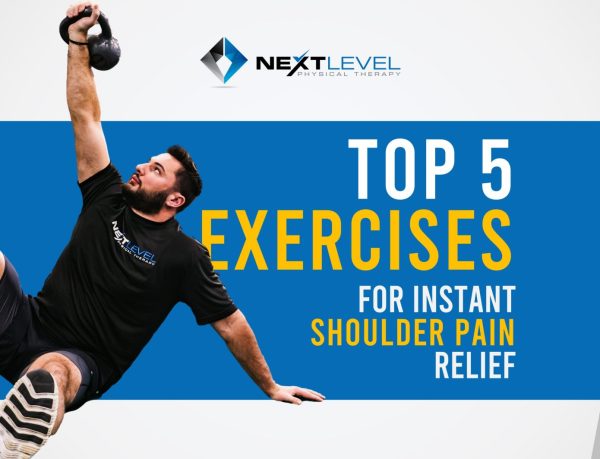
5 Shoulder Pain Exercises for Relief and Better Mobility
Shoulder pain is a common issue for many people, from high-level athletes to weekend warriors and everyone in between. It can make simple things like reaching overhead, lifting weights, sleeping, driving, or getting through a workout feel frustrating. Despite how common it is, shoulder pain can come from many different causes. Some of the most frequent contributors include overuse conditions, which are often seen in athletes such as baseball pitchers, degenerative changes from gradual wear and tear over time, or acute injuries like falling on an outstretched arm. Regardless of the cause, one of the most effective ways to reduce shoulder pain and allow healing to begin is by changing the position and posture of the body. Improving posture and mobility can help create more space in the shoulder joint, reduce stress on irritated tissues, and allow the area to calm down. If you are currently dealing with shoulder pain, we always recommend being evaluated by a licensed professional so you can receive a customized plan tailored to your specific needs. In the meantime, here are five shoulder pain exercises that may help improve mobility, reduce discomfort, and help you move with more confidence. What Causes Shoulder Pain? Shoulder pain can happen for several reasons, including: Overuse from lifting, throwing, swimming, or repetitive overhead activity Rotator cuff irritation Shoulder impingement symptoms Limited shoulder mobility Stiffness in the upper back or thoracic spine Poor control of the shoulder blade Training volume that increased too quickly Acute injuries, such as falling on an outstretched arm Because the shoulder is so mobile, it depends heavily on coordination between the shoulder joint, shoulder blade, upper back, rib cage, and surrounding muscles. When one area is not moving well, another area often has to compensate. Best Shoulder Pain Exercises for Relief The following shoulder pain exercises are not meant to be a long-term solution for every shoulder issue, but they can be a helpful starting point. Move slowly, stay within a comfortable range, and avoid pushing into sharp pain. 1. Banded Shoulder Distraction [embed]https://www.youtube.com/watch?v=foTgEqbKGUQ[/embed] Recommended dosage: 3 sets x 30 second hold Grab hold of a resistance band, straighten your arm, and bend forward slightly at the hips. Try to relax into the position and allow the band to gently pull your shoulder away from the joint. This creates a traction force that may help open up space in the shoulder joint and reduce pressure on irritated or impinged tissues. You should also feel a strong stretch through the lat muscles, which is an area many gym-goers tend to have tightness. 2. Banded Bully Stretch [embed]https://www.youtube.com/watch?v=7JHZwYrSDoY[/embed] Recommended dosage: 3 sets x 30 second hold Hang a 1 to 1.5 inch resistance band from a squat rack, pull-up bar, or another sturdy overhead surface. Place the band around the upper part of your humerus as close as possible to where the arm meets the shoulder. Face away from the band and place your hand behind your back as if you were being handcuffed. Step forward until you feel a strong but tolerable stretch deep in the shoulder. This exercise is excellent for opening up space within the shoulder joint and often provides quick relief. It can be especially helpful before or after an upper body workout. 3. Seated Back Expansion [embed]https://www.youtube.com/watch?v=OCUzQOT0Ij0[/embed] Recommended dosage: 5 sets x 5 breath cycles Set up in a chair at a table that is roughly knee height. Place your elbows on the table directly in front of you, making sure they are aligned under your shoulders. Your palms should be facing you. Lean slightly forward and reach your chest away from the table while keeping your abdominal muscles engaged. Hold this position and take five slow, deep breaths. You should feel a stretch between your shoulder blades and throughout your upper back. Cranky shoulders are often linked to stiffness in the thoracic spine, also known as the upper back. When the upper back does not move well, the shoulder may have to work harder during reaching, pressing, throwing, or lifting. 4. Half Kneeling T-Spine Rotation [embed]https://www.youtube.com/watch?v=njY2DlYMnPo[/embed] Recommended dosage: 3 sets x 8 reps each direction Find a wall and a foam roller. Set up in a half kneeling position as close to the wall as possible. Place the foam roller between the wall and your outside knee, keeping steady pressure against the wall throughout the movement. Hold both arms straight out in front of you at shoulder height, with your inside arm against the wall. Rotate your torso and outside arm, reaching back toward the wall behind you. Rotate as far as you can while keeping your knee pressed into the foam roller. Be sure to perform this exercise on both sides. 5. T-Spine Bench Mobility [embed]https://www.youtube.com/watch?v=n2iwe5LNVmY[/embed] Recommended dosage: 3 sets x 10 reps, 3 second hold Grab a PVC pipe or dowel and a weight bench. Kneel in front of the bench and hold the PVC with both hands, palms facing up. Place your elbows on the bench in front of you. Slowly sit your hips back while dropping your head and bending at the elbows. You should feel a deep stretch through your upper back and mid spine. Pause for three seconds at the bottom of each repetition before returning to the starting position. How Often Should You Do These Shoulder Pain Exercises? For general shoulder stiffness or mild discomfort, these exercises can often be performed 3 to 5 times per week. Some people may benefit from doing one or two of them before workouts as part of a warm-up. A simple starting routine could look like this: Banded shoulder distraction: 3 sets of 30 seconds Seated back expansion: 5 slow breath cycles Half kneeling T-spine rotation: 2 to 3 sets of 8 reps per side If your symptoms improve, you can continue using these exercises as part of your mobility routine. If symptoms stay the same or get worse, that is a sign you may need a more specific plan. When Shoulder Exercises Are Not Enough Exercises can be helpful, but shoulder pain does not always go away with stretching or mobility work alone. If the underlying issue involves strength, tendon irritation, training load, instability, or movement mechanics, you may need a more complete physical therapy plan. You should consider seeing a physical therapist if: Your shoulder pain lasts longer than a couple of weeks Pain keeps coming back during workouts You feel weakness with lifting or reaching You have pain at night or trouble sleeping on that side You feel clicking, catching, or instability You cannot return to your normal training or sport These exercises can be a helpful starting point for reducing shoulder pain and improving movement. If your symptoms persist or continue to worsen, a thorough evaluation can help identify the underlying cause and guide a more comprehensive plan for lasting relief. Physical Therapy for Shoulder Pain At Next Level Physical Therapy, we work with active adults and athletes who want more than temporary shoulder pain relief. Our goal is not just to calm symptoms down. It is to help you understand what caused the issue, rebuild strength, restore mobility, and return to the activities you care about. Depending on your situation, physical therapy for shoulder pain may include shoulder mobility work, rotator cuff strengthening, scapular stability exercises, thoracic spine mobility drills, manual therapy, and workout-specific progressions. Frequently Asked Questions About Shoulder Pain Exercises What is the best exercise for shoulder pain? There is no single best exercise for shoulder pain because the right exercise depends on what is causing the pain. For some people, shoulder mobility work helps. For others, rotator cuff strengthening, upper back mobility, or scapular control exercises may be more important. Should I stretch my shoulder if it hurts? Gentle stretching may help if your shoulder feels stiff or tight, but you should not force painful positions. If stretching causes sharp pain, pinching, numbness, or worsening symptoms, stop and get evaluated. Can shoulder pain come from upper back stiffness? Yes. Limited thoracic spine mobility can affect how the shoulder moves. If your upper back is stiff, your shoulder may have to compensate during overhead movement, pressing, or throwing. How long does shoulder pain take to improve? Mild shoulder irritation may improve within days or weeks when managed properly. More persistent shoulder pain, rotator cuff irritation, or strength-related issues may take longer and often require a structured rehab plan. When should I see a physical therapist for shoulder pain? You should see a physical therapist if your shoulder pain is not improving, keeps returning, limits your workouts, causes weakness, or affects your daily activities. A proper evaluation can help identify the cause and prevent the issue from becoming a long-term problem. Final Thoughts on Shoulder Pain Relief Shoulder pain exercises can be a great starting point when your shoulder feels tight, irritated, or limited. The key is choosing movements that improve shoulder position, upper back mobility, and overall control without pushing into pain. These five exercises can help you start moving better, but they are not a complete solution for every shoulder problem. If your pain continues or keeps coming back, working with a physical therapist can help you address the root cause and get back to training, sports, and daily life with more confidence. Need help with shoulder pain? Request an appointment with Next Level Physical Therapy and get a plan built around your body, your goals, and the activities you want to get back to.

Testimonials

See How We Created Massive Transformations For People Just Like You
Joanna C.
"Before Next Level, every time I felt pain, I would get scared... My only wish was to feel somewhat out of pain… and with Next Level, I achieved far more than that."
Shawn A.
"The one-on-one care is what sets this place apart. Next Level looked at the big picture—my movement, my measurements, the root cause... not only did the pain go away, but my hip and shoulder issues cleared up too."
Abby C. & Joe C.
“Coming here showed me how much was really out of alignment… and the difference was instant. I felt better right away.”

Reviews

Razi
Active Adult

Absolutely amazing!

I’m truly grateful to Dr.Artem and the team at Next Level physical therapy for being able to get back to the gym and being able to blast through my plateaus.

I’ve been suffering from shoulder & wrist pain for the past 10 years. And throughout these years, I’ve tried numerous programs and visited multiple physical therapists who recommended the same exercises, which yielded no results.

After visiting Artem and working with him, I started seeing SIGNIFICANT progress in my shoulder’s mobility within the first week! And everything else started improving within the following weeks. This is definitely not the typical physical therapy session, and I had plenty of “Homework” to do. But it was completely customized to address my issues, and I couldn’t have been happier with the result.

Thanks again!

Billy M.
College Baseball Player

Dr. Mike is a pure genius. I was dealing with a shoulder problem for the past 3 years. After the first session, I could feel the difference. He is by far the best investment I have ever made and I can’t thank this man enough. I would have never thought something as simple as as breathing could make such a difference. With the exercises that he gave me to correct my body’s bad habits, I feel ten times better. Again, can’t thank this man enough.

Ken C.
Kettlebell Sport Athlete

I was a couch potato for most of my adult life. About six years ago I started doing regular exercise. Within a few years I got into much better shape, including losing thirty pounds! Unfortunately, I started experiencing chronic pain in my left shoulder. For a long time I just put up with it, hoping it would go away.

At times the pain traveled throughout my arm. There was a whole month it was so bad that not only did I have to stop exercising, but I could barely sleep at night. When I resumed exercise, I minimized the activities that worsened my discomfort.

About a year ago, I decided to focus on one fitness activity and train like an athlete. Kettlebell Sport is essentially endurance weightlifting, and requires lifting moderately heavy weights overhead repetitively. Before long my coach realized that the lack of shoulder mobility would hinder my progress in the sport. In addition, the pain in my shoulder was getting worse. Coach convinced me to do something I should have done long before: see a physical therapist. Coach recommended Next Level, saying they were state of the art and among the best in the country.

My experience as a physical therapy patient was not what I expected.

At each visit, Dr. Mike stepped me through three or four exercises. Breathing – deep inhales and strong exhales – were essential to every exercise. He had me do several repetitions of each exercise every day or every other day. The fifteen or twenty minutes these exercises took gradually brought changes in my body.

To my surprise, most of the exercises were not focused directly on my shoulder.

Early on Dr. Mike determined that my ribs tended to jut too far forward, particularly on the left side. The first group of exercises was designed to correct that problem.

Later Dr. Mike focused on the muscles around my left shoulder blade, which were not engaging sufficiently when they were needed. He gave me several new exercises to help awaken those muscles.

Another group of exercises helped me develop the habit of breathing deeply into my upper back.

I would not have guessed that my shoulder pain would be solved by a collection of exercises involving other parts of the body. Dr. Mike holistically assessed my situation, and corrected the postural problems that were the root cause of the symptoms in my shoulder.

My shoulder’s mobility has improved immensely. I have been able to continue my kettlebell sport training with little to no pain in my shoulder.

The methods used by Next Level may seem surprising, but the bottom line is that they are effective.