Training and
Performance

The World Class Pain Solution for Athletes and Active Adults.
Revolutionizing Physical Therapy, one success story at a time.

Let’s be honest. The Old Way Doesn’t Work.

Spending 20 minutes laying down with a heating pad…

Doing cookie-cutter stretches with minimal guidance…

Waiting your turn while your therapist bounces between multiple patients…

That’s not care. That’s a factory.

You deserve better.

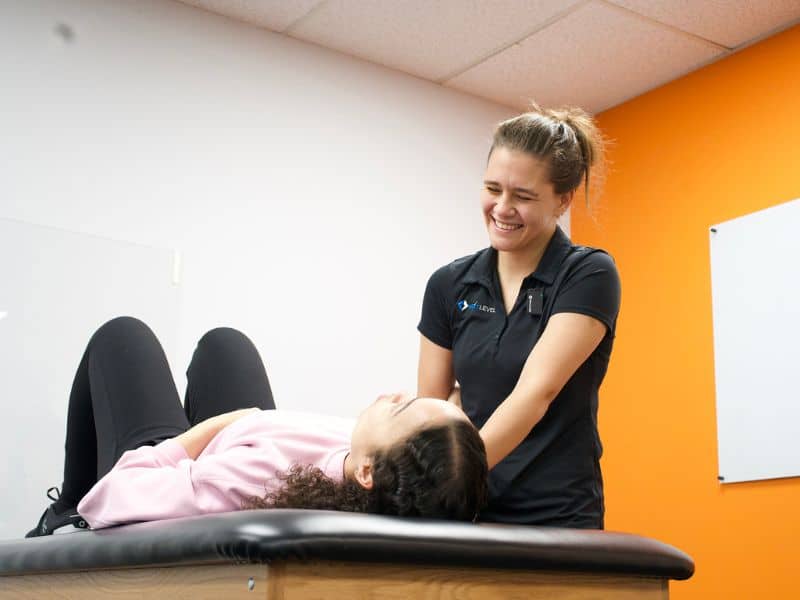
You deserve focused, one-on-one treatment that gets to the real root of your pain. And if you’re ready to break free from the old model,

We’ll take you to the NEXT LEVEL.

“Lasting transformations are built on the bedrock of a solid foundation, sound strategy, and great execution.” – Dr. Mike PT, DPT / Co-Founder

Pain-Free Secrets Guide 2.0
Our new guide dives deeper into the Next Level System, giving you clear, actionable strategies to eliminate pain, improve movement, and achieve lasting results.
Athlete's Guide
Unlock your full potential with our free guide for athletes. Learn how to move better, prevent injuries, and perform pain-free with the proven Next Level System.
End Back Pain Guide
Discover the proven steps to finally end back pain for good. This free guide reveals the root causes of pain and how to move, strengthen, and recover with confidence.

FOUNDATION

Pain is the result of a weakness in your foundation.

Regardless of location, severity, and age, recovery relies on 4 key foundations.

This is our “4 Pillars of Recovery.”

Failure to address each pillar leads to pain and poor results. Long-term pain relief only happens when each pillar is strengthened at the right time.

PILLAR 1:
STRUCTURE
Any structural damages that have potential to limit your physical ability to recover must be addressed first. By tackling these barriers first, we set the stage for real lasting progress, not just temporary relief.
PILLAR 2:
MINDSET
Your thoughts and beliefs are a major indicator of your body’s ability to recover. We must ensure that they are healthy, empowering, and most importantly, accurate.
PILLAR 3:
MOVEMENT
How you move at the most basic level is the building block of everything. In order to load your body with advanced movements, you must possess strength and control in your basic functional movement patterns.
PILLAR 4:
CAPACITY
Solid movement with strength and control is what leads to long-term pain relief. As your body builds capacity, you’ll feel stronger and more confident to get back to doing what you love.

STRATEGY

We start with the end in mind so that your treatment has intent and purpose.

We get clear on your goals and what you want to achieve from the start.

We implement our 7 Level System to identify the root cause of your pain and develop a personalized treatment plan that is solely focused on your goals.

The system has transformed lives from professional and Olympic level athletes, to the everyday fitness enthusiast.

It is the perfect bridge that will get you from being limited in pain, to doing what you love again.

  • 07:
    Physical Mastery
  • 06:
    Transformation
  • 05:
    Power & Capacity
  • 04:
    Integration
  • 03:
    Control
  • 02:
    Position & Range
  • 01:
    Understanding
  • 00:
    Acute Management

Execution

Sound strategy with precise execution results in lasting transformation.

We have tested the most effective treatments and combined the most proven methods.

What we’ve created is a world-class treatment system where you’ll feel a difference at each session, one where you’ll have deep-rooted pain-relief at the end.

Video Testimonials

Jeremy V.
“I was two weeks away from a serious back surgery… and within the first week at Next Level, I made enough progress to cancel it. The radiating pain stopped, I could sit again, and my world finally opened back up.”
Beverly J.

“I was living at a 9 out of 10 pain pretty consistently, and nothing ever got me out of pain permanently until I came to Next Level.”

Joanna C.
"Before Next Level, every time I felt pain, I would get scared... My only wish was to feel somewhat out of pain… and with Next Level, I achieved far more than that."
Shawn A.
"The one-on-one care is what sets this place apart. Next Level looked at the big picture—my movement, my measurements, the root cause... not only did the pain go away, but my hip and shoulder issues cleared up too."
`

BLOG

Top 5 Exercises For Instant Shoulder Pain Relief
Shoulder pain is a common issue for many people, from high level athletes to weekend warriors and everyone in between. Despite how common it is, shoulder pain can come from many different causes. Some of the most frequent contributors include overuse conditions, which are often seen in athletes such as baseball pitchers, degenerative changes from gradual wear and tear over time, or acute injuries like falling on an outstretched arm. Regardless of the cause, one of the most effective ways to reduce shoulder pain and allow healing to begin is by changing the position and posture of the body. Improving posture can help create more space in the shoulder joint, reducing stress on irritated tissues and allowing the area to calm down. If you are currently dealing with shoulder pain, I always recommend being evaluated by a licensed professional so you can receive a customized plan tailored to your specific needs. In the meantime, here are my top 5 exercises for instant shoulder pain relief. These are not meant to be a long-term solution, but they can help you feel better so you can get through your day and your workouts without pain holding you back. 1. Banded Shoulder Distraction 3 sets x 30 sec hold [embed]https://www.youtube.com/watch?v=foTgEqbKGUQ[/embed] 3 sets x 30 second hold Grab hold of a resistance band, straighten your arm, and bend forward slightly at the hips. Try to relax into the position and allow the band to gently pull your shoulder away from the joint. This creates a traction force that helps open up space in the shoulder joint and reduce pressure on irritated or impinged tissues. You should also feel a strong stretch through the lat muscles, which is an area many gym-goers tend to have tightness. 2. Banded Bully Stretch [embed]https://www.youtube.com/watch?v=7JHZwYrSDoY[/embed] 3 sets x 30 second hold Hang a 1 to 1.5 inch resistance band from a squat rack, pull-up bar, or another sturdy overhead surface. Place the band around the upper part of your humerus as close as possible to where the arm meets the shoulder. Face away from the band and place your hand behind your back as if you were being handcuffed. Step forward until you feel a strong but tolerable stretch deep in the shoulder. This exercise is excellent for opening up space within the shoulder joint and often provides quick relief. It can be especially helpful before or after an upper body workout. 3. Seated Back Expansion [embed]https://www.youtube.com/watch?v=OCUzQOT0Ij0[/embed] 5 sets x 5 breath cycles Set up in a chair at a table that is roughly knee height. Place your elbows on the table directly in front of you, making sure they are aligned under your shoulders. Your palms should be facing you. Lean slightly forward and reach your chest away from the table while keeping your abdominal muscles engaged. Hold this position and take five slow, deep breaths. You should feel a stretch between your shoulder blades and throughout your upper back. Cranky shoulders are often linked to stiffness in the thoracic spine, also known as the upper back. The following two exercises focus on improving upper back mobility to help your shoulders move more freely. 4. ½ Kneeling T-Spine Rotation [embed]https://www.youtube.com/watch?v=njY2DlYMnPo[/embed] 3 sets x 8 reps each direction Find a wall and a foam roller. Set up in a half kneeling position as close to the wall as possible. Place the foam roller between the wall and your outside knee, keeping steady pressure against the wall throughout the movement. Hold both arms straight out in front of you at shoulder height, with your inside arm against the wall. Rotate your torso and outside arm, reaching back toward the wall behind you. Rotate as far as you can while keeping your knee pressed into the foam roller. Be sure to perform this exercise on both sides. 5. T-Spine Bench Mobility [embed]https://www.youtube.com/watch?v=n2iwe5LNVmY[/embed] 3 sets x 10 reps, 3 second hold Grab a PVC pipe or dowel and a weight bench. Kneel in front of the bench and hold the PVC with both hands, palms facing up. Place your elbows on the bench in front of you. Slowly sit your hips back while dropping your head and bending at the elbows. You should feel a deep stretch through your upper back and mid spine. Pause for three seconds at the bottom of each repetition before returning to the starting position. These exercises can be a helpful starting point for reducing shoulder pain and improving movement. If your symptoms persist or continue to worsen, a thorough evaluation can help identify the underlying cause and guide a more comprehensive plan for lasting relief.
Your Scapula Is NOT Dysfunctional
I think we can all agree that shoulder pain is frustrating. Personally, I use my arms constantly. Getting dressed, showering, feeding myself, driving, lifting weights, doing pushups, writing this article, and a lot more all depend on healthy shoulder function. If you are anything like me, you rely on your shoulders every day too. There are many possible causes of shoulder pain, but if you have been told you have scapular dyskinesis, scapular instability, or scapular dysfunction, which are essentially different labels for the same idea, I have something important to tell you. It is the truth, but you might not be ready for it. Are you sure? Really sure? Alright, you asked for it. There is no such thing as a dysfunctional scapula. I know that may come as a surprise, but hear me out for a moment. I believe the word dysfunctional has no place in conversations about how bodies move. It reinforces the idea that our bodies are fragile or broken, which can lead to hesitation, fear avoidance, and an increased risk of recurring injuries. How does that happen? Our good friend Dumbledore summed it up well: (his beard is filled with wisdom) Calling a scapula dysfunctional implies that there is a single correct or normal way for a shoulder to move. Anyone labeled as dysfunctional is then seen as abnormal, incorrect, or at risk of hurting themselves. Terms like dyskinesia, abnormal mechanics, and instability create similar problems. They are binary. You are either normal or abnormal, with no room in between. This kind of mental framing often leads to self-limiting beliefs. People given these diagnoses frequently avoid activity out of fear of making things worse, which ironically tends to make things worse over time. Just because your shoulder is not working the way you want does not mean something is wrong with it. It simply means there are a few things that need to be addressed. To understand this better, we need to look at the anatomy of the shoulder. There are three main structures involved: the ribcage, the scapula, and the humerus. The scapulothoracic joint exists between the ribcage and the scapula, while the glenohumeral joint connects the scapula and the humerus. The scapula contributes roughly 30 percent of total shoulder motion and functions as a floating joint with no direct bone-to-bone attachment to the rest of the body. The upper arm bone, or humerus, sits in a socket on the outer edge of the scapula. As the scapula moves, the socket moves with it, allowing the shoulder to orient itself in many different positions. This is what lets you place your hand in such a wide variety of positions. The shoulder has more range of motion than any other joint in the body. With greater available motion comes greater complexity and a higher demand for control. This is where the discussion of stability usually enters the picture. For this discussion, stability means the ability to resist unwanted motion or return to a desired position after being moved. This definition explains why common treatments for an “unstable” shoulder often include exercises like BOSU planks, reactive drills where a therapist applies unpredictable forces, or lifting weights attached to bands. The intent behind these exercises is good, but the application is often flawed. These drills are complex and involve many variables. For someone already dealing with shoulder issues, that level of complexity can be overwhelming and lead to inconsistent results. A more effective approach is to start by developing passive motion so the shoulder has access to the positions it needs. The next step is active motion within that newly available range. From there, the focus should shift to producing force in those positions and building strength and consistency in the desired movement patterns. Only if the issue persists after these steps should more advanced and variable exercises be introduced. For example, I would not have a client perform any type of unstable surface pushup until they can clearly demonstrate twenty clean and consistent strict pushups first. Highly variable and dynamic exercises may look impressive, but they belong at the top of the pyramid, not the bottom. The foundation has to be built properly before progressing upward. If you have been struggling to get your shoulders back to where you want them to be and feel like you have tried everything, I strongly encourage you to return to the basics and master them using this progression. If you cannot sort it out on your own, working with a skilled professional who understands this process can make all the difference. There is nothing wrong with your shoulder. It is simply having difficulty managing complexity right now.
Ditch The Theraband To Build A Confident Shoulder
The foremost principle that guides rehabilitation is the SAID Principle, or Specific Adaptations to Imposed Demands. Simply put, this principle of physiology tells us that the body adapts to the specific demands placed upon it. Perform enough aerobic exercise and your heart adapts by increasing the size of the muscles in the left ventricle. This allows more blood to be pumped with each contraction, lowering resting heart rate over time. Similar adaptations occur within the nervous and hormonal systems and often lead to decreases in resting blood pressure as well.¹ The tendons of sprinters become increasingly stiff as they train to run faster. This is a positive adaptation. Think about the last time you struggled to change the roll of bathroom tissue because the spring was stiff and kept snapping back quickly. A stiffer spring, much like a stiffer tendon, releases more energy when stretched and recoils, helping the sprinter move faster and more efficiently. When an injury occurs to a muscle, tendon, or another joint structure, it is usually because that tissue was exposed to a level of stress that exceeded its ability to adapt positively. When you trip and roll your ankle in the classic position shown below in Image 1, the ligaments and muscles on the outside of the ankle are injured because they were loaded too quickly and with too much force for what they were prepared to handle. Meanwhile, there are well documented examples of martial artists being able to break stone with their shins without injury because they have spent years gradually adapting their bodies to those compressive forces. [caption id="" align="aligncenter" width="652"] Image 1: Despite this being Klay Thompson of the Golden State Warriors, my left ankle was in this same exact situation about a year ago. Source: https://i2.wp.com/b-reddy.org/wp-content/uploads/2016/07/klay-thompson-right-ankle-sprain.jpg?ssl=1[/caption] How does this relate to a shoulder injury? If we want to restore shoulder function and allow the joint to tolerate increasing physical stress without negative adaptations like pain or injury, we need to apply the Goldilocks Principle of rehabilitation shown in Image 2. The stress must be just right. Too little will not create change, and too much will drive setbacks. The chart below is a helpful way to visualize this concept when restoring strength and range of motion following injury. Image 2:  Volume vs intensity threshold for gaining an adaptation. (Joel Jamieson’s “Ultimate MMA Conditioning”)  Resistance tubing, often referred to by the commercial name Theraband, is one of the most common tools people associate with physical therapy. Despite the title of this article, I am not against the use of resistance bands. For individuals in the early stages of shoulder rehabilitation, tubing can be extremely useful. It provides a low level of resistance that may be enough to rebuild initial strength or improve control of the arm through a safe range of motion. Bands can also help provide external feedback so you can better feel your shoulder moving into different positions, which can be valuable when restoring range of motion. However, if the goal is to build a shoulder that can produce and absorb meaningful force, bands alone are often not enough. At some point, greater resistance is needed to apply the appropriate combination of volume and intensity required for long term strength gains.   Sidelying Kettlebell Arm Bar Exercises like the kettlebell or dumbbell arm bar are an excellent entry point for retraining shoulder rotation with heavier loads. They also help retrain coordinated movement of the shoulder blade, allowing smoother and more controlled motion of the arm. Hooklying Dumbbell Pullover The hooklying dumbbell pullover is another effective way to improve overhead range of motion while building strength through a large arc of movement. This exercise is commonly used to help clients regain overhead motion without compensating through excessive lower back arching. It also builds confidence when holding weight overhead. Staggered Stance Landmine Press Landmine pressing is a highly effective way to load the muscles around the shoulder with progressively heavier resistance. This variation also allows easy modification to train coordination between ribcage rotation and shoulder movement, which is critical for many athletic and daily activities. If you are returning from a shoulder injury, it is important to understand the purpose behind each exercise you choose. Not all rehabilitation needs to look like bands and two pound weights. Your program should be challenging enough to prepare your shoulder for the real world demands you place on it. Make sure the time you invest in rehabilitation is producing the adaptations your shoulder actually needs. References Farrell C, Turgeon DR. Normal Versus Chronic Adaptations To Aerobic Exercise. [Updated 2021 Jul 15]. In: StatPearls [Internet]. Treasure Island (FL): StatPearls Publishing; 2022 Jan-. Available from: https://www.ncbi.nlm.nih.gov/books/NBK572066/
The #1 Missing Piece In Resolving Shoulder Pain
Are you Treating the Problem or The Result?  Shoulder problems are incredibly common among the athletes and active adults we see. As therapists, we regularly encounter diagnoses such as shoulder impingement, tendonitis, and rotator cuff injuries. These conditions are often blamed on weak rotator cuff muscles, scapular winging, or muscle imbalances. One major thing to understand about these diagnoses is that they are not the actual problem. They are the result. They are the result of deeper rooted movement habits and mechanics that often go unaddressed in traditional rehabilitation. Common solutions for these issues are often just as short sighted. Stretching, rotator cuff strengthening, and general strength training are frequently prescribed, yet they often miss the mark when it comes to truly resolving pain. Why? Because they address symptoms rather than the cause of the faulty mechanics, overuse of certain muscles, or positioning muscles in disadvantaged positions. To understand the biggest missing piece in resolving shoulder pain, we first need to understand how the shoulder actually works. A Quick Anatomy Lesson of the Shoulder Complex  The shoulder complex is made up of four major components: the glenohumeral joint, which is the ball and socket, the scapula or shoulder blade, the sternum and clavicle, and the rib cage. Shoulder movement in any direction requires rotation of the humeral head within the glenoid socket. Because the shoulder has so much freedom of movement, stability of the joint must be maintained. This is why every shoulder movement is accompanied by scapular movement. Since the socket of the shoulder joint is part of the scapula, its motion is essential for keeping the humeral head centered within the socket during movement. When the humeral head does not stay centered, issues such as shoulder impingement, proximal biceps tendonitis, and rotator cuff injuries can occur. For the shoulder to move well, the scapula must move in coordination with the humerus. The scapula has a natural curvature and sits on a rib cage that also has curvature due to normal thoracic spine shape. The rounded rib cage and curved scapula allow these structures to stay congruent and permit normal scapular rotation in support of shoulder movement. The position of the rib cage and its ability to expand properly to support the scapula is essential for normal shoulder motion without compensation. Rib Cage Position and Expansion  Under normal circumstances, the rib cage should be able to expand in all directions during breathing. With each inhale, the lower ribs should move outward in what is known as bucket handle motion, while the upper ribs and sternum move up and outward in a pump handle motion. The back side of the rib cage should demonstrate similar movement, particularly in the upper ribs. When the rib cage lacks these normal movements, scapular position and shoulder mobility are negatively affected. For example, when the back side of the upper rib cage becomes restricted or flattened due to chronic tension in the upper back, scapular movement becomes limited. A curved scapula resting on a flat surface cannot move or rotate the same way it would on a rounded, congruent rib cage. Without proper scapular movement, the shoulder either loses access to normal motion or must rely on compensatory mechanics. Repeatedly moving into ranges you do not truly have or compensating for restrictions is exactly what leads to repeated stress in the same tissues. This often shows up as shoulder impingement, biceps tendonitis, or gradual wear of the rotator cuff tendons. How Rib Cage Mechanics Are Lost Loss of normal rib cage mechanics is commonly seen in resistance training. Many gym movements emphasize pulling the shoulder blades back and down for stability. Whether pushing, pulling, squatting, or deadlifting, rib cage and scapular position often remain the same. A similar issue comes from the common advice to pull the shoulders back and down for good posture. Spending excessive time in a retracted scapular position limits normal scapular motion and flattens the upper rib cage. This forces the shoulder to compensate to achieve desired movements. The Solution To truly resolve shoulder pain, you must start at the source. While factors such as rotator cuff strength, dynamic stability, and local tissue irritation matter, they should not be addressed in isolation. If you do not resolve what led to these issues in the first place, you are simply treating symptoms. To improve shoulder joint mechanics and motion, proper scapular movement must be restored. Normal scapular movement depends on a rib cage that is positioned correctly and able to expand in all directions to provide a stable foundation. Once this foundation is in place, other components of shoulder rehabilitation can be addressed with much greater success. Below are 2 examples of drills to implement into your program to improve ribcage expansion: Seated Zercher Breathing Video [embed]https://www.youtube.com/watch?v=3CtDqIZnC_U[/embed] Seated Back Expansion Video  [embed]https://www.youtube.com/watch?v=24K6f7OMDXE[/embed]

Reviews

Julia K.
Powerlifter

Simply put: If you’re looking for hands-on, personal, and evidence based treatment, Next Level Physical Therapy is the place for you. If you are looking for hectic, “you’re just a number” therapy, try else where.

Mike V.
Strength Coach

Dr. Mike gets to the root of the problem. I had chronic pain in both knees for over 18 months. Now I can run with my kids, kneel on the floor to change a diaper, and move without pain after a quick warm up.

Glen R.
Construction Worker

I have tried physical therapy more than five times. 20 years of pain killers allowed me to work, but still did not kill the pain. I was in a desperate situation with quality of life. Finally Dr. Artem listened to me…