
When athletes get injured, the goal is almost always the same: return to sport as quickly and safely as possible. Whether you are a runner trying to get back to training, a baseball player preparing for the season, or a weekend golfer wanting to play pain-free again, the question becomes how to rebuild your body so it can perform the demands of your sport.
This is where the concept of sports specific rehab often enters the conversation. Unfortunately, the phrase is commonly misunderstood. Many people assume sports specific rehab means immediately performing drills that mimic their sport, practicing cutting movements, throwing, swinging, or sprinting as soon as pain subsides.
In reality, true sports specific rehab looks very different. It begins by stepping away from the sport itself and first addressing the human movement patterns that allowed the injury to occur.
Understanding this distinction is one of the most important factors in returning to sport safely and performing at a high level again.
Why Sports Specific Rehab Is Often Misunderstood
The phrase “sports specific” naturally leads athletes to believe rehab should look like their sport. A basketball player expects jumping drills. A tennis player expects rotational work. A baseball player expects throwing progressions.
These elements eventually become part of the process, but they should not be the starting point.
Most sports injuries occur because the body has adapted too strongly to the specific demands of the sport. Over time, repetition creates patterns of movement that become dominant. The body becomes highly optimized for certain actions but loses the ability to move freely in other directions.
This loss of variability often sets the stage for overuse stress and injury.
In other words, the sport itself is often part of the reason the injury occurred in the first place.
Human-Specific Before Sport-Specific
The first step in effective sports specific rehab is understanding how the athlete moves as a human being.
Before considering throwing mechanics, running stride, or swing technique, clinicians must evaluate the athlete’s movement patterns. This includes assessing mobility, stability, asymmetries, and compensations throughout the body.
Even when an injury appears localized, the root cause often involves a larger pattern.
For example, an elbow injury in a baseball player may stem from poor trunk rotation. Knee pain in a runner may originate from limitations in hip mobility. Back pain in a golfer may result from restricted rotation through the hips.
By identifying these underlying movement tendencies, rehab can address the true source of stress rather than simply treating symptoms.
Why Sports Adaptation Can Lead to Injury
Athletes spend years training their bodies to excel in specific environments. A pitcher develops powerful rotational mechanics. A sprinter builds explosive forward propulsion. A tennis player trains repeated rotational acceleration.
While these adaptations improve performance, they also create predictable movement biases.
When the body becomes overly specialized, certain movement options disappear. The system becomes less adaptable.
Eventually, the tissues that repeatedly absorb stress can become overloaded. At that point, injury is not random. It is often the result of the body operating within a limited pattern for too long.
True sports specific rehab must therefore restore movement options before reintroducing sport demands.
The Corrective Phase of Rehabilitation
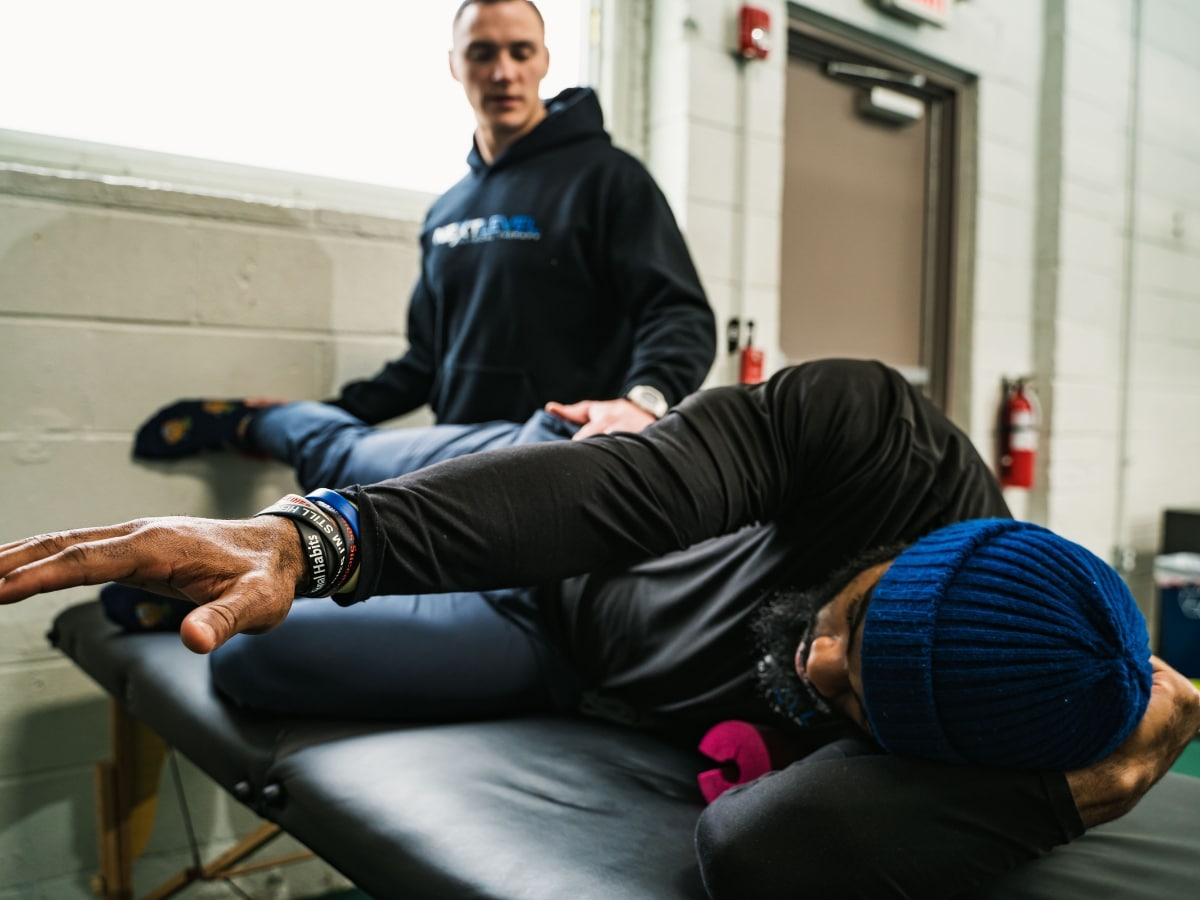
Once movement patterns have been assessed, the first phase of rehab typically focuses on corrective exercise.
This phase aims to restore mobility, improve coordination, and rebalance dominant patterns that have developed over time. The exercises in this stage are often lower intensity and highly targeted.
Rather than mimicking sport movements, the goal is to help the body access positions and ranges that may have been lost due to repetitive training.
This stage may involve:
- Rebuilding hip and thoracic mobility
- Improving breathing and ribcage mechanics
- Reestablishing balanced loading between sides of the body
- Teaching the athlete how to access new movement positions
While this phase may appear simple from the outside, it is critical for creating the foundation that allows later stages of rehab to succeed.
Bridging the Gap With Strength and Conditioning
One of the biggest challenges in sports rehab is transitioning from corrective exercise to full performance.
This bridge is built through intelligent strength and conditioning.
Once mobility and movement patterns improve, the athlete must gradually build the capacity to handle stress again. Strength training reinforces the new movement patterns while increasing the body’s tolerance to load.
Programs are typically structured to progress gradually from controlled strength exercises to more dynamic and powerful movements.
This stage might include:
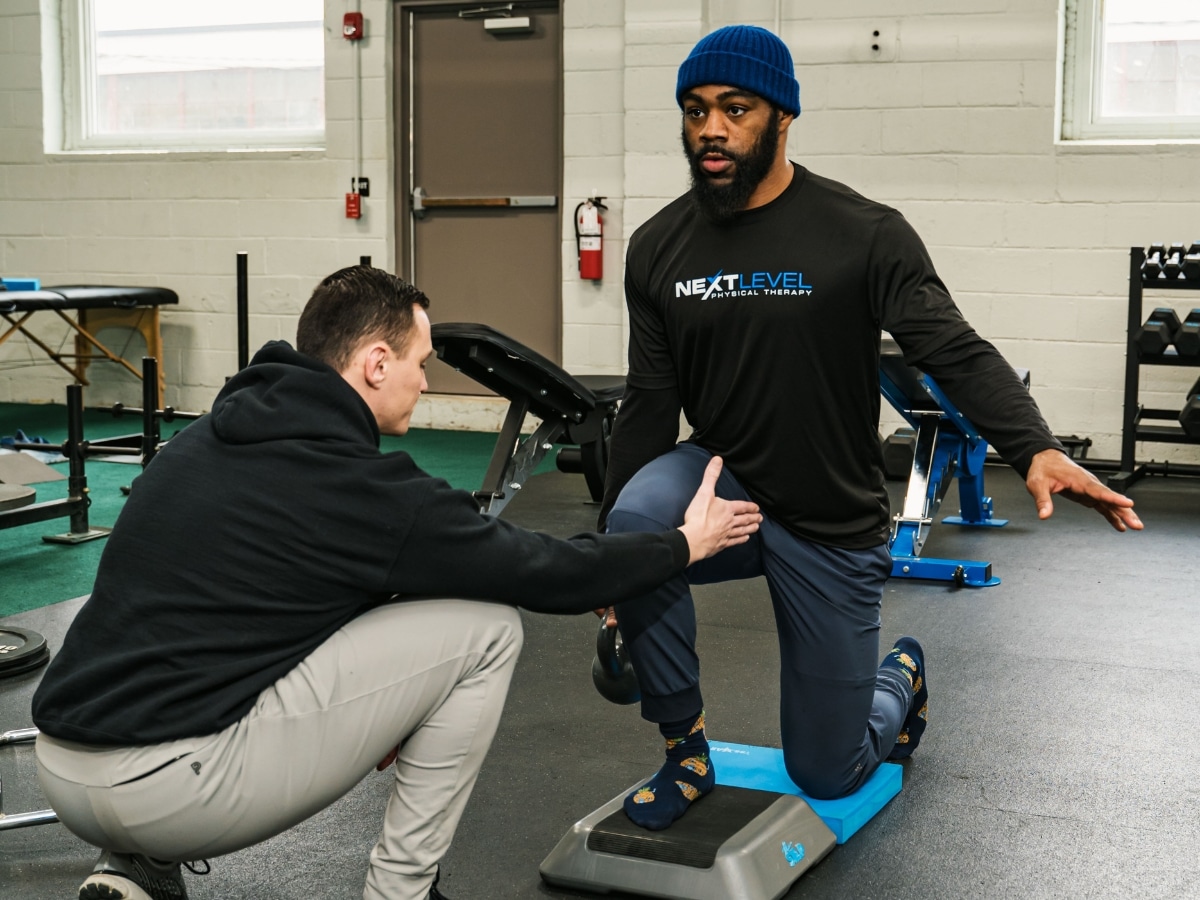
- Foundational strength training
- Single-leg and asymmetrical loading
- Rotational strength development
- Gradual increases in intensity
The key is that strength training is not random. It is specifically designed to reinforce the movement corrections developed earlier in the rehab process.
Introducing Plyometrics and Higher Intensity Work
As the athlete’s capacity improves, rehab progresses into higher intensity training.
This stage introduces plyometrics, speed work, and reactive movements that more closely resemble the demands of sport. The goal is to expose the body to progressively greater levels of force while maintaining the improved movement patterns established earlier.
Plyometrics help athletes learn how to absorb and produce force efficiently. This becomes especially important in sports that involve sprinting, jumping, or rapid changes in direction.
At this stage, sport-specific elements may begin to reappear, but they are introduced gradually and strategically.
The Mental Side of Returning to Sport
Physical readiness is only one component of returning to sport. The mental side of recovery plays an equally important role.
After an injury, many athletes experience fear of reinjury. Even when the body has recovered physically, hesitation or lack of confidence can affect performance.
Each athlete responds differently to this challenge. Some return to competition quickly with little hesitation. Others need additional support rebuilding trust in their body.
A strong rehab process acknowledges this mental component. Education, gradual exposure to sport demands, and clear progressions help athletes rebuild confidence as they move closer to competition.
When athletes view recovery as part of their development rather than a setback, the transition back to sport often becomes smoother.
How Rehab Differs Across Age Groups
While the principles of sports specific rehab remain consistent, the approach can vary depending on the athlete’s age and experience.
Younger athletes often benefit from additional emphasis on basic movement skills. Many youth athletes have not yet developed strong coordination, strength training habits, or body awareness.
Rehab for these athletes may involve more time building foundational skills such as squatting, hinging, and controlling body position.
More experienced athletes often have years of strength and conditioning experience. As a result, they may progress more quickly through foundational stages and move sooner into advanced training.
However, even elite athletes still require careful attention to movement patterns and foundational mechanics.
Common Mistakes Athletes Make During Rehab
One of the most common mistakes athletes make during recovery is jumping too quickly into sport-specific drills.
High-intensity training can feel productive, but without restoring movement balance first, these drills may reinforce the same patterns that caused the injury.
Another common mistake is treating rehab as separate from training. In reality, the most successful rehab programs function like intelligent training programs that progressively rebuild capacity.
When corrective exercise, strength development, and sport exposure are integrated properly, athletes can return to competition stronger than before.
The True Goal of Sports Specific Rehab
Sports specific rehab is not about mimicking sport movements from day one. It is about preparing the body to tolerate the demands of sport again.
This process begins with understanding human movement patterns, progresses through corrective work and strength development, and eventually reintegrates sport-specific demands in a controlled manner.
When done properly, this approach does more than simply return athletes to the field. It helps them return stronger, more resilient, and better prepared to perform.
And that is what sports specific rehab should truly look like.