Training and
Performance

The World Class Pain Solution for Athletes and Active Adults.
Revolutionizing Physical Therapy, one success story at a time.

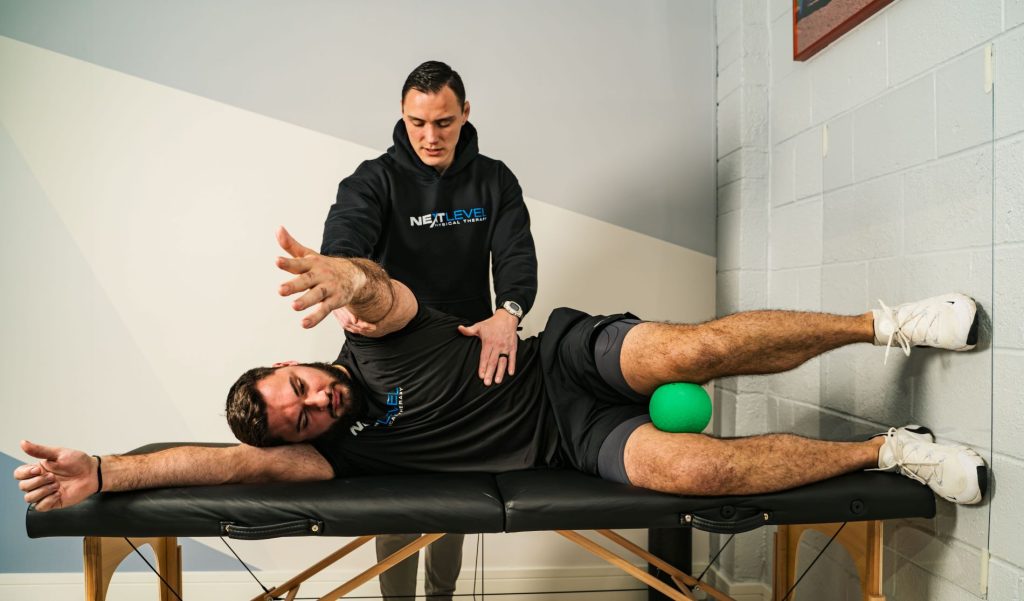
Not All Post-Surgical Rehab Is the Same...
And That’s the Problem

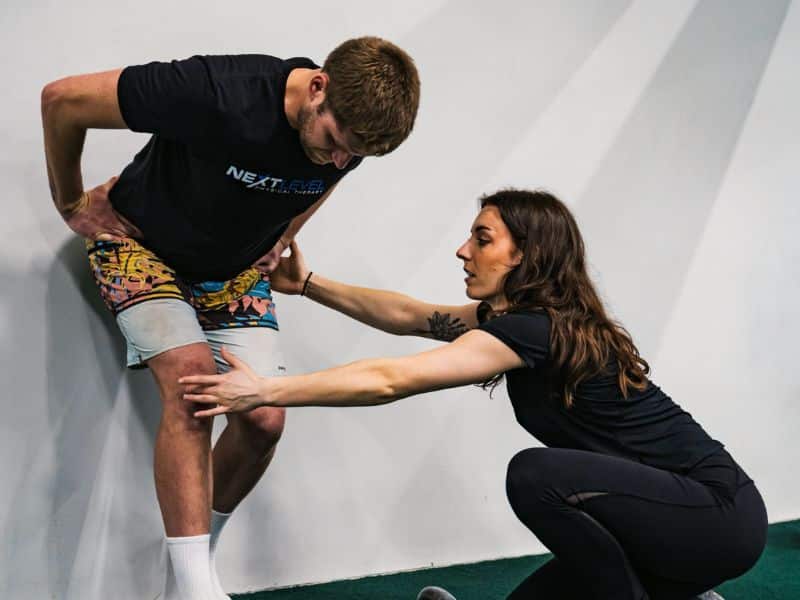
It happens far too often: You go through surgery, only to end up in pain again because the rehab wasn’t right.

After surgery, your body is in a vulnerable, sensitive state.

You need focused, one-on-one care, nothing less.

Rehab isn’t just about recovering. It’s about understanding why the surgery was needed in the first place. Identifying the root cause, fixing imbalances, and preventing the pain from coming back.

We know the courage it takes to get surgery. That’s why we treat your recovery with the attention it deserves. At every session, you get our full focus, and we stay in close communication with your doctors to keep everything on track.

“Most importantly, we fix the deep root cause of why you got injured so that you can be more confident than ever doing what you love again.”

– Dr. Mike PT, DPT / Co-Founder

Pain-Free Secrets Guide 2.0
Our new guide dives deeper into the Next Level System, giving you clear, actionable strategies to eliminate pain, improve movement, and achieve lasting results.
Athlete's Guide
Unlock your full potential with our free guide for athletes. Learn how to move better, prevent injuries, and perform pain-free with the proven Next Level System.
End Back Pain Guide
Discover the proven steps to finally end back pain for good. This free guide reveals the root causes of pain and how to move, strengthen, and recover with confidence.

FOUNDATION

Pain is the result of a weakness in your foundation.

Regardless of location, severity, and age, recovery relies on 4 key foundations.

This is our “4 Pillars of Recovery.”

Failure to address each pillar leads to pain and poor results. Long-term pain relief only happens when each pillar is strengthened at the right time.

PILLAR 1:
STRUCTURE
Any structural damages that have potential to limit your physical ability to recover must be addressed first. By tackling these barriers first, we set the stage for real lasting progress, not just temporary relief.
PILLAR 2:
MINDSET
Your thoughts and beliefs are a major indicator of your body’s ability to recover. We must ensure that they are healthy, empowering, and most importantly, accurate.
PILLAR 3:
MOVEMENT
How you move at the most basic level is the building block of everything. In order to load your body with advanced movements, you must possess strength and control in your basic functional movement patterns.
PILLAR 4:
CAPACITY
Solid movement with strength and control is what leads to long-term pain relief. As your body builds capacity, you’ll feel stronger and more confident to get back to doing what you love.

STRATEGY

We start with the end in mind so that your treatment has intent and purpose.

We get clear on your goals and what you want to achieve from the start.

We implement our 7 Level System to identify the root cause of your pain and develop a personalized treatment plan that is solely focused on your goals.

The system has transformed lives from professional and Olympic level athletes, to the everyday fitness enthusiast.

It is the perfect bridge that will get you from being limited in pain, to doing what you love again.

  • 07:
    Physical Mastery
  • 06:
    Transformation
  • 05:
    Power & Capacity
  • 04:
    Integration
  • 03:
    Control
  • 02:
    Position & Range
  • 01:
    Understanding
  • 00:
    Acute Management

Execution

Sound strategy with precise execution results in lasting transformation.

We have tested the most effective treatments and combined the most proven methods.

What we’ve created is a world-class treatment system where you’ll feel a difference at each session, one where you’ll have deep-rooted pain-relief at the end.

Video Testimonials

Charlie B.
"I had double hip surgery and spent years in constant pain, just walking around hurt. I felt like I was on a hamster wheel with every other PT… If you’ve been stuck like I was, you’re going to feel the difference here."
Jeremy V.
“I was two weeks away from a serious back surgery… and within the first week at Next Level, I made enough progress to cancel it. The radiating pain stopped, I could sit again, and my world finally opened back up.”
Maggie B.

“Being on my feet all day was miserable. At Next Level, they actually walk you through the exercises on the spot and make sure you understand everything. My mood, my energy, everything is better now.”

Beverly J.

“I was living at a 9 out of 10 pain pretty consistently, and nothing ever got me out of pain permanently until I came to Next Level.”

`

BLOG

Your Scapula Is NOT Dysfunctional
I think we can all agree that shoulder pain is frustrating. Personally, I use my arms constantly. Getting dressed, showering, feeding myself, driving, lifting weights, doing pushups, writing this article, and a lot more all depend on healthy shoulder function. If you are anything like me, you rely on your shoulders every day too. There are many possible causes of shoulder pain, but if you have been told you have scapular dyskinesis, scapular instability, or scapular dysfunction, which are essentially different labels for the same idea, I have something important to tell you. It is the truth, but you might not be ready for it. Are you sure? Really sure? Alright, you asked for it. There is no such thing as a dysfunctional scapula. I know that may come as a surprise, but hear me out for a moment. I believe the word dysfunctional has no place in conversations about how bodies move. It reinforces the idea that our bodies are fragile or broken, which can lead to hesitation, fear avoidance, and an increased risk of recurring injuries. How does that happen? Our good friend Dumbledore summed it up well: (his beard is filled with wisdom) Calling a scapula dysfunctional implies that there is a single correct or normal way for a shoulder to move. Anyone labeled as dysfunctional is then seen as abnormal, incorrect, or at risk of hurting themselves. Terms like dyskinesia, abnormal mechanics, and instability create similar problems. They are binary. You are either normal or abnormal, with no room in between. This kind of mental framing often leads to self-limiting beliefs. People given these diagnoses frequently avoid activity out of fear of making things worse, which ironically tends to make things worse over time. Just because your shoulder is not working the way you want does not mean something is wrong with it. It simply means there are a few things that need to be addressed. To understand this better, we need to look at the anatomy of the shoulder. There are three main structures involved: the ribcage, the scapula, and the humerus. The scapulothoracic joint exists between the ribcage and the scapula, while the glenohumeral joint connects the scapula and the humerus. The scapula contributes roughly 30 percent of total shoulder motion and functions as a floating joint with no direct bone-to-bone attachment to the rest of the body. The upper arm bone, or humerus, sits in a socket on the outer edge of the scapula. As the scapula moves, the socket moves with it, allowing the shoulder to orient itself in many different positions. This is what lets you place your hand in such a wide variety of positions. The shoulder has more range of motion than any other joint in the body. With greater available motion comes greater complexity and a higher demand for control. This is where the discussion of stability usually enters the picture. For this discussion, stability means the ability to resist unwanted motion or return to a desired position after being moved. This definition explains why common treatments for an “unstable” shoulder often include exercises like BOSU planks, reactive drills where a therapist applies unpredictable forces, or lifting weights attached to bands. The intent behind these exercises is good, but the application is often flawed. These drills are complex and involve many variables. For someone already dealing with shoulder issues, that level of complexity can be overwhelming and lead to inconsistent results. A more effective approach is to start by developing passive motion so the shoulder has access to the positions it needs. The next step is active motion within that newly available range. From there, the focus should shift to producing force in those positions and building strength and consistency in the desired movement patterns. Only if the issue persists after these steps should more advanced and variable exercises be introduced. For example, I would not have a client perform any type of unstable surface pushup until they can clearly demonstrate twenty clean and consistent strict pushups first. Highly variable and dynamic exercises may look impressive, but they belong at the top of the pyramid, not the bottom. The foundation has to be built properly before progressing upward. If you have been struggling to get your shoulders back to where you want them to be and feel like you have tried everything, I strongly encourage you to return to the basics and master them using this progression. If you cannot sort it out on your own, working with a skilled professional who understands this process can make all the difference. There is nothing wrong with your shoulder. It is simply having difficulty managing complexity right now.
The #1 Missing Piece In Resolving Shoulder Pain
Are you Treating the Problem or The Result?  Shoulder problems are incredibly common among the athletes and active adults we see. As therapists, we regularly encounter diagnoses such as shoulder impingement, tendonitis, and rotator cuff injuries. These conditions are often blamed on weak rotator cuff muscles, scapular winging, or muscle imbalances. One major thing to understand about these diagnoses is that they are not the actual problem. They are the result. They are the result of deeper rooted movement habits and mechanics that often go unaddressed in traditional rehabilitation. Common solutions for these issues are often just as short sighted. Stretching, rotator cuff strengthening, and general strength training are frequently prescribed, yet they often miss the mark when it comes to truly resolving pain. Why? Because they address symptoms rather than the cause of the faulty mechanics, overuse of certain muscles, or positioning muscles in disadvantaged positions. To understand the biggest missing piece in resolving shoulder pain, we first need to understand how the shoulder actually works. A Quick Anatomy Lesson of the Shoulder Complex  The shoulder complex is made up of four major components: the glenohumeral joint, which is the ball and socket, the scapula or shoulder blade, the sternum and clavicle, and the rib cage. Shoulder movement in any direction requires rotation of the humeral head within the glenoid socket. Because the shoulder has so much freedom of movement, stability of the joint must be maintained. This is why every shoulder movement is accompanied by scapular movement. Since the socket of the shoulder joint is part of the scapula, its motion is essential for keeping the humeral head centered within the socket during movement. When the humeral head does not stay centered, issues such as shoulder impingement, proximal biceps tendonitis, and rotator cuff injuries can occur. For the shoulder to move well, the scapula must move in coordination with the humerus. The scapula has a natural curvature and sits on a rib cage that also has curvature due to normal thoracic spine shape. The rounded rib cage and curved scapula allow these structures to stay congruent and permit normal scapular rotation in support of shoulder movement. The position of the rib cage and its ability to expand properly to support the scapula is essential for normal shoulder motion without compensation. Rib Cage Position and Expansion  Under normal circumstances, the rib cage should be able to expand in all directions during breathing. With each inhale, the lower ribs should move outward in what is known as bucket handle motion, while the upper ribs and sternum move up and outward in a pump handle motion. The back side of the rib cage should demonstrate similar movement, particularly in the upper ribs. When the rib cage lacks these normal movements, scapular position and shoulder mobility are negatively affected. For example, when the back side of the upper rib cage becomes restricted or flattened due to chronic tension in the upper back, scapular movement becomes limited. A curved scapula resting on a flat surface cannot move or rotate the same way it would on a rounded, congruent rib cage. Without proper scapular movement, the shoulder either loses access to normal motion or must rely on compensatory mechanics. Repeatedly moving into ranges you do not truly have or compensating for restrictions is exactly what leads to repeated stress in the same tissues. This often shows up as shoulder impingement, biceps tendonitis, or gradual wear of the rotator cuff tendons. How Rib Cage Mechanics Are Lost Loss of normal rib cage mechanics is commonly seen in resistance training. Many gym movements emphasize pulling the shoulder blades back and down for stability. Whether pushing, pulling, squatting, or deadlifting, rib cage and scapular position often remain the same. A similar issue comes from the common advice to pull the shoulders back and down for good posture. Spending excessive time in a retracted scapular position limits normal scapular motion and flattens the upper rib cage. This forces the shoulder to compensate to achieve desired movements. The Solution To truly resolve shoulder pain, you must start at the source. While factors such as rotator cuff strength, dynamic stability, and local tissue irritation matter, they should not be addressed in isolation. If you do not resolve what led to these issues in the first place, you are simply treating symptoms. To improve shoulder joint mechanics and motion, proper scapular movement must be restored. Normal scapular movement depends on a rib cage that is positioned correctly and able to expand in all directions to provide a stable foundation. Once this foundation is in place, other components of shoulder rehabilitation can be addressed with much greater success. Below are 2 examples of drills to implement into your program to improve ribcage expansion: Seated Zercher Breathing Video [embed]https://www.youtube.com/watch?v=3CtDqIZnC_U[/embed] Seated Back Expansion Video  [embed]https://www.youtube.com/watch?v=24K6f7OMDXE[/embed]
Hand Going Numb? Check Your Thumb – How the Relationship Between Your Hand and Wrist Movement Can Affect Your Carpal Tunnel Syndrome Symptoms (Part 1/2)
Carpal tunnel syndrome is a collection of symptoms that most commonly appear in the thumb, index finger, and middle finger on the palm side of the hand. The hallmark symptom is aching, tingling, or a loss of sensation in those three fingers specifically. These symptoms most often occur because the median nerve is experiencing prolonged compression as it passes into the hand through the carpal tunnel. The carpal tunnel is a narrow passageway formed by bones and connective tissue near the wrist that also contains several tendons and muscles, along with the median nerve. Because this space is small, even subtle changes in position or tissue behavior can increase pressure on the nerve. (Figure 1). [caption id="" align="aligncenter" width="600"] Figure 1: Anatomy of the carpal tunnel region and the median nerve. The nerve in the middle that runs to the thumb and middle finger is the median nerve. Source: https://qph.fs.quoracdn.net/main-qimg-2effc0be8c4ff02f065339aebda08596-c[/caption] The most common treatments I see recommended include prolonged static stretching of the muscles on the front of the wrist and forearm, active range of motion exercises for the wrist and hand in all directions, stretching of the thumb muscles, and tendon or nerve gliding activities. What all of these interventions have in common is their shared goal of reducing compression on the median nerve. Nerves thrive on movement, blood flow, and adequate space. The intent behind these treatments is sound, which is why the surgical option for severe cases involves cutting the connective tissue that runs across the carpal tunnel to create more room for the nerve. While there is nothing inherently wrong with these approaches, not all interventions produce the same effect. If the goal is to create space around the carpal tunnel, it is critical to consider the relationship between the position of the hand and the wrist. Many of the muscles and tendons that influence carpal tunnel pressure either cross through the tunnel or attach directly to the bones of the hand and wrist. Static stretching primarily increases a muscle’s tolerance to being lengthened. According to current research, it does very little to change how muscles or tendons behave or function in daily movement (PubMed ID# 28801950). In addition, applying prolonged tension to a nerve that is already compressed can be similar to stretching an already tight rubber band. Increasing tension does not reduce stress on the structure and may actually worsen symptoms. Rather than focusing solely on muscles that are labeled as tight, it is often more effective to focus on positioning the bones of the hand and wrist in a way that reduces tension on the nerve. This approach helps “unstretch” the rubber band and gives the median nerve more room to move freely. The image below shows an example of a thumb that is internally rotated relative to the wrist, highlighted in yellow. The blue arrow shows a thumb that is better able to externally rotate relative to the wrist. (Figure 2) [caption id="" align="aligncenter" width="960"] Figure 2: An example of differing thumb and wrist orientations. Source: https://i2.wp.com/plasticsurgerykey.com/wp-content/uploads/2020/06/10-1055-b-002-98003_c049_f001.jpg?w=960[/caption] Can you see how stretching the muscles of the yellow hand might produce a completely different result than stretching the blue hand? Applying the same solution to two different presentations does not lead to the same outcome. In the next part of this discussion, we will explore how to create a more effective strategy to improve space and movement around the median nerve. This approach may help reduce or eliminate carpal tunnel symptoms by addressing the specific presentation shown in the yellow hand.
The Infamous Tommy John & Baseball
If you were to assess how great a pitcher in baseball truly is, you might find yourself looking at a lot of statistics, most notably ERA or earned run average. With the goal of striking out every batter who steps into the box, pitchers must not only possess elite skill and talent, but also the ability to generate an incredible amount of power. That power is repeated roughly one hundred times per game. Across sports, very few athletes are required to produce such high levels of force as frequently as baseball pitchers. When athletes specialize as pitchers at a young age and play across multiple teams each year, the volume of throwing and cumulative stress placed on the elbow and surrounding structures can take a serious toll. For a long time, this was believed to threaten a player’s future in the sport. These issues often begin as lower level conditions such as Little League Elbow, which is typically the result of inadequate rest between pitching outings, or acute bursitis, which involves inflammation of a localized fat pad. Over time, the elbow must repeatedly absorb tremendous force across seasons. This repetitive overhead throwing stresses the tendons and ligaments responsible for elbow stability and increases the risk of more serious injuries, including damage to the ulnar collateral ligament. As UCL injuries have become increasingly common in younger athletes over the past several years, organizations such as the American Sports Medicine Institute, USA Baseball, Little League Baseball, and Major League Baseball have implemented pitch count guidelines in an effort to protect developing players. Despite these efforts, higher level athletes continue to face significant risk. The Ulnar Collateral ligament (UCL) injury The ulnar collateral ligament is one of the most commonly injured ligaments in repetitive overhead and throwing athletes. To tolerate the high forces required to throw a baseball sixty feet, the ligament gradually stretches and elongates. Eventually, it may no longer be able to maintain the structural integrity of the elbow. Like most ligament injuries, UCL damage exists on a spectrum. Injuries can range from a mild sprain with inflammation to a complete tear that compromises elbow stability. UCL Symptoms Include:  Pain with throwing or inside of the elbow Instability  Decreased strength or power in throwing Increased sensitivity around the ulnar nerve “funny bone” causing numbness and tingling in the ring and pinky finger Diagnosis and Treatment A UCL injury is diagnosed based on a combination of clinical presentation, physical examination findings, and diagnostic imaging such as X-ray or MRI. The next steps depend on the severity of the injury, healing potential, inflammation levels, and response to rehabilitation. Further assessment by a physical therapist or athletic trainer is often necessary to determine whether throwing mechanics, body positioning, sequencing, or compensatory strategies are placing excessive stress on the elbow. In many cases, limitations in shoulder mobility prevent a pitcher from generating force efficiently. When this happens, the body looks for power elsewhere. That power often comes from the inside of the elbow. Normal pitching mechanics already place approximately 300 newtons, or about 67 pounds, of torque on the inside of the elbow. Now imagine how much additional stress accumulates when mechanics are inefficient and that load is repeated one hundred pitches per game over the course of an entire season. Tommy John and His Influence Named after former Los Angeles Dodgers pitcher Tommy John, this surgical procedure has dramatically changed the outlook for throwing athletes. Once considered a career ending injury, UCL reconstruction is now a well established option for athletes who fail conservative treatment. Tommy John surgery involves replacing the damaged UCL with a tendon graft, often taken from the forearm or hamstring. This is followed by an extensive rehabilitation process that progresses through multiple phases and typically lasts between six and twelve months. What was once viewed as the end of a pitching career is now often seen as a pathway back to competitive play. Today, UCL reconstruction is commonly performed and heavily emphasized in rehabilitation and sports medicine education. If you have questions about UCL injuries, Tommy John surgery, or elbow pain related to throwing, consult your primary care physician or visit Next Level Physical Therapy. We are always happy to discuss your concerns and help guide you in the right direction.

Reviews

Kevin S.

Dr. Mike is the man! I knew I needed an expert in sports therapy for my shoulder once I was able to start therapy after my surgery. Dr. Mike was recommended to me and I heard a lot of good things about him. If I didn’t go to Dr. Mike for my post surgery rehab then I wouldn’t be ahead of schedule and feeling better then ever 4 months post surgery. He has a great personality and is also flexible with scheduling. The last couple months attending physical therapy with Dr. Mike was fantastic and great. He pushed me to limits that I didn’t think I could reach during therapy. If you ever have a sports injury I highly recommend Dr. Mike because you will see the difference.

Tyler B.

As a Division 1 baseball player who received Tommy John Surgery (UCL Reconstruction) in April 2021, proper recovery was extremely crucial. When I came home from school for the summer, I attended Next Level Physical Therapy and saw Dr. Benjamin Fan. I was referred to Dr. Fan through my surgeon Dr. Chris Ahmad and his assistant, who is the Head Team Physician for the New York Yankees. I could not have been happier to have been sent to Next Level and Dr. Fan. The staff at Next Level are all very kind, personable, and friendly. I enjoyed seeing Dr. Fan twice a week throughout the summer. I was put through an amazing workout every time, and learned a great deal of tips and tricks. Dr. Fan has a ton of knowledge, and I will be incorporating a lot of workouts I learned through him in my routines. I always found his workouts to be helpful, and I always left feeling good. Dr. Fan is easy and fun to talk to, and I am very grateful to have met him. I could not have been happier with my experiences at Next Level Physical Therapy.

Edwin G.

My experience at Next Level Physical Therapy was the best! I had the pleasure to have Ben Fan as my physical therapist.  He helped me so much during my recovery after my ACL surgery. HIGHLY RECOMMEND!!!