What We Treat

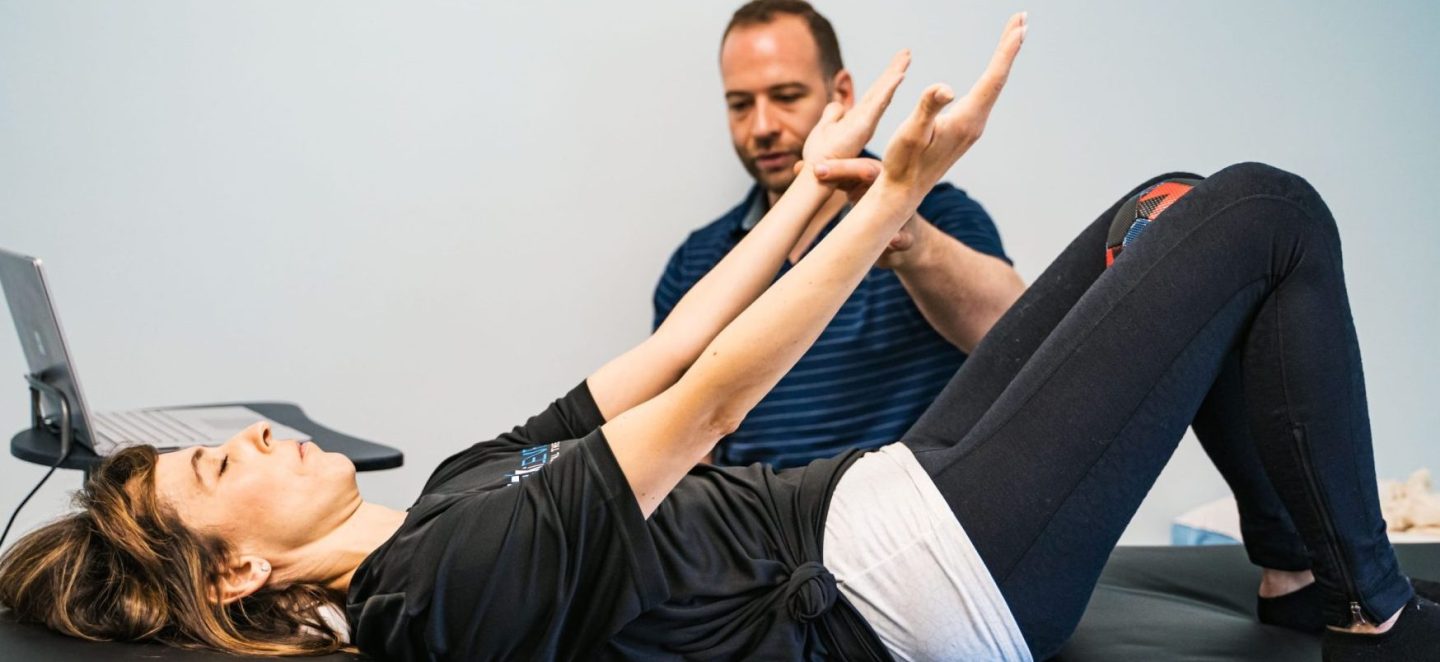
Back pain
Knee pain
Hip pain
Shoulder pain
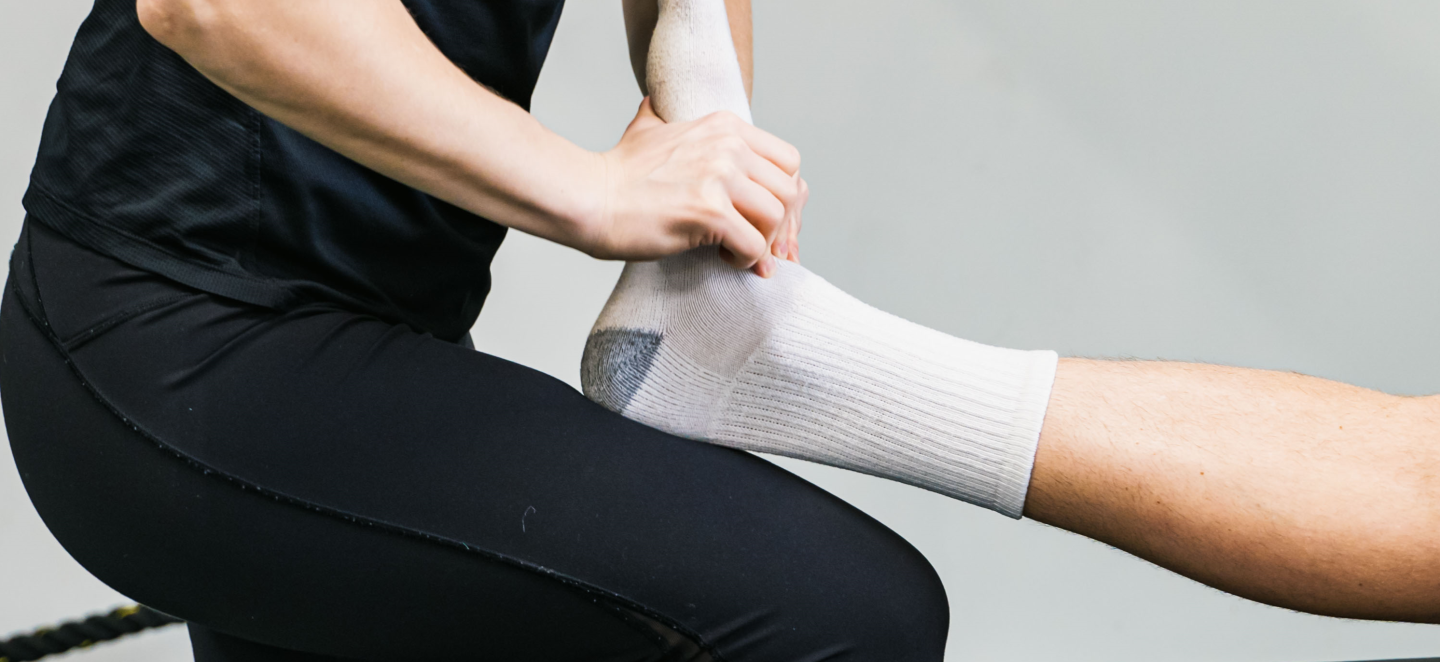
Foot and Ankle pain
Elbow pain
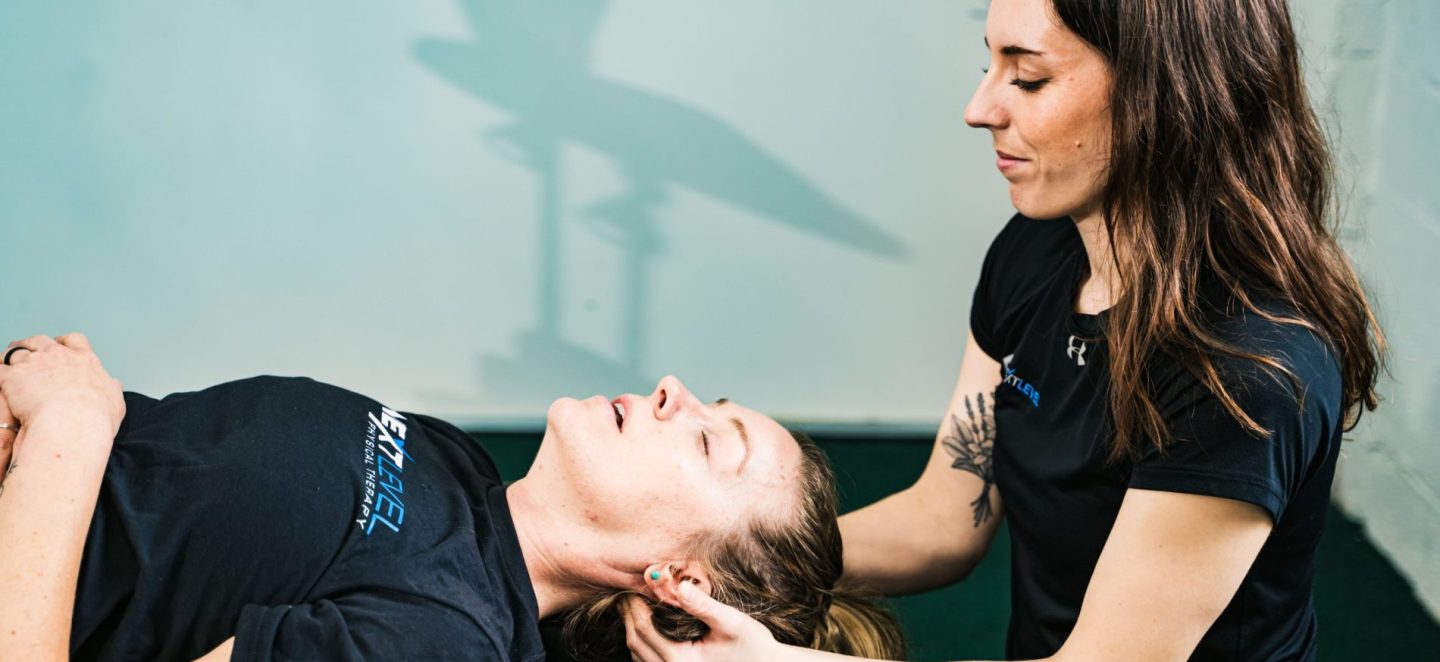
Head and Neck pain

Find out more about how we connect the dots from the deepest root & eliminate your pain from the source below!

What We Treat

Back pain
Knee pain
Hip pain
Shoulder pain
Foot and Ankle pain
Elbow pain
Head and Neck pain

Find out more about how we connect the dots from the deepest root & eliminate your pain from the source below!

What We Treat

Back pain
Knee pain
Hip pain
Shoulder pain
Foot and Ankle pain
Elbow pain
Head and Neck pain

Find out more about how we connect the dots from the deepest root & eliminate your pain from the source below!

What We Treat

Back pain
Knee pain
Hip pain
Shoulder pain
Foot and Ankle pain
Elbow pain
Head and Neck pain

Find out more about how we connect the dots from the deepest root & eliminate your pain from the source below!

What We Treat

Back pain
Knee pain
Hip pain
Shoulder pain
Foot and Ankle pain
Elbow pain
Head and Neck pain

Find out more about how we connect the dots from the deepest root & eliminate your pain from the source below!

What We Treat

Back pain
Knee pain
Hip pain
Shoulder pain
Foot and Ankle pain
Elbow pain
Head and Neck pain

Find out more about how we connect the dots from the deepest root & eliminate your pain from the source below!

What We Treat

Back pain
Knee pain
Hip pain
Shoulder pain
Foot and Ankle pain
Elbow pain
Head and Neck pain

Find out more about how we connect the dots from the deepest root & eliminate your pain from the source below!

The Only Way to
Long-Term Pain Relief

You’ve tried everything, but why hasn’t it worked? 

You may have experienced 1 or all of the following:

  • They told you to stretch because you had “tight muscles”
  • They gave you exercises because you had “weak muscles” 
  • You went and got adjusted because there was some “misalignment”
  • You received surgery because they found a “tear” 

These methods only give temporary relief because they are just fighting the symptoms and not connecting the dots from the deepest root. The body is too complex for such a basic approach. 

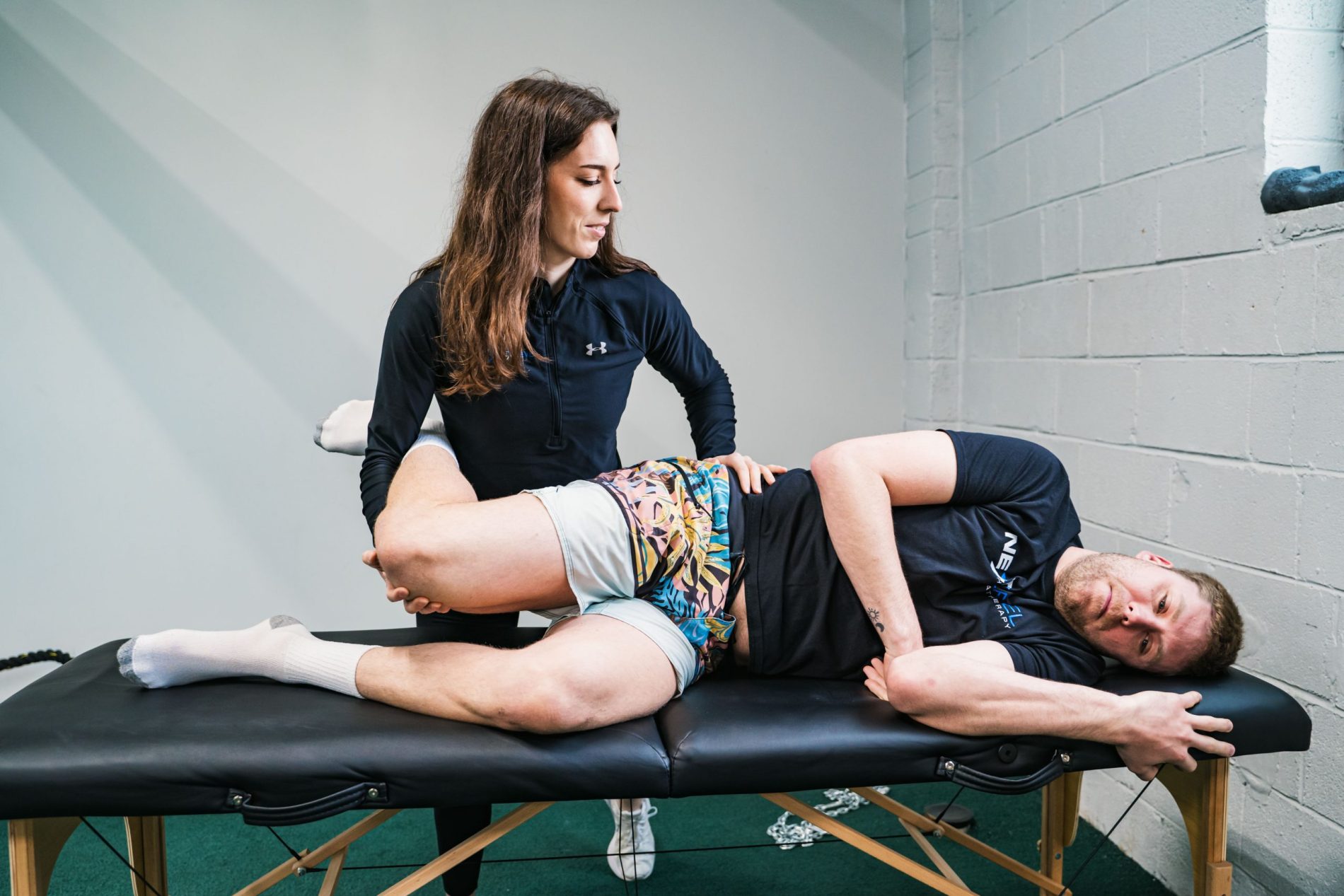
You need a specialized solution that will treat the body as a whole and get to the root cause of your pain. 

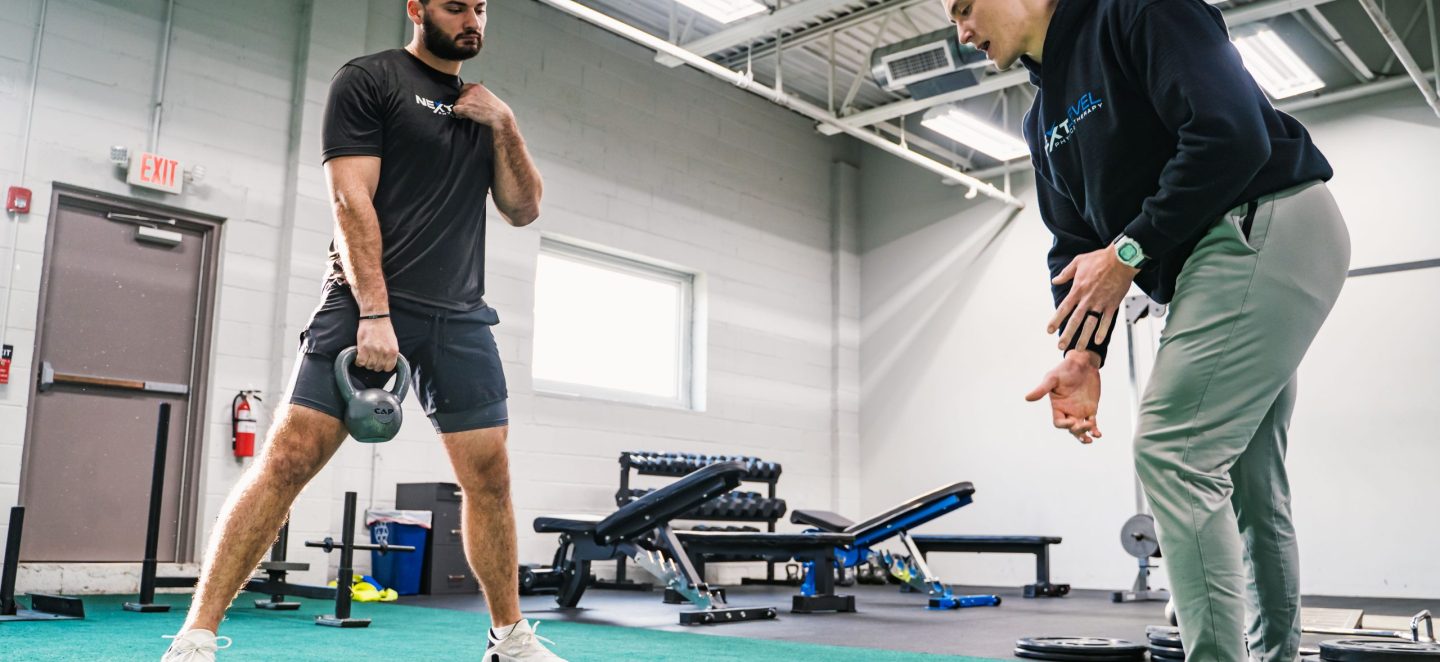
Physical therapist working with a patient on lunges at Next Level Physical Therapy in Southampton, PA

Conditions Treated

  • Achilles Tendinitis
  • Ankle Impingement
  • Ankle Instability
  • Broken/Fractured Bone
  • Bursitis
  • Flat Feet
  • Heel Pain
  • Lisfranc Injury
  • Muscle Pain & Tightness
  • Muscle Pulls & Strains
  • Plantar Fasciitis
  • Posterior Tibialis Tendinitis
  • Post-Surgical Rehab
  • Shin Splints
  • Sprained Ankle
  • Stress Fractures
  • Turf Toe
Pain-Free Secrets Guide 2.0
Our new guide dives deeper into the Next Level System, giving you clear, actionable strategies to eliminate pain, improve movement, and achieve lasting results.
Athlete's Guide
Unlock your full potential with our free guide for athletes. Learn how to move better, prevent injuries, and perform pain-free with the proven Next Level System.
End Back Pain Guide
Discover the proven steps to finally end back pain for good. This free guide reveals the root causes of pain and how to move, strengthen, and recover with confidence.
get rid of your foot and ankle pain for good

Are you ready to get to the root cause of your foot and ankle pain?

Take the first step into your pain-free life by clicking the button below.
`

BLOG

The 3 Things Your Doctor Didn’t Tell You About Plantar Fasiitis
You are reading this because either you, or someone you care about, has been dealing with a persistent burning or aching pain on the bottom of the foot. Maybe it only hurts when walking. Maybe it hurts all the time. Maybe it is in the middle of the arch or closer to the heel. Either way, chances are a podiatrist or orthopedist has told you that it is plantar fasciitis. Here are three things they probably did not tell you. There is typically nothing wrong with the foot itself Typical solutions do not address the root of the problem Exercise is the only way to truly eliminate it Let’s get into it. There is Typically Nothing Wrong With the Foot Itself Plantar fasciitis is classified as an inflammatory condition, but inflammation itself is not the problem. Inflammation often gets a bad reputation, but it is actually a critical part of the healing process. When tissue damage occurs, even at a mild level, inflammation shows up to start repair. Think of a car accident on the highway where a guardrail is damaged. Police arrive to secure the area, tow trucks remove vehicles, street cleaners clear debris, and construction crews rebuild the rail. Inflammation serves a similar purpose in the body. It clears debris and delivers materials needed for healing. Inflammation only becomes an issue when it never resolves. If inflammation represents the first step in healing, then chronic inflammation means the body is constantly trying to repair damage but never catching up. This is the definition of an overuse injury. With plantar fasciitis specifically, the pain in the foot is usually the result of a problem, not the problem itself. Flat feet, high arches, or family history are rarely the primary cause. If the structure of your foot were the issue, pain would have shown up much earlier in life. Typical Solutions Don’t Address the Root of the Problem Common treatments include rest, boots, stretching, massage, cortisone injections, and orthotics. While these can help reduce pain, they often miss the bigger picture when used alone. The goal of early treatment is to reduce stress on the plantar fascia so healing can occur. A boot, night splint, or rest period lowers overall load. Pain decreases and things feel better for a while. Then the boot comes off, life returns to normal, and weeks later the pain slowly creeps back in. That is not bad luck. The strain did not happen randomly. You felt better because support and reduced activity offloaded stress. Once normal movement and load returned, the same stresses were placed on the same tissues. Stretching and massage often follow next. Rolling the foot on a frozen water bottle and stretching the calves can feel great temporarily. Relief lasts an hour, then symptoms return, so the cycle repeats. Temporary relief is mistaken for progress. Cortisone injections often come next. They can dramatically reduce pain by suppressing inflammation. The problem is that inflammation is not the root issue. Removing the warning signal does not eliminate the stress causing the problem. All of these approaches treat symptoms, not causes. They can create a window of opportunity to do the real work, but they are rarely sufficient on their own. Exercise is the Only Way to Truly Eliminate It If most treatments focus on reducing pain, then exercise must address why the pain exists in the first place. That usually means strengthening the foot and improving how forces move through the body. Strengthening is straightforward. Strong tissues tolerate more stress before breaking down. This allows you to do more without accumulating overuse. Unfortunately, seated calf raises and toe curls only take you so far. To truly change capacity, exercises like walking, farmer carries, step ups, step downs, split squats, lunges, and light plyometrics must be part of the plan. The other major factor is motor variance. For this discussion, motor variance means how many movement options you can access and control. The more positions your foot, ankle, and lower leg can move through, the less wear any single tissue experiences. Think of it like shoes. If you wore the same pair every day, they would break down quickly. Rotating through several pairs spreads the stress. Stretching and massage temporarily improve range of motion, but range of motion is driven by muscle activity. If stiffness keeps returning, those muscles are doing a job. The key is figuring out why. That often means looking above the foot. What if plantar fasciitis pain is influenced by your upper back? The position of your center of mass has a major impact on your feet. If the upper back, lower back, or hips are stiff, they can push your body weight forward. As your weight shifts forward, your calves and feet must work harder to keep you upright. You push your toes into the ground to prevent falling forward, which increases stress through the plantar fascia, calves, and Achilles. Muscles tighten to protect you from tipping. Suddenly foot pain is not just a foot problem. This is why any approach to plantar fasciitis that ignores center of mass is incomplete. If you have been dealing with foot pain for a long time and nothing seems to work, widen your lens. Do not stare at one tree so closely that you miss the forest.

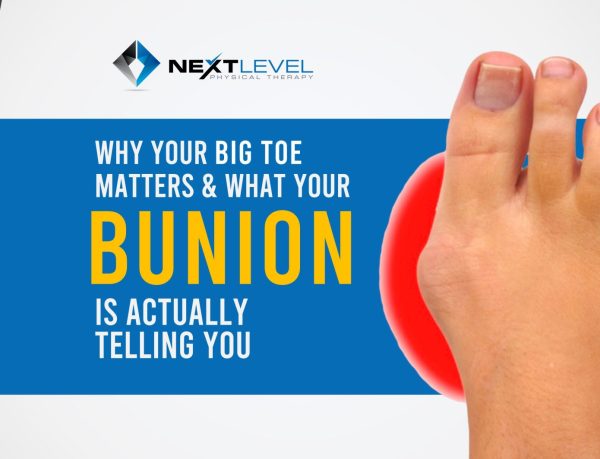
Why Your Big Toe Matters & What Your Bunion Is Actually Telling You
For something as small as a toe, it can be surprising how much influence the big toe has on the rest of the body. With every step we take, the big toe helps us sense the ground and plays a major role in how we push off from one foot to the next. When big toe extension is limited, especially the motion needed to rise up onto the toes, walking mechanics can change significantly. Those changes often lead to compensations that do not stop at the foot. Over time, they can affect the knees, hips, low back, and even travel upward into the upper back, shoulders, and neck. Basics of Walking:  To understand why the big toe is so important, we first need to review some basic anatomy and the gait cycle, or how we walk. The big toe is designed to extend backward roughly 70 degrees, creating nearly a right angle with the bottom of the foot. This extension can become limited for several reasons, but two of the most common contributors are altered joint positioning and tightness in the muscles that flex or curl the toe downward. Changes in joint position can occur for many reasons and are best identified during a full evaluation with a physical therapist. Factors such as high or low arches, excessive pronation or supination, or pushing off the outside of the foot instead of the big toe can all alter how the bones of the foot align. When alignment changes at the big toe joint, the available motion is often reduced. The important takeaway is that these changes are often modifiable. With the right interventions and exercises that address the root cause, big toe position and movement can frequently be improved. The second contributor is tightness in the muscles that hold the toe in a flexed or curled position. It is important to understand that muscle tightness is usually a response, not the original problem. Muscles typically become tight due to the positions they are placed in or the demands repeatedly placed on them. It is uncommon for someone to be born with muscles that are simply too tight. More often, tightness develops as a reaction to how the foot is functioning. That is why identifying and addressing the underlying cause is essential for long term improvement. Gait Cycle: Push Off To further highlight the role of the big toe, we need to look at the terminal stance and toe off phases of the gait cycle. During this phase, the heel lifts off the ground and the body moves forward over the big toe. This motion requires adequate extension at the big toe joint. Because we take thousands of steps each day, even small impairments in this phase can add up over time. Diagram: Phases of the normal gait cycle, including heel strike, loading response, mid stance, terminal stance, pre swing, toe off, mid swing, and terminal swing. When the big toe cannot extend properly, people often compensate by rolling toward the pinky side of the foot during push off. Another common compensation is the development of a bunion, which occurs when force is driven through the inside edge of the toe instead of allowing the toe to extend backward at the joint. Both of these compensations can lead to pain in the toe or foot itself. They can also increase stress on the knees, hips, low back, and other areas as the body adapts to keep walking smoothly despite the limitation. Whether you are dealing with foot pain, pain elsewhere in the body, or are concerned about a developing bunion, the big toe is often an overlooked but critical piece of the puzzle. If you have been focusing only on the location of your pain without success, it may be time to zoom out and look at the entire body, quite literally from head to toe. A thorough assessment by a physical therapist can help identify movement limitations, compensations, and how they may be contributing to ongoing pain.
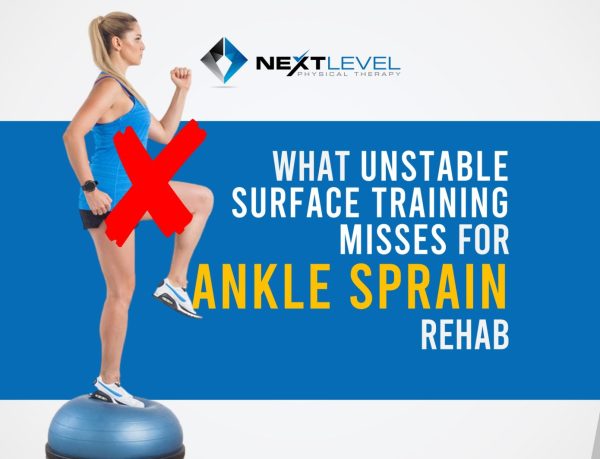
Wobble No More: What Unstable Surface Training Misses For Ankle Sprain Rehab
The inversion ankle sprain is the most common injury in the world. Walking down the stairs and missing a step. Getting bumped in the air during a layup and landing on the outside of the foot. In an instant, force is applied through the outside of the foot and ankle at a speed the ligaments and surrounding tissues cannot rebound from, as shown in Image 1 below. [caption id="" align="aligncenter" width="894"] Image 1: An inversion ankle sprain in the NBA.[/caption] Like most acute injuries, damage to the bones, muscles, ligaments, and tendons triggers inflammation. This response helps clear damaged tissue and initiate healing. Swelling follows as part of this process and gradually decreases as the acute phase of injury resolves. Once ankle and foot range of motion is restored, one of the most commonly prescribed interventions is unstable surface training. This usually involves standing on a foam pad, wobble board, or BOSU ball while maintaining balance and foot contact. The idea behind this approach is that standing on an unpredictable surface forces the ankle and center of gravity to adjust continuously. This is thought to retrain body awareness and reduce the tendency to place force through the outside of the foot, which could lead to another ankle sprain. [caption id="" align="aligncenter" width="929"] Figure 2: Single Leg Stance Balance Retraining on a Bosu Ball[/caption] There is nothing inherently wrong with this concept. For athletes and active individuals, the ability to respond to unexpected perturbations and regain control is important. The issue lies in how well this type of training transfers to real world movement and sport demands. Most sports are performed on solid surfaces such as hardwood courts, turf, grass, asphalt, or concrete. These surfaces do not yield the way unstable surfaces do. The yielding nature of unstable surfaces makes it difficult to place the ankle, foot, and rest of the body into positions that are optimal for producing force to slow down, absorb load, and change direction safely. Clinically, individuals with recurrent ankle sprains often struggle to control internal rotation through the foot, ankle, and hip. Internal rotation represents the ability to drive force down into the ground beneath the body. To slow down effectively during landing, the body must apply force into the ground over time. To redirect movement, it must quickly produce force again to push away from the surface. If you attempt to produce downward force while the foot and limb remain oriented toward external rotation, force continues to be directed toward the outside of the foot instead of directly beneath the body. This limits your ability to reduce sprain risk. In the example referenced above, notice how the foot may be on the unstable surface, but the shin remains oriented outward relative to the body. This brings up an important question. How do we retrain the ability to produce force directly beneath the body rather than outside of it? The first step is developing coordination in a low demand position, such as the supine cross connect shown in Video 1. [embed]https://youtu.be/TcsiqnDrd0g[/embed]  Video 1: Supine Cross Connect  This exercise helps align the foot, knee, hip, and rib cage while pressing into a fixed surface. The wall simulates the ground, allowing you to learn proper force direction without the complexity of standing balance. Progression: Low Step Up Cable Chop Once this pattern is solid, the next step is transferring it to a standing position. [embed]https://youtu.be/mGzNekn1g3o[/embed] Video 2: Low Step Up Cable Chop  In this exercise, the stance leg is positioned directly under the body while the cable or band chop helps guide force into the inside portion of the foot. This reinforces proper alignment and force production during upright movement. These exercises are just two examples of how to retrain the ability to absorb and generate force without directing bodyweight toward the outside of the foot. To be truly prepared for sport or high level activity, these principles must eventually be trained at higher speeds, under greater loads, and repeatedly without fatigue altering mechanics. If you have tried unstable surface training and still feel that your ankle does not function the way you expect after an injury, this approach may be worth exploring. If you have questions, feel free to reach out and continue the conversation.
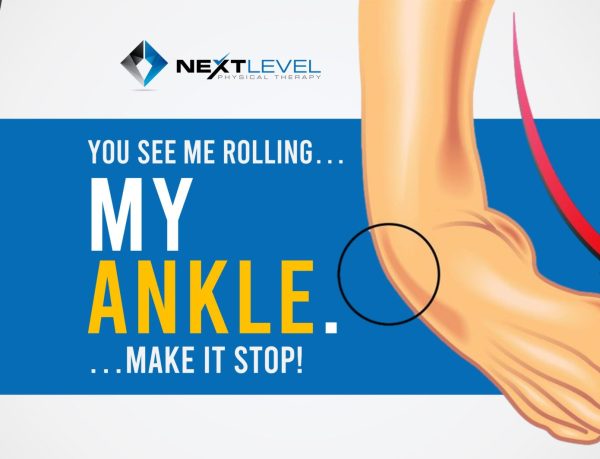
You See Me Rolling…My Ankle. Make It Stop! (Part 1/2)
I used to train in martial arts pretty extensively. I even competed for both glory and tiny trophies. I studied several styles, but I went the furthest in Judo. There is something deeply satisfying about getting into your opponent’s head and navigating every move and counter move. It felt like chess, but with actual fighting and no getting punched in the face. This article is not about my love for throwing people. It is about how I used to sprain my ankle every few months. One wrong step. One moment of lost focus. Suddenly I was off the mat and out of the gym for two to four weeks. This frustrating cycle kept me from getting as strong and as skilled as I wanted to be. It left me feeling fragile. What was the point of training so hard if something so simple could take me out so easily and so often? I no longer deal with this problem, but if any of this sounds familiar, keep reading. Understanding Ankle Sprains There are several types of ankle sprains, but we are going to focus on inversion sprains since they are the most common. An inversion sprain occurs when the heel rolls inward and the outside of the foot collapses toward the ground. This usually happens for one of two main reasons. Either your center of mass shifts outside of your base of support, or the peroneal muscles on the outside of your lower leg do not activate quickly enough as the ankle begins to roll. The peroneal muscles work to evert the foot and ankle, essentially resisting the exact mechanism that causes an inversion sprain. You want these muscles on your side. For the purpose of this article, we are going to focus primarily on delayed muscle activation. The term sprain means damage to a ligament. Ligaments are connective tissues that attach one bone to another. When it comes to inversion ankle sprains, the ligaments most commonly involved are the anterior talofibular ligament and the calcaneofibular ligament. Unlike muscles, ligaments do not contract and they do not have their own direct blood supply. Because of this, they heal more slowly and they cannot actively change their length once healing has occurred. Here is an important and often overlooked fact. The number one predictor of a future ankle sprain is a previous ankle sprain. Let’s unpack why that matters. Why Ankle Sprains Keep Coming Back We are often taught that ligaments are what hold our bodies together. That is only partially true. Ligaments are not especially strong. Muscles are what truly stabilize us and allow us to move through the world. Ligaments do have an important role though. They are loaded with mechanoreceptors, which are sensory structures that help your brain understand where your body is in space. As your joints move, ligaments stretch and send signals to the brain, providing constant updates about joint position. This sense of body awareness is called proprioception. Without proprioception, movement would be clumsy and uncoordinated. When you sprain a ligament, it is forcibly stretched and partially torn. As it heals, it does so at a slightly longer length than before. Ligaments cannot shorten themselves after healing. This means that after an ankle sprain, the ligaments are a bit looser than they used to be. Because these ligaments help provide positional feedback to the brain, the signals they send are now slightly delayed. The delay may only be fractions of a second, but during high speed or high intensity movement, that delay matters. Here is the good news. Muscles also contain mechanoreceptors. By retraining the muscles of the foot and lower leg, especially those on the outside of the ankle, you can help make up for the lost feedback from the injured ligaments. This is why proper rehabilitation is not just about strength. It is about timing, awareness, and control. What Comes Next Now you know why ankle sprains tend to repeat themselves and why simply resting until the pain goes away is not enough. In Part 2 of this series, I will walk you through a few foundational exercises that we consider mandatory in any complete ankle rehabilitation program. These drills are designed to restore confidence, improve control, and help stop the cycle of rolling your ankle over and over again. Stay tuned.

Testimonials

See How We Created Massive Transformations For People Just Like You
Shawn A.
"The one-on-one care is what sets this place apart. Next Level looked at the big picture—my movement, my measurements, the root cause... not only did the pain go away, but my hip and shoulder issues cleared up too."
Maggie B.

“Being on my feet all day was miserable. At Next Level, they actually walk you through the exercises on the spot and make sure you understand everything. My mood, my energy, everything is better now.”

Joanna C.
"Before Next Level, every time I felt pain, I would get scared... My only wish was to feel somewhat out of pain… and with Next Level, I achieved far more than that."
Abby C. & Joe C.
“Coming here showed me how much was really out of alignment… and the difference was instant. I felt better right away.”

Reviews

Michelle A.
Active Adult

July 31/2018 fell down the stairs and ended up with a bimalleolar fracture. Off to the hospital I went and a week later on August 9 I was having surgery. 9 pins and a rod later, i was in a cast for 6 weeks. Cast came off and my surgeon sent me home in a air CAM boot for 4 weeks and told me to start weight bearing 25%, then increase to 50% and so on. I was still using crutches. This was it! This was all the guidance I received. Needless to say I was so scared and anxious as to how I was going to learn how to walk on my own with this air boot that weighed a ton! I thought I was making good progress on my own until my follow up visit a month later with my surgeon who looked at me and said “you’re still using the crutches and can’t walk on your own yet? You’re very behind on your progress!” Handed me a script for physical therapy and I was on my own again.
I called every single therapy place in my area. Couldn’t find anyone in network with my insurance. I was in tears and very overwhelmed.
I said to myself if I have to pay out of pocket then I might as well go to the best! I googled “best physiotherapy in Mercer county” and voila NEXT LEVEL PT appeared!!
I called, practically sobbing and Katie answered. Katie was so kind, listened to my story and told me everything would be ok. She was right. I called on a Friday and I was in the following Tuesday to see Dr Ben.
I was so scared because everyone I spoke with that had a prior injury and physical therapy told me it would be painful. Friends and family warned me that physical therapy would be very painful.
I met Dr Ben on Tuesday October 21/2018. I was immediately at ease and knew that Katie had done a great job in choosing Dr Ben as my physiotherapist.
I walked in using two crutches. Dr Ben told me that same day I’d be walking out with only one crutch and sure enough, I did!!!
The confidence that Dr Ben gave me in one hour in one day was enough for me to know that I was at the right place.
Two weeks later, I took my first steps without crutches and I never looked back.
Dr. Ben is phenomenal. He’s patient, kind and compassionate. By Christmas 2018 i was walking with a cane, walking up and down the stairs and doing things I never thought I could ever do again.
I returned to work February 2019, used the cane for 2 weeks and then i was walking without it!!!
All this took a lot of work and patience from Dr Ben but he never gave up on my recovery. Dr Ben always pushed me to do things I thought I couldn’t and for this I will forever be grateful.
Next Level Physical Therapy not only targets your injury but it heals your mind, body and soul.
Thank you, Dr Ben and everyone at Next Level!!
I am back to running again and I owe this to you.

Jeff L.
Ironman Triathlete

Dr. Mike and the staff at Next Level are top notch. They take time to work with each patient and prescribe specific exercises that get you back on track quickly! Their approach to physical therapy was exactly what I was looking for and that approach helped me recover from nagging plantar fasciitis.

Vanessa P.
Runner

Dr. Mike is AMAZING, hands down! I went to him with a nagging calf injury that I couldn’t shake for months, and he has been working magic on it. He uses new and exciting treatment like dry needling, after one session, my calf, which has been bothering me for about 4 months felt significantly better. I keep coming back for more! His clinical expertise and credentials are stellar: DPT, CSCS, Sports PT internship etc. You’ll be impressed with how thorough his assessments are and he really gives each patient the time needed to complete each treatment. So smart, and an all around great guy! Anyone that is an athlete / needs rehab, go to him, you won’t be let down. Prices are great, and worth it! Nice job and THANK YOU Dr. Mike!! My calf thanks you too